That unbelievably low introductory price for web hosting looks tempting, but what happens after the first year? For many Australian businesses, the initial saving quickly evaporates under a mountain of unexpected fees, performance bottlenecks, and costly limitations. These aren't just minor inconveniences; they can directly impact your revenue, security, and brand reputation. The attractive $2.99/month deal often conceals a much higher true cost of ownership, a common pitfall not just in hosting but across many service agreements. The pitfalls of seemingly budget-friendly options extend beyond web hosting; you can learn more about common subscription mistakes marketing teams make in other service areas too.
This article unpacks the most significant hidden costs of budget web hosts, providing real-world Australian examples and actionable advice to help you see beyond the sticker price. We'll explore everything from dramatic renewal price hikes and essential add-ons that aren't included, to the financial toll of slow speeds and poor security. You will learn to identify these traps before you commit, ensuring you choose a hosting partner that supports your business's growth rather than hindering it.
By understanding these pitfalls, you can make a smarter, more cost-effective decision for your website's future. We will provide clear examples, screenshots, and direct links to resources that illustrate these points, so you can confidently evaluate hosting plans. Our goal is to equip you with the knowledge to calculate the total cost, not just the advertised one, and find a hosting solution that delivers genuine value for your Australian business.
1. The Renewal Price Shock: When 'Introductory' Rates Expire
The most common trap in the budget hosting market is the steep price jump after an initial promotional period. This is a classic bait-and-switch tactic where providers lure you in with an exceptionally low monthly rate, often requiring you to pay for one, two, or even three years upfront to secure the deal. The real cost is revealed only when that initial term expires, and the renewal invoice lands in your inbox, often at a price two or three times higher than what you originally paid.
This strategy is built on customer inertia. Providers are counting on the fact that once your website is established, the perceived effort, technical challenge, and potential downtime involved in migrating to a new host will seem too daunting. This effectively locks you into a much higher long-term expense, turning a seemingly affordable choice into a significant financial drain. It's a critical factor to consider among the hidden costs of budget web hosts, as it directly impacts your total cost of ownership over the lifespan of your website.
Real-World Cost Breakdown
Let’s look at a typical scenario for an Australian small business. A budget host advertises a plan for just A$2.99 per month. However, to get this price, you must prepay for a 36-month term.
- Initial Outlay: A$2.99/month x 36 months = A$107.64 (plus GST)
- The Catch: The fine print reveals the plan renews at A$9.99 per month.
- Renewal Cost: A$9.99/month x 36 months = A$359.64 (plus GST)
This represents a staggering 234% price increase at renewal. What began as a hundred-dollar investment suddenly balloons into a bill exceeding A$350 for the exact same service.
How to Avoid the Renewal Trap
The key to sidestepping this financial pitfall is due diligence before you commit. Always treat the introductory price with scepticism and hunt for the true, ongoing cost.
Actionable Insight: Before finalising any hosting purchase, locate the 'renewal price' on the provider's website. Transparent providers like UpTime Web Hosting clearly display both their introductory and renewal pricing, including GST, so you can make an informed decision. They also offer loyalty rewards, helping to reduce future renewal costs rather than inflate them.
To protect yourself, follow these steps:
- Calculate the Total Cost of Ownership (TCO): Don't just focus on the first bill. Calculate your total expected cost over a three-to-five-year period, factoring in the inevitable renewal price.
- Check for Pricing Transparency: Scrutinise the checkout process. If the renewal rate isn’t clearly stated, treat it as a red flag. The Australian Competition and Consumer Commission (ACCC) provides clear guidance on misleading practices like drip pricing, which can help you understand your rights as a consumer.
- Set a Calendar Reminder: If you do opt for a provider with a promotional rate, set a reminder in your calendar for at least two months before your renewal date. This gives you ample time to assess your options and migrate your site without being rushed into an expensive renewal.

Performance you can feel, backed by clients who depend on it. Read how our support and uptime create long‑term customer success.Power Your Business with Better Hosting
2. The Slow Drip of Add-On Fees at Checkout
Beyond the headline price, many budget hosts inflate their final bills through a process known as "drip pricing". This involves progressively adding extra fees and pre-selected "recommended" add-ons during the checkout process. A cheap advertised price can quickly become expensive as you are nudged into paying for essentials like backups, security scanners, and even basic SSL certificates that should arguably be included. This is a deliberate strategy to increase the average order value by banking on customer confusion or the fear of missing out on a crucial service.
This practice is one of the most frustrating hidden costs of budget web hosts because it makes direct comparison between providers nearly impossible. The final price is often only revealed on the last payment screen, long after you have invested time and effort entering your details. It's a clear red flag that a provider may not be transparent about its overall value proposition, instead relying on checkout manipulation to boost its revenue.
Real-World Cost Breakdown
Let’s examine how a low advertised price gets inflated for an Australian online store. A host advertises a plan for a seemingly great price of A$4.95 per month for a 12-month term.
- Advertised Initial Cost: A$4.95/month x 12 months = A$59.40
- The Drip: During checkout, the following items are often pre-selected or presented as essential:
- Daily Backups: +A$3.00/month (A$36.00/year)
- "Essential" Security Scanner: +A$2.50/month (A$30.00/year)
- "Priority" Support: +A$4.00/month (A$48.00/year)
- True First-Year Cost: A$59.40 (base) + A$36.00 (backups) + A$30.00 (security) + A$48.00 (support) = A$173.40
In this common scenario, the actual first-year cost is 192% higher than the advertised price. These aren't luxury features; they are services most website owners would consider standard, yet they are used to nearly triple the initial bill.
How to Avoid the Drip Pricing Trap
Being aware of this tactic is the first step to defending your wallet. As an Australian consumer, you are protected by laws that govern pricing transparency.
Actionable Insight: Familiarise yourself with your rights by reviewing the Australian Competition and Consumer Commission's (ACCC) official guidance on drip pricing. The ACCC states that unavoidable fees must be included in the headline price. This guidance empowers you to identify and question misleading checkout practices.
Follow these steps to protect yourself from surprise fees:
- Scrutinise Every Checkout Step: Don’t just click "Next". Carefully review each screen and de-select any pre-ticked boxes for services you haven't explicitly chosen.
- Compare 'Apples with Apples': When evaluating hosts, look at what is included as standard. A slightly more expensive plan from a transparent provider like UpTime Web Hosting that includes backups, security, and SSL for free often works out cheaper than a budget plan loaded with paid add-ons.
- Question "Essential" Add-ons: Research whether a recommended add-on is truly necessary. For instance, our Knowledge Base article on the importance of SSL certificates explains how free options like Let's Encrypt are sufficient for most Australian businesses, making a paid SSL redundant.
3. The Essential Add-Ons That Aren't Included
Another area where budget hosts inflate your final bill is by treating essential website components as optional, paid add-ons. You're drawn in by a low advertised price for the core hosting service, only to discover that critical features like an SSL certificate, professional email accounts, or even basic daily backups come at an extra cost. These aren't luxuries; they are fundamental necessities for running a secure and professional website in Australia.
This unbundling strategy can be particularly deceptive. For example, not having an SSL certificate means your site will be flagged as "Not Secure" by browsers, deterring visitors and harming your search engine ranking. Similarly, using a generic Gmail or Outlook address instead of a domain-branded email (e.g., info@yourbusiness.com.au) undermines your brand's credibility. These additional fees are a significant part of the hidden costs of budget web hosts, turning a low initial price into a much larger, piecemeal investment.
Real-World Cost Breakdown
Let's break down how these seemingly small add-on costs accumulate for a local service business. You sign up for a A$3.99/month hosting plan, but soon realise you need more.
- Initial Hosting Cost: A$3.99/month x 12 months = A$47.88
- The Add-Ons:
- SSL Certificate: Many budget hosts offer a free one for the first year, then charge A$99.99/year at renewal.
- Professional Email: A$3.00/month per mailbox = A$36.00/year for one account.
- Automated Daily Backups: A$4.50/month = A$54.00/year.
- True First-Year Cost: A$47.88 + A$36.00 + A$54.00 = A$137.88
- True Renewal Cost (Year 2): A$47.88 (hosting renewal) + A$99.99 (SSL) + A$36.00 (email) + A$54.00 (backups) = A$237.87
What started as a sub-A$50 annual commitment quickly triples and then quintuples, all for features that should arguably be included from the start.
How to Avoid Add-On Fees
To prevent your hosting bill from spiralling, you must scrutinise what is and isn't included in a plan before you purchase. Look for providers that offer an all-in-one solution.
Actionable Insight: Seek out hosts that bundle essential services into their plans at no extra charge. A provider like UpTime Web Hosting includes free and automatic SSL certificates, unlimited professional email accounts, and automated daily backups as standard. This transparency ensures the price you see is the price you pay, without nasty surprises.
Follow these steps to avoid getting caught out:
- Create a 'Must-Have' Checklist: Before shopping, list your non-negotiable features: SSL, domain email, daily backups, and malware scanning. Compare potential hosts against this list.
- Read the Full Feature List: Don't just look at the headline offer. Dig into the detailed comparison tables on the provider’s website to confirm which features are genuinely included versus which are timed trials or paid extras.
- Choose Integrated Providers: Opting for a host that provides these core services directly simplifies management and support. Instead of dealing with multiple vendors for your hosting, email, and security, you have a single point of contact, which is crucial when learning how to choose a web host that's best for you.
Host your website with our 5-star rated, cPanel website hosting plans.
Super fast servers, with security included and hosted in your choice of Australian Data Center.
View cPanel Plans
4. The Performance Cost: Slow Speeds & Server Limits
One of the most damaging hidden costs of budget web hosts isn't on your invoice—it's in your website's performance. Budget hosting providers often achieve their low prices by "overselling" servers, cramming hundreds or even thousands of websites onto a single machine with shared resources. When one site on the server experiences a traffic spike or runs a resource-heavy script, every other site on that server, including yours, slows to a crawl.
For an Australian business, this is a disaster. Slow loading times lead directly to higher bounce rates, lower search engine rankings (Google prioritises fast sites), and a frustrating user experience for your local customers. If your server is located overseas (a common practice for international budget hosts), the physical distance adds even more latency, making your site feel sluggish for Australian visitors. This poor performance directly impacts your bottom line.
Real-World Cost Breakdown
The cost here is measured in lost opportunity, not just dollars on an invoice.
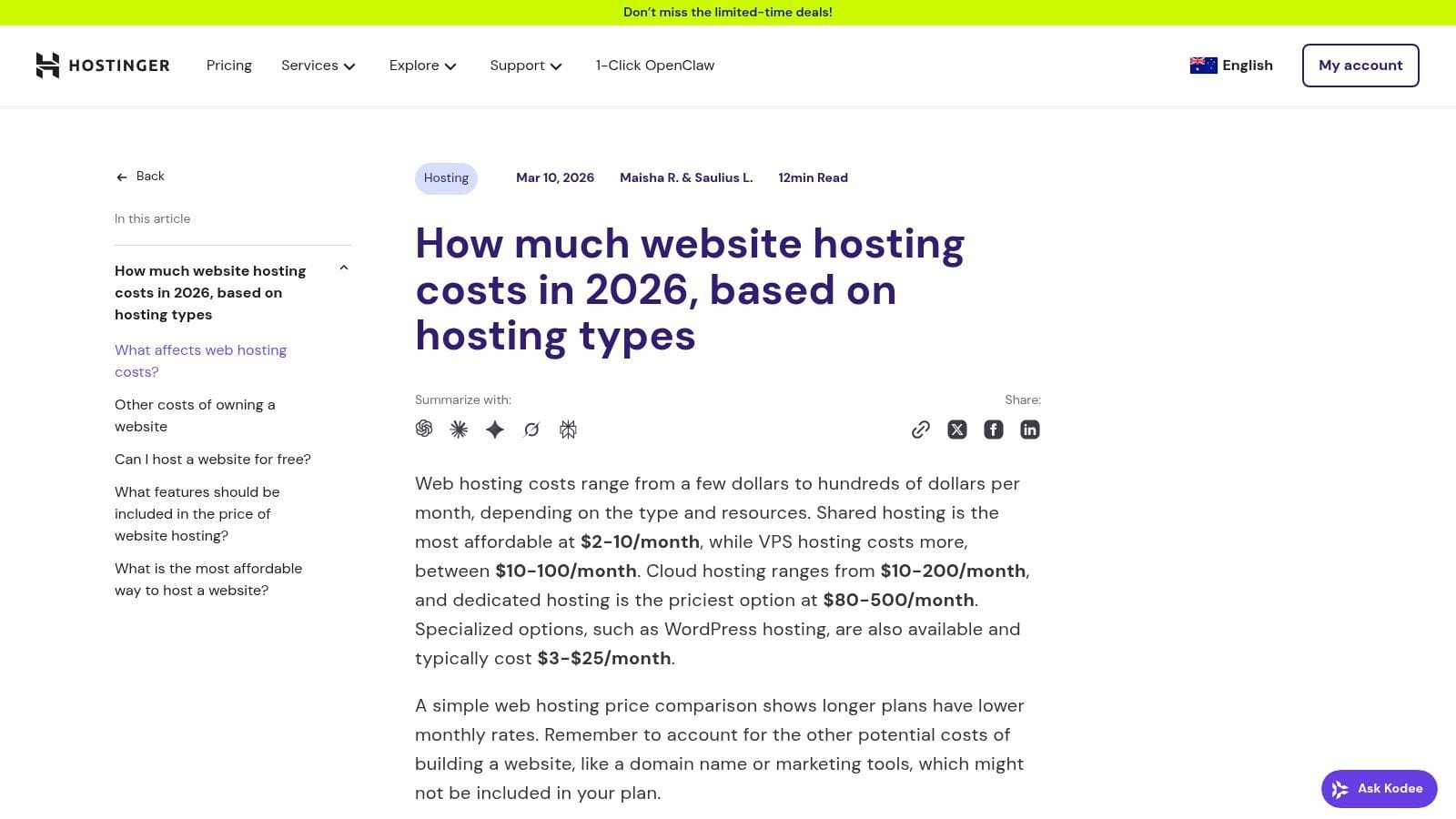
- Example Scenario: A Sydney-based e-commerce store on a cheap US-based server sees its page load time increase from 2 seconds to 5 seconds.
- The Impact:
- Conversion Rate Drop: Studies show that a 3-second delay can cut conversions by over 50%. If the store makes A$5,000/month, this could mean A$2,500 in lost sales.
- SEO Penalty: Google's algorithms penalise slow sites, pushing the store down in search results for key terms like "buy widgets Sydney." This loss of visibility means fewer new customers.
- Forced Upgrade: The only "solution" the budget host offers is a costly upgrade to a higher-tier plan or a VPS, which might have been the correct choice from the start.
This demonstrates how your hosting service affects website speed and, ultimately, your revenue.
How to Avoid the Performance Trap
Prioritising performance and Australian-based infrastructure is essential for any business targeting local customers.
Actionable Insight: Choose a provider with servers located in Australia. This significantly reduces latency for your local audience. UpTime Web Hosting operates out of high-speed data centres in Sydney, ensuring your website loads quickly for Australian visitors. We also use technologies like LiteSpeed Web Server and NVMe storage to maximise performance.
To protect your site's speed and your revenue:
- Check Server Locations: Before buying, confirm that the host has servers in Australia. Don't assume a
.com.audomain means local infrastructure. - Look for Performance Features: Check if the host offers performance-enhancing technology like LiteSpeed, NVMe SSDs, and caching tools like Redis or Memcached as standard.
- Read the Resource Limits: Understand the CPU, RAM, and I/O limits of your plan. Budget hosts often have very strict limits that can throttle your site's performance during busy periods.
5. The Support Cost: Time Wasted & Problems Unsolved
When your website goes down or you encounter a technical issue, the quality of your web host's support team becomes critical. With budget providers, this is often where the "savings" really start to hurt. Many cheap hosts cut corners by outsourcing support to overseas call centres with limited technical knowledge and no real power to fix complex issues.
This results in long wait times, communication barriers, and frustrating ticket escalations that can take days to resolve. For an Australian business owner, waiting 24 hours for a response to a critical issue like a website outage means lost revenue, damaged customer trust, and immense personal stress. The time you spend chasing support is time you can't spend running your business. This is a massive, unquantifiable part of the hidden costs of budget web hosts.
Real-World Cost Breakdown
Let's imagine a common scenario for a Melbourne-based consultant whose website goes offline on a Friday afternoon.
- Budget Host Experience:
- Submits a support ticket. Receives an automated reply promising a response within 24 hours.
- Tries live chat but is met with a chatbot or a first-level agent who can only follow a script. The issue is "escalated."
- The website remains down all weekend. A real technician finally responds on Monday, 60+ hours later.
- The Cost:
- Lost Leads: Dozens of potential clients visiting over the weekend see an error message and go to a competitor.
- Reputation Damage: The business looks unreliable and unprofessional.
- Owner's Time: The consultant spends hours trying to get help instead of focusing on client work.
For mission-critical sites, the cost of poor support can be astronomical. Exploring an affordable virtual private server with a dedicated support team can provide far better ROI than a cheap shared plan with no effective support.
How to Avoid the Support Trap
Vetting a provider's support system before you sign up is just as important as checking their prices.
Actionable Insight: Prioritise hosts with an Australian-based, expert support team. UpTime Web Hosting offers 24/7 support from a team of skilled technicians located right here in Australia. This means faster response times, no communication barriers, and solutions from people who understand the local business landscape.
Use this checklist to evaluate a potential host's support:
- Test Their Pre-Sales Support: Ask a technical question via their live chat or ticket system before you buy. The speed and quality of their response is a good indicator of their post-sales service.
- Check for Local Contact Details: Does the provider have an Australian phone number and business address? This is a strong sign of a genuine local presence.
- Read Reviews about Support: Look for independent reviews that specifically mention customer support experiences, especially during critical incidents.
6. The Security Cost: Reactive Fees and Downtime
Beyond predictable price hikes, one of the most significant hidden costs of budget web hosts emerges when things go wrong. Budget providers often lack robust, proactive security measures, making their clients' websites prime targets for hackers and malware. When a breach occurs, the host's responsibility is typically limited to notifying you of the problem—the cleanup is on you.
This is where the real costs spiral. For a non-technical Australian business owner, cleaning a hacked site is a nightmare. You're faced with hiring expensive third-party security experts, dealing with search engine blacklisting, and reassuring customers that their data is safe. The revenue lost from a compromised or offline website can dwarf years of hosting fees, turning a "bargain" into a financial disaster. This reactive, emergency spending is a direct consequence of choosing a host that doesn't prioritise security.
Real-World Cost Breakdown
This scenario focuses on the contingency costs that are excluded from budget hosting plans.
- Incident: A Brisbane marketing agency's website is hacked and starts redirecting to a spam site. Their budget host suspends the account to prevent further spread.
- The Catch: The hosting plan doesn't include malware removal. The host offers a paid cleanup service for A$250.
- The Cost of Remediation:
- Third-Party Cleanup: The agency opts for an external service, costing A$400 for immediate cleanup.
- Lost Business: The site is down for two days, resulting in an estimated A$1,500 in lost client inquiries.
- Reputation Repair: The agency spends hours contacting clients and reassuring them, damaging their professional image.
The total cost of this single incident exceeds A$1,900, all because the initial A$5/month hosting plan lacked proactive security.
How to Avoid Reactive Security Costs
Thinking about potential problems before they happen is key. Instead of choosing a host based solely on price, assess its security features and support policies from day one.
Actionable Insight: Choose a host that bundles comprehensive security into their plans. Providers like UpTime Web Hosting integrate proactive security scanning with Imunify360, a robust Web Application Firewall (WAF), and free malware removal into their standard offerings. This prevents these reactive costs from ever materialising. You can learn more about our security features in our Web Application Firewall guide.
To protect your business from these post-incident expenses:
- Scrutinise Security Inclusions: Does the plan include a WAF, daily malware scans, and free cleanup services? If not, factor in the cost of a third-party security subscription.
- Evaluate Backup Policies: Confirm that daily backups are included and, crucially, that restoring from a backup is free and easy. Our Knowledge Base explains how to restore your website from a backup in cPanel.
- Read the Terms of Service: Understand the provider's responsibility in a security breach. Many cheap hosts explicitly state that website security is solely the customer's problem, which is one of the biggest web hosting mistakes that businesses make.
Register your new domain name at competitive market prices including free domain add-ons like privacy, DNS Hosting, Custom Nameservers and Forwarding.
Always the best price and no nasty renewal price hikes.
Register A Domain Name
7. The Migration Cost: Getting Trapped
The final hidden cost often appears when you decide you've had enough of the poor performance, surprise fees, and lackluster support from your budget host. Migrating a website to a new provider can be a complex and technical process. Budget hosts know this, and many create a "sticky" ecosystem that makes leaving difficult and expensive.
Some providers will charge a hefty fee for migration assistance or to provide you with a full backup of your website. Others offer no help at all, leaving you to handle the entire migration yourself. For a busy Australian business owner without a technical background, this can be an intimidating and risky task. A mistake during migration can lead to data loss, extended downtime, and broken functionality, creating another set of expensive problems to solve. This "exit fee," whether direct or indirect, is the final trap of cheap hosting.
Real-World Cost Breakdown
Let’s look at an Adelaide-based tradesperson who wants to move their WordPress site away from a slow, unreliable budget host.
- The Problem: The budget host has no free migration service and their control panel is a proprietary, confusing system that makes creating a full cPanel-style backup impossible.
- The Options & Costs:
- DIY Migration: The business owner spends a full weekend watching tutorials and attempting a manual migration. They make a mistake, leading to 8 hours of downtime and a broken contact form. The opportunity cost of their time and lost leads is easily A$500+.
- Paid Migration Service: The budget host offers to perform the migration for a one-time fee of A$200.
- Hiring a Developer: A freelance developer quotes A$350 to handle the migration securely.
Regardless of the path chosen, there is a significant cost attached to leaving the "cheap" provider—a cost that wouldn't exist if they had chosen a host with better service from the start.
How to Avoid the Migration Trap
The solution is to choose a provider that values your business enough to make joining—and leaving, should you ever need to—as seamless as possible.
Actionable Insight: Look for a host that offers free, professional website migration as part of their service. UpTime Web Hosting provides a seamless and free migration service for new customers, handled by our expert Australian team. We take care of moving your files, databases, and emails, ensuring a smooth transition with minimal downtime.
To safeguard your freedom to move, take these steps:
- Check Migration Policies Upfront: Before you sign up with any host, confirm their policy on migrations. Is it free? Do they assist? Is there a fee?
- Ensure Standard Control Panels: Opt for hosts that use industry-standard control panels like cPanel or Plesk. This makes it much easier to generate backups and move your site to another standard provider if needed.
- Prioritise Value Over Price: A provider that invests in a great onboarding experience, including free migration, is demonstrating a commitment to customer service that will likely extend throughout your time with them. This is a key principle when evaluating cheap web hosting options in Australia.
Making the Smart Choice: Looking Beyond the Monthly Price
Choosing a web host based solely on a low introductory price is a classic false economy. As we've detailed throughout this article, the initial monthly fee is often just the tip of the iceberg. The real financial and operational impact of budget hosting surfaces later, through a series of predictable and often frustrating challenges.
The journey with a budget provider often starts with an attractive deal, but the true cost quickly becomes apparent. We've seen how steep renewal price hikes can triple or even quadruple your initial investment, a practice highlighted by regulators like the ACCC for its lack of transparency. Suddenly, the "cheap" plan is no longer cheap, and you're locked into an ecosystem that makes migrating away a costly and time-consuming ordeal.
Recapping the True Cost of "Cheap" Hosting
The hidden costs of budget web hosts extend far beyond simple price increases. They manifest in ways that can directly harm your business's reputation and bottom line. Let's briefly revisit the key takeaways:
- Performance and Downtime: Slow-loading pages and frequent outages don't just frustrate visitors; they actively drive customers away and hurt your search engine rankings. The money "saved" on hosting is quickly lost in missed sales and opportunities.
- Essential Add-ons: Critical features like daily backups, SSL certificates, and malware scanning are often sold as expensive extras. A transparent provider includes these as standard, understanding they are necessities, not luxuries.
- Support Limitations: When your site goes down, waiting hours for generic, outsourced support is not a viable option. The value of expert, local Australian support that resolves issues quickly cannot be overstated. To truly understand the gap in service between premium and budget support, it's helpful to compare it against established industry standards. Familiarising yourself with Help Desk Best Practices can reveal just how much is missing from a low-cost support offering.
- Data and Migration Fees: Getting your data out of a budget host can be surprisingly difficult and expensive. Many providers charge significant fees for migration assistance or make the manual process so complex that you're forced to pay for their help.
Shifting Your Mindset: From Cost to Value
The smarter approach is to calculate the Total Cost of Ownership (TCO) over a one to three-year period. This forward-thinking calculation provides a much clearer picture of your actual investment.
Pro Tip: When calculating TCO, add the full renewal price (not the introductory offer), the cost of any essential add-ons like security and backups, and the GST. Compare this figure against an all-inclusive provider; the results are often surprising.
By prioritising value and transparency over a rock-bottom introductory offer, you're not just buying server space; you are investing in a stable, secure, and high-performing foundation for your online presence. You're choosing peace of mind, knowing that your website is supported by robust infrastructure and a team of local experts who are available when you need them. This allows you to focus on what you do best: running your business.
Ultimately, the choice of a web host is a strategic business decision. The initial savings from a budget provider are often an illusion, paid for later through financial strain, technical headaches, and lost opportunities. Make the choice to invest in reliability, performance, and genuine support. Your business, your customers, and your future self will thank you for it.
Ready to move beyond the hidden costs and false economies of budget hosting? Partner with UpTime Web Hosting for a refreshingly transparent, all-inclusive experience with clear, GST-inclusive pricing. Our fully-managed security, performance stack, and expert local support provide the reliable foundation your Australian business deserves.