
So, you're ready to start selling online in Australia. It’s a brilliant move. More and more Aussie shoppers are choosing to buy online, and there's a massive opportunity for local businesses to meet that demand. But before you start picturing the sales rolling in, there are a few foundational pieces you need to get right.
Getting these basics sorted from day one isn't just about ticking boxes for the government. It’s about building a business that your customers will trust and ensuring you don't run into legal or financial headaches down the track.
Building Your Australian Business Foundation
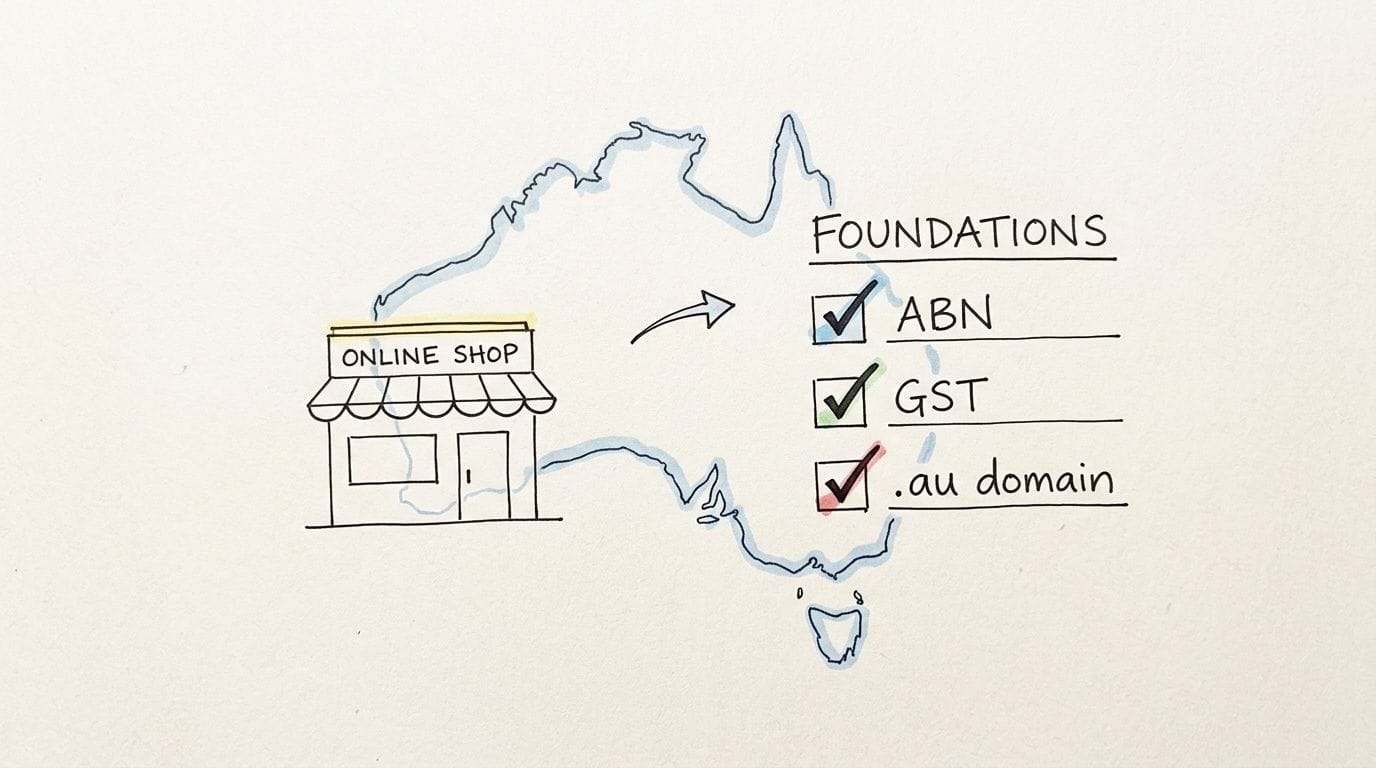
The Aussie e-commerce scene is absolutely thriving. Projections show we're on track to have 116,000 online shopping businesses by 2025. That’s a staggering 7.5% growth rate every single year since 2020. This boom tells you one thing loud and clear: if you want a piece of the pie, you need to look legitimate and professional from the get-go.
First Things First: Get Your ABN
Your first port of call is getting an Australian Business Number (ABN). Think of it as your business's official ID card. It’s a unique 11-digit number that identifies your business to the government, other businesses, and your customers.
Applying for an ABN is completely free through the Australian Business Register (ABR), and you'll need it for a few critical reasons:
- It proves you’re actually running a business in Australia.
- You can't register for a
.com.auor.audomain name without one. - It's a requirement for registering for GST (more on that in a moment).
- It makes you look credible to suppliers and payment providers like Stripe or eWay.
Plus, if you don't have an ABN, other businesses paying you are legally required to withhold tax at the highest possible rate. That’s a cash flow killer you definitely want to avoid.
Get Your Head Around GST
Next up is the Goods and Services Tax (GST). It’s a 10% tax on most goods and services sold in Australia. The key thing to know is that you don’t have to register for GST straight away.
You're only required to register for GST once your business turnover hits (or is expected to hit) $75,000 in a 12-month period. For non-profits, the threshold is $150,000.
Let's look at a practical example of how this plays out.
The Side Hustle: You start an online store selling handmade ceramics. You’re just starting out and project your first-year sales will be around $40,000. Since you’re well under the $75,000 threshold, you don’t need to register for GST. Simple.
The Growing Retailer: You launch a store selling niche electronic gadgets. Business takes off faster than expected, and you hit $75,000 in turnover within eight months. At that point, the clock starts ticking. You must register for GST with the Australian Taxation Office (ATO) within 21 days and begin charging it on your sales.
For a deeper dive into the nitty-gritty of setting up your business, our guide on how to start an online business in Australia is a great place to start.
Secure Your Digital Territory: The .au Domain
Finally, let's talk about your digital address. Choosing a .com.au or a .au domain name is one of the smartest moves you can make. It immediately tells shoppers you're a local Aussie business.
This isn't just a vanity thing; it builds instant trust. Customers see a .au and assume local shipping, support in their time zone, and pricing in Australian Dollars. It removes a layer of uncertainty that often comes with shopping on international sites.
Remember that ABN you just got? You'll need it to register a .au domain, which is why it's a powerful signal of a legitimate Australian enterprise. Pick a name that’s catchy, easy to remember, and says something about your brand. It’s your stake in the ground for selling online in Australia.

Performance you can feel, backed by clients who depend on it. Read how our support and uptime create long‑term customer success.Power Your Business with Better Hosting
Choosing Your E-commerce Platform and Australian Hosting
Okay, you've sorted out your business registration and nabbed a domain name. Now for the exciting part: building the digital storefront where you'll actually make your sales.
The platform you pick is the engine of your business, and your hosting is the very foundation it rests on. Getting these two things right from the start is absolutely crucial for the speed, security, and overall customer experience you'll offer when selling online in Australia.
Think of it this way: an all-in-one platform is like leasing a pre-built shop in a managed shopping centre. It's convenient, but you have to follow their rules. A self-hosted option, like WordPress with WooCommerce, is like buying your own plot of land to build a custom store from the ground up. You get total control, but also more responsibility.
Finding the Right E-commerce Engine
Your e-commerce platform is the machine that handles everything, from showing off your products to securely taking payments. For many Aussie businesses, a self-hosted platform like WooCommerce is the ideal choice.
WooCommerce is a massively powerful plugin that bolts right onto a WordPress website. This combo gives you complete, granular control over every pixel and function of your store. If you crave endless customisation, need to add very specific features, or simply want to own all of your store’s data and content outright, this is your best bet.
Practical Example: Imagine you're selling bespoke artisan cheese from regional Victoria. With WooCommerce, you could build a custom "cheese of the month" subscription feature, integrate a specialised calculator for refrigerated shipping with Australia Post, and create a beautiful blog to share stories from the local farms you partner with. This level of customisation is what sets a unique brand apart.
Of course, not everyone needs that level of customisation. Sometimes, you just want to get a professional-looking store online fast. In that case, you might look at all-in-one website builders. If you're leaning that way, our detailed breakdown of the best website builder for a small business in Australia is a great place to start your research.
Ultimately, choosing a self-hosted platform like WooCommerce gives you the freedom to pick your own high-performance Australian hosting, a decision that can make or break your store's success.
The Strategic Advantage of Australian Hosting
No matter which platform you settle on, where your website is hosted is a decision that has a direct impact on your sales. Choosing a 100% Australian host like UpTime Web Hosting isn't just about local pride; it's a smart business move.
When a customer in Melbourne tries to visit your store, their request shouldn't have to bounce to a server in Texas and back again. That physical distance, known as latency, adds precious milliseconds to your page load time. It might sound insignificant, but those tiny delays add up, frustrating customers and leading directly to abandoned carts.
By hosting your site on local servers right here in Sydney or Melbourne, you slash that latency. The result is a much faster, snappier shopping experience for your Australian customers. Search engines like Google notice this speed boost too, and often reward local sites with better rankings in Australian search results.
Core Hosting Features for E-commerce Security
A fast website is great, but a secure one is absolutely non-negotiable. Your hosting provider is your first and most important line of defence against online threats. When you're handling customer data and processing payments, you simply cannot afford to cut corners on security.
Here are the non-negotiable security features your e-commerce host must provide:
- Free SSL Certificate: This encrypts the connection between your customer's browser and your server, protecting their personal and payment info. It’s what adds the "https" and the little padlock icon to the address bar—a massive trust signal for shoppers. We include this as standard on all our web hosting plans.
- Automated Malware Scanning: Your host should be proactively hunting for malicious code on your site. This helps catch and neutralise threats before they can damage your store or, even worse, compromise your customer's data. Our Imunify360 security suite handles this automatically.
- DDoS Protection & Firewall: A Distributed Denial-of-Service (DDoS) attack can flood your server with junk traffic, knocking your store completely offline. A strong firewall and solid DDoS protection are essential to filter out this bad traffic and keep you in business, especially during a big sale.
Data sovereignty is another key piece of the puzzle. Hosting in Australia means your business data and your customers' data are stored locally, where they are protected by Australian privacy laws. This gives both you and your shoppers peace of mind.
Combine these protections with mission-critical features like our encrypted off-site nightly backups, and you've built a powerful and resilient foundation for your online business.
Configuring Payments, Shipping and Taxes
Okay, your digital storefront is built. Now for the nuts and bolts—the part where you set up how you get paid, how customers get their goods, and how you keep the tax office happy. Getting these details right from the start is non-negotiable. It’s what builds trust and makes the whole buying experience feel smooth and professional.
This is also where the platform you chose earlier really comes into play. The amount of control you wanted has a direct impact on how you’ll tackle these next few tasks.
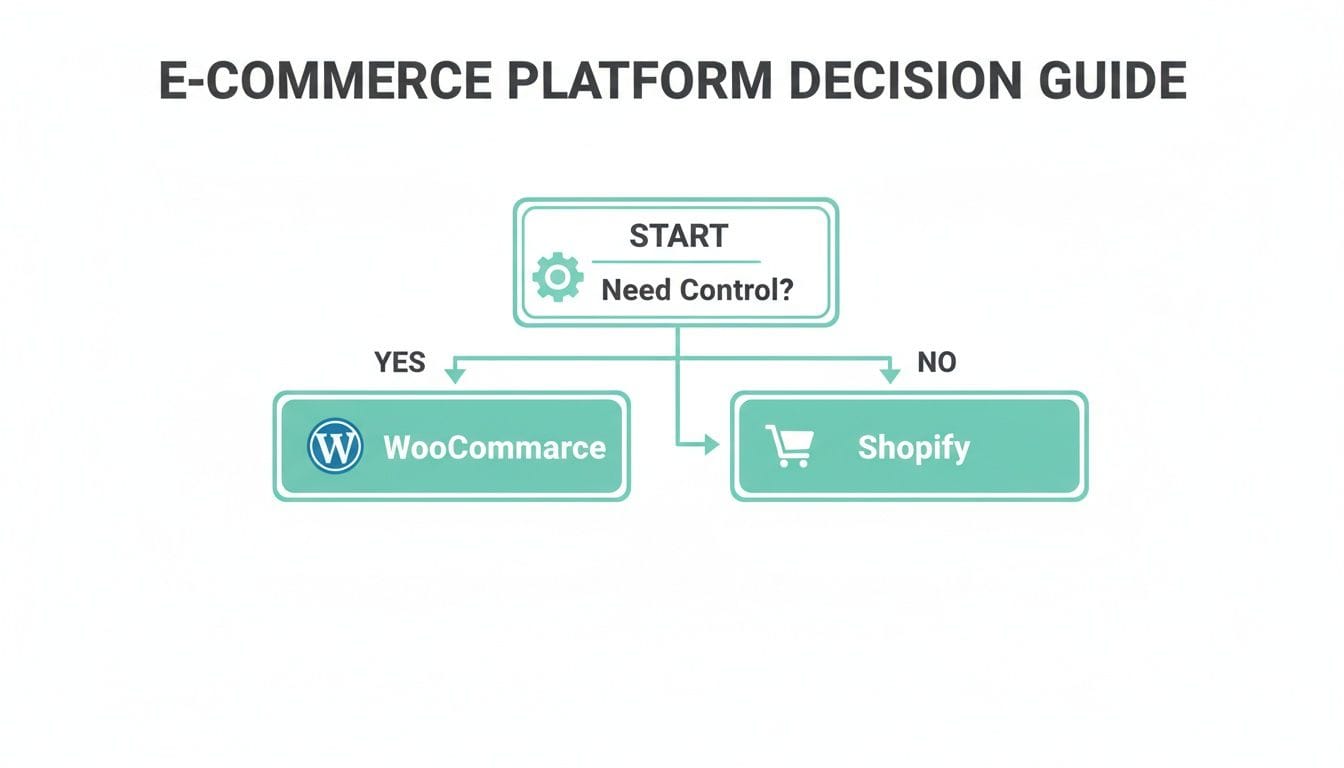
If you opted for a self-hosted platform like WooCommerce, you’ve chosen the path of ultimate control. This gives you total freedom over your payments, shipping rules, and tax setup, which is exactly what we’re about to dive into.
Setting Up Australian Payment Gateways
Deciding how to take people’s money is a massive decision. Get it wrong, and you'll lose sales right at the finish line. Aussies expect to see payment options they recognise and trust; a clunky or dodgy-looking checkout is a guaranteed way to send them running.
The good news is that plugging trusted payment gateways into a platform like WooCommerce is pretty straightforward these days. These services are the secure middleman, connecting your site to your customer’s bank and handling the transaction safely.
For any Australian business, there are a few go-to options you should seriously consider:
- Stripe: A global giant known for its slick interface and easy integration. It handles credit/debit cards, Apple Pay, and Google Pay without a fuss.
- eWay: A homegrown hero that’s well-trusted in the local market. The big advantage here is their excellent Aussie-based support and rates geared for local businesses.
- PayPal: Everyone knows PayPal. Just having its logo on your site can boost conversions because so many shoppers already have an account and prefer its security.
When you're comparing them, don't just get fixated on the transaction fee percentage. You also need to look at any monthly fees, their security features, and how easily they talk to your e-commerce platform. For most people starting out, Stripe’s simple, pay-as-you-go pricing is a brilliant place to start.
Mastering Shipping and Deliveries
Shipping. This is where so many new online sellers get bogged down. It can feel horribly complex, but if you break it down into logical pieces, it's much more manageable. The goal is simple: offer fair, clear shipping costs that don't secretly destroy your profit margin.
And make no mistake, getting this right matters. In 2025, Australia’s online retail sector ballooned to a mind-boggling $82.6 billion. That incredible growth was driven by 82% of Australian households buying online, with 68% of them saying convenience was their number one reason. You can read more about this huge market shift in KPMG's detailed Australian retail outlook. A confusing shipping setup is the exact opposite of convenient.
Start by defining your shipping zones. For a typical Aussie business, this might look something like this:
- Zone 1: Local Delivery (your city or specific postcodes)
- Zone 2: State-wide (e.g., all of NSW)
- Zone 3: National (all other Australian states and territories)
- Zone 4: International (e.g., New Zealand, USA)
Once you have your zones, you can set different shipping rates for each.
Practical Example: Let's say you're a Sydney-based store selling art prints. You might offer a $5 flat rate for Sydney postcodes, a $12 flat rate for the rest of Australia, and then use real-time carrier rates from Australia Post for any international orders. This gives local buyers a simple, cheap option while ensuring you're not losing money on shipping to Perth or overseas. WooCommerce has excellent shipping zone setup guides to walk you through this process.
Crafting a Fair Returns Policy
A clear and fair returns policy isn't just a "nice-to-have"—it's a legal requirement under Australian Consumer Law. More than that, it's a powerful way to build trust. A shopper is far more likely to click "buy" if they know there's a simple process for returns if something isn't quite right.
Make sure your policy is easy to find on your site and written in plain English, not legal jargon. It needs to clearly state:
- The timeframe for a return (e.g., 30 days from purchase).
- The required condition of the item (e.g., unworn, with tags still attached).
- Who pays for the return shipping (the customer or you).
- What you offer in return: a refund, an exchange, or store credit.
If you want to dig deeper into the legal side of running your operation, you might find our guide on how to start a home business helpful.
Configuring GST for Compliance
Finally, let's talk tax. If you're registered for GST (or need to be), you have to set it up correctly in your store from day one. Thankfully, most e-commerce platforms have built-in tax settings that make this pretty painless.
You'll need to create a tax rule that applies a 10% GST rate to all sales delivered to an Australian address. Your platform should automatically add this tax at checkout and show it clearly on the order summary and final invoice. It’s vital that your prices are either listed as "including GST" or that the tax is added transparently. Nothing kills trust faster than a surprise tax bill on the final checkout page. Platforms like WooCommerce provide detailed information on how to set up Australian GST correctly.
Host your website with our 5-star rated, cPanel website hosting plans.
Super fast servers, with security included and hosted in your choice of Australian Data Center.
View cPanel Plans
Marketing Your New Australian Online Store
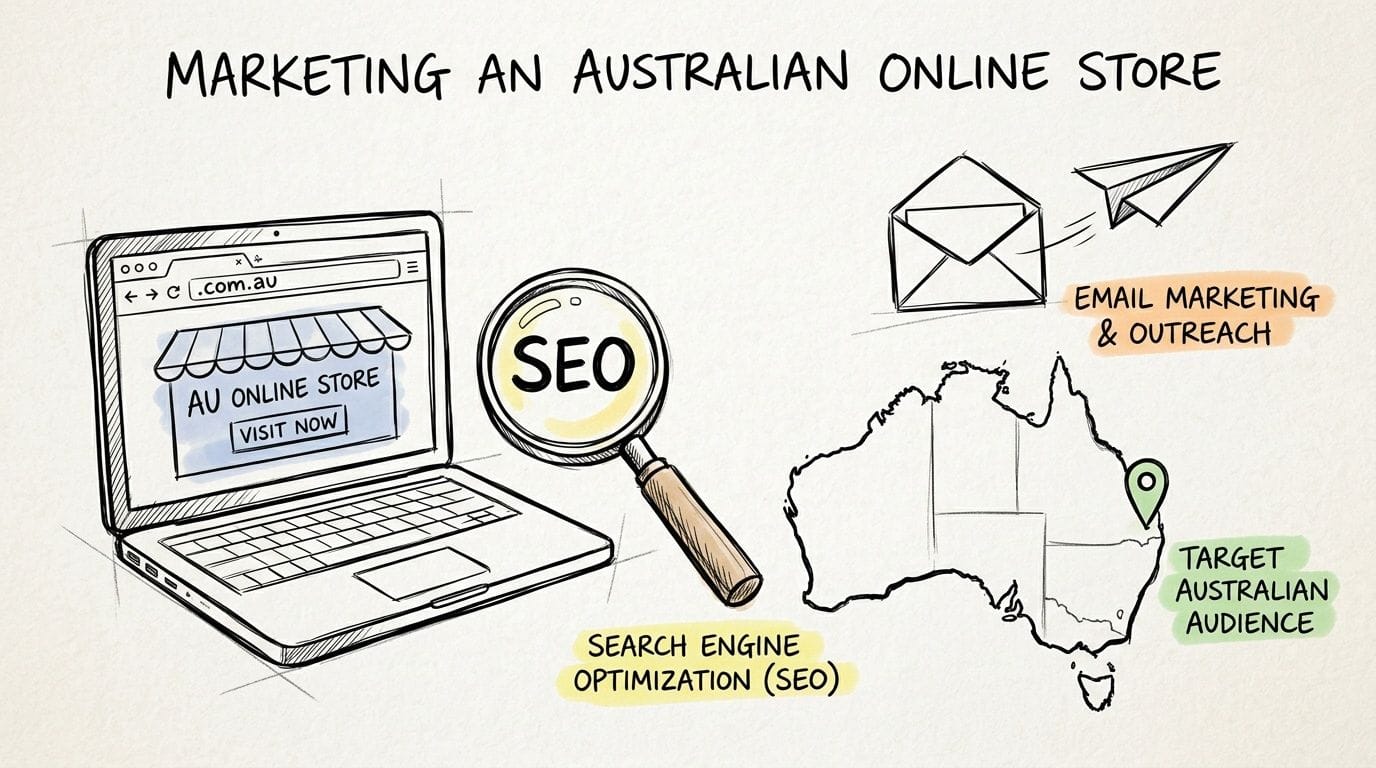
You’ve built the store, set up your payment systems, and figured out shipping. Now for the most important part: getting customers. Hitting 'publish' on your site is just the starting line. To actually make sales, you need a smart marketing plan built specifically for Aussie shoppers.
Marketing an online store in Australia is all about thinking local. You’re not just up against other Australian businesses; you’re fighting for the attention of your neighbours. This is where you can use your local identity as a powerful advantage.
Building Your SEO Foundation
Search Engine Optimisation (SEO) is how you get your store to show up when people search on Google. When someone in Australia is looking for a product you sell, you want to be on that first page. The good news? Your .com.au domain and local Australian hosting already give you a leg up, telling Google you’re a great match for Aussie shoppers.
Now, it’s time to focus on local keywords. Think like your customers. Instead of just aiming for "handmade leather wallets," target phrases people actually search for, like "handmade leather wallets Sydney" or "buy leather wallet online Australia."
Here are a few immediate SEO actions you should take:
- Set up a Google Business Profile: It's a free tool that gets you on Google Search and Maps. This is absolutely essential for capturing "near me" searches and instantly makes your business look more credible.
- Optimise Your Pages: Make sure your product titles, category names, and descriptions use your target keywords naturally. A product title like "Men's Full-Grain Leather Bifold Wallet – Made in Australia" is far more effective.
- Focus on Site Speed: We’ve said it before, but it’s critical. Fast loading times, powered by local hosting, make for a better user experience and are a huge tick in Google's books.
If you’re serious about climbing the search rankings, exploring our search engine optimisation services can give you the expert strategy needed to get ahead of the competition.
Leveraging Content and Email Marketing
Content marketing is one of the most powerful and cost-effective ways to attract customers and build a brand they trust. If you're using WordPress and WooCommerce, your built-in blog is the perfect place to start. You can write articles that answer common questions, tell the story behind your products, or offer genuinely helpful advice.
Practical Example: If you sell eco-friendly cleaning products in Australia, a blog post like "A Guide to a Chemical-Free Kitchen Clean Using Aussie Ingredients" will attract people interested in that niche and position you as an expert. This helps build a loyal following and gives you great content to share across social media.
Email is your direct line to your most valuable customers, perfect for new product announcements, exclusive discounts, and driving repeat business. But for it to work, your emails have to look the part.
A critical part of building this trust is sending emails from a professional address linked to your domain (e.g., sales@yourstore.com.au), not a generic Gmail or Hotmail account. This small detail makes your business look established and secure. All our UpTime hosting plans include professional email accounts to help you build that crucial customer trust from day one.
To effectively promote your products and reach a wider audience across various channels, consult a detailed Modern Guide to Advertising in E-Commerce for comprehensive strategies.
Your Simple Store Launch Plan
You don't need a huge budget for a successful launch. A simple, coordinated plan is all it takes to build momentum and get those crucial first sales over the line.
Here’s a basic framework to get you started:
- Pre-Launch (1-2 weeks out): Start creating some buzz on social media. Share behind-the-scenes glimpses and offer an exclusive "launch day" discount for anyone who signs up to your email list early.
- Launch Day: It’s time to go live! Announce your store is open across all your channels. Send a launch email to your early subscribers with their special discount code.
- Post-Launch (First month): Keep the momentum going with great content. Encourage your first few customers to leave reviews and share photos of your products in use. This kind of social proof is pure gold for building trust with new visitors.
This straightforward approach helps you focus your energy and ensures your new store opens with a bang, not a whisper.
Managing Your Store From Launch Day and Beyond
The big day is here, and your online store is officially open for business. While popping the champagne for your launch is a huge milestone, the real journey of selling online in Australia is just getting started. Now, the focus shifts from building your store to the day-to-day work of running it, growing it, and turning those first-time visitors into loyal customers.
Before you even think about announcing your launch, it’s wise to run a final pre-flight check. I always recommend doing a complete test transaction with your own credit card to make sure the money actually lands where it's supposed to. Fill out your contact form to confirm you're getting enquiries. It's also critical to check that your shipping rules are applying the right costs to different postcodes across Australia. Catching these little hiccups now will save you from major headaches later on.
Day-to-Day Store Operations
Once the orders start rolling in, your daily rhythm will settle around a few key tasks. The most urgent is always order fulfilment. This means promptly picking, packing, and getting products out the door and on their way to your customers.
Timely communication is everything here. You should have automated emails set up to confirm an order has been placed, and another one sent the moment it has been shipped, complete with tracking details. Alongside this, you'll be handling customer service—answering product questions, helping with order problems, or processing the occasional return. Responding quickly and helpfully is one of the most powerful ways to build a great reputation and get people coming back. And to make sure your products look their best, consider using an AI product photo editor to create crisp, professional images that appeal to the Australian market.
Weekly and Monthly Growth Activities
Once you've settled into a routine, it's time to zoom out from individual orders and look at the bigger picture—the overall health and performance of your business.
A massive part of this is regularly diving into your website analytics. Tools like Google Analytics offer a goldmine of information about who is visiting your site, how they found you, and what they do once they're there.
- Monitor Traffic Sources: Are people finding you through Google, social media, or clicking a direct link? Knowing this tells you exactly where your marketing efforts are paying off.
- Analyse Popular Pages: Which products or blog posts are getting all the attention? This is crucial insight that can guide what you stock and what you write about.
- Track Conversion Rates: What percentage of your visitors actually make a purchase? If this number feels low, it might be a red flag pointing to an issue with your pricing, product pages, or the checkout process itself.
Your website is your single most valuable business asset, and protecting it is non-negotiable. Just imagine losing all your customer orders, product data, and the design work you've spent months on. A server crash or a security breach could be catastrophic.
This is precisely why automated, reliable backups are your ultimate safety net. Think of services like our encrypted off-site nightly backups as a time machine for your business, letting you restore your site quickly if the worst happens. For a full rundown on keeping your site protected, our guide on web maintenance and support is an invaluable read.
Optimising for Peak Performance
Understanding when your customers are most active is the key to maximising sales. The Australian online retail scene is absolutely booming—in mid-2025, turnover hit a staggering $4,703.8 million in a single month, a 4.9% jump from the previous year. Research shows that peak shopping times are typically in the evenings (7 PM to 10 PM) and on weekends. Your site has to perform flawlessly during these high-traffic periods. You can discover more about these trends in the latest retail trade statistics from the ABS.
A slow website is a certified conversion killer. In fact, studies confirm that site speed issues are responsible for 9% of all shopping cart abandonments. This is where reliable Australian hosting with 24/7 monitoring makes all the difference, ensuring your store is fast, always online, and ready to turn those evening browsers into buyers. This constant vigilance is what truly transforms your 'build' phase into a sustainable 'grow' phase, powering your success long after launch day.
Your Top Questions About Selling Online in Australia, Answered
Jumping into the world of eCommerce is exciting, but it’s natural to have a few questions. When it comes to selling online in Australia, getting the right answers from the start can save you from a lot of costly headaches down the track. Let's walk through some of the most common queries we get from new Aussie store owners.
How Much Does It Cost to Start Selling Online in Australia?
The upfront cost to get an online store off the ground can vary a lot depending on what you’re selling, but it doesn’t have to break the bank. Your main, non-negotiable expenses will be:
- Business Registration: Registering your business name is a must. It’s pretty affordable, costing around $39 for one year or $88 for three years through ASIC.
- Domain Name: Your online address. A
.com.auor.audomain is crucial for building trust with Aussie shoppers and usually costs between $15 and $25 per year. - Website Hosting: Think of this as the rent for your digital shopfront. Quality Australian hosting plans from a provider like UpTime are surprisingly affordable, and we often have deals on your first invoice to help you get started on the right foot.
Of course, you'll also need to think about costs for your actual products (inventory), payment processing fees (typically a small slice of each sale), and your marketing budget. But a lean, smart startup can absolutely get going for just a few hundred dollars.
Do I Really Need an Australian Web Host?
Technically, no. But should you use one? Absolutely. Choosing an Australian web host gives you a serious leg-up on the competition. When you host with a local provider like UpTime Web Hosting, your website’s files are physically stored on servers right here in Australia—like in Sydney or Melbourne.
This might seem like a small detail, but it’s huge for performance. The physical closeness slashes latency, which means your website loads much, much faster for your Australian customers. A zippy site leads to happier users, fewer abandoned carts, and better rankings in local Google searches.
On top of the speed boost, hosting locally means your business and customer data are kept safe under Australian privacy laws. Plus, you get access to a support team that’s actually awake when you are. When something goes wrong, you don’t want to be waiting for a team on the other side of the world to start their day.
For a deeper dive, check out our guide on the essentials of website hosting.
What Are the Biggest Mistakes to Avoid When Starting Out?
We see a lot of new entrepreneurs trip over the same hurdles. One of the biggest is skipping over the boring-but-essential legal stuff, like getting an ABN and figuring out your GST obligations. Another classic mistake is picking a web host based on price alone, completely ignoring how poor performance and weak security can kill sales.
A clunky or confusing checkout process is another sure-fire way to lose customers. The same goes for launching your beautiful new store without any marketing plan to actually get people there.
But perhaps the most damaging mistake of all is failing to secure your site with an SSL certificate. Nothing screams "don't trust me with your credit card" like a "Not Secure" warning in the browser. To make sure our clients never face this, UpTime includes free SSL certificates with every single hosting plan, so your store is secure and trustworthy from day one.
Ready to build your online store on a foundation of speed, security, and local support? UpTime Web Hosting offers 100% Australian hosting designed to help your business succeed. Explore our plans today and give your customers the best possible online experience.