So, you're ready to start an online business in Australia. It's a fantastic journey, but it can feel a bit overwhelming at first. You've got an idea, but then there's the legal stuff like getting an ABN, building a website that actually works, and figuring out a marketing plan that brings in customers.
The good news? It's a completely manageable process when you break it down into clear steps. Think of this guide as your roadmap, designed to get you from that initial spark to a successful launch, day one and beyond.
Your Blueprint for a Successful Online Business
Jumping into the world of online business is an exciting move, filled with genuine opportunity. The digital marketplace isn't just growing; for many Aussies, it's now the main way they shop. This has created a fertile ground for new ideas and ventures to really take off. We've designed this guide to be your high-level plan, cutting through the jargon to focus on the practical steps you need to take right now.
We'll walk you through the whole process, from brainstorming your initial concept to getting the essential legal paperwork sorted. A big part of this will focus on Australian-specific needs, like registering for an Australian Business Number (ABN) and why securing a .au domain is a non-negotiable for building trust with local customers from the get-go.
The Opportunity in Australian eCommerce
Honestly, there's never been a better time to launch an online business in Australia. We've seen a massive shift in how people shop, and eCommerce has absolutely exploded.
Australians spent a staggering AU$69 billion on online goods in the last year alone—that's a huge 12% jump from the year before. This surge means online shopping now makes up 16.8% of all retail spending, a massive leap from just 10% before the pandemic. With nearly 9.8 million households clicking 'add to cart', the demand is clearly there.
Charting Your Course
To give you a clear picture of the path ahead, here’s a simple look at the key phases you'll move through to bring your online business to life.
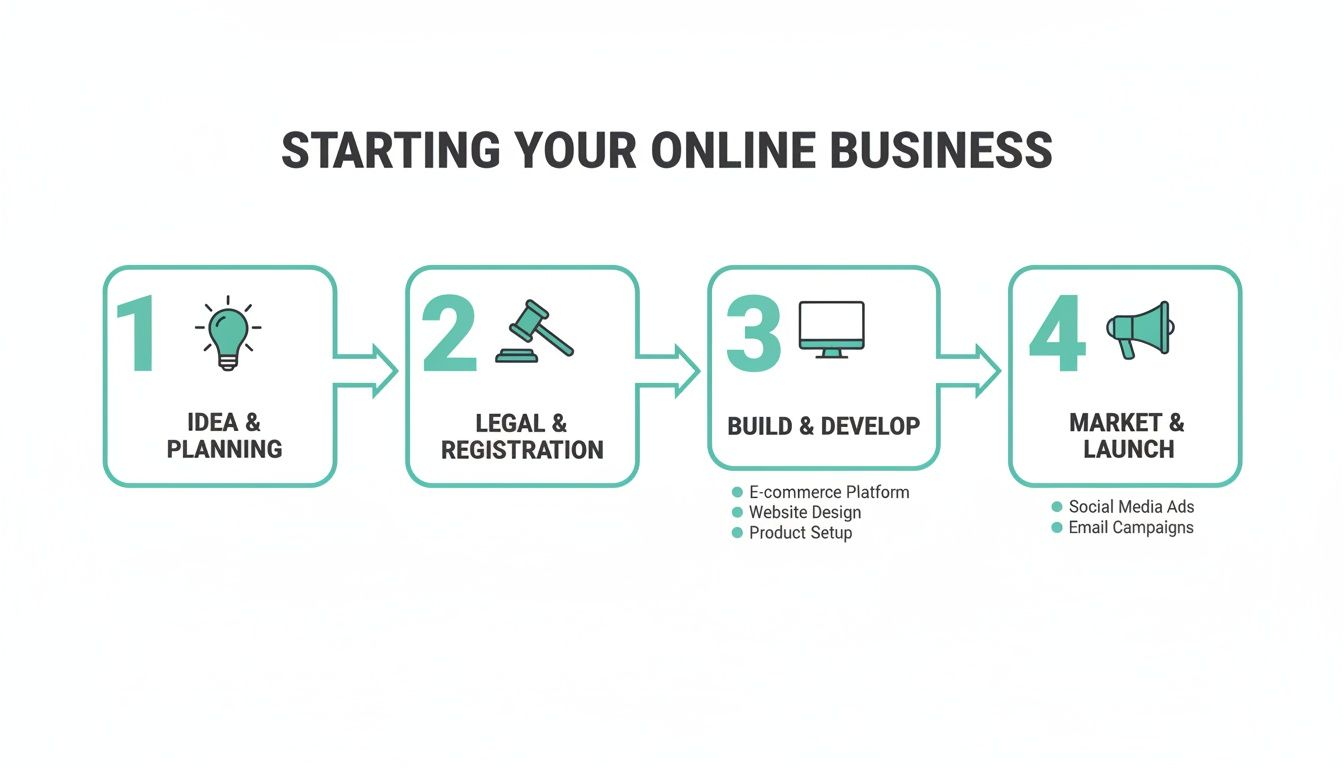
As you can see, success isn't about luck; it's built on a logical progression. It all starts with a great idea and moves through to a legally sound, well-built, and effectively marketed operation.
Think of this guide as your strategic checklist. Each section that follows will dive deeper into these phases, providing the practical details, tools, and insights needed to make informed decisions and avoid common pitfalls.
From choosing the right digital tools to launching a marketing plan that actually works, we’ve got you covered. Of course, a crucial part of any plan is understanding the costs involved. For a detailed breakdown, check out our guide on how much you need to build and manage your website.
Alright, let's get into it.

Performance you can feel, backed by clients who depend on it. Read how our support and uptime create long‑term customer success.Power Your Business with Better Hosting
Building Your Legal and Digital Foundations
Before you get caught up in the exciting stuff like logos and website designs, you need to pour the concrete slab. Getting your legal and digital house in order from day one is genuinely one of the smartest things you can do. It’s all about creating a solid base that prevents headaches down the track and sets you up for long-term success.
This first phase really runs on two parallel tracks: making your business official in the eyes of the Australian government and staking your claim on a unique piece of the internet. Let's walk through these crucial first steps to make sure your new venture is built to last.
Making It Official: The Legal Structure
First things first, you need to decide on a business structure. This decision will directly impact your tax obligations, personal liability, and the amount of paperwork you'll be dealing with. For most new online businesses in Australia, it usually boils down to two options.
- Sole Trader: This is the simplest and most popular starting point. You are the business. You trade under your own name and are personally responsible for any debts. It's incredibly straightforward to set up and manage, which makes it ideal for freelancers, consultants, or small-scale online sellers just getting started. For example, a freelance graphic designer selling digital prints online would typically start as a sole trader.
- Company (Pty Ltd): Registering a proprietary limited company creates a completely separate legal entity. This is a game-changer for protecting your personal assets, but it comes with higher setup costs and more rigorous reporting requirements. It’s the way to go if you have big plans to scale, want to attract investors, or simply want that extra layer of personal liability protection. For example, an online store with significant startup investment and plans to hire staff would benefit from a company structure.
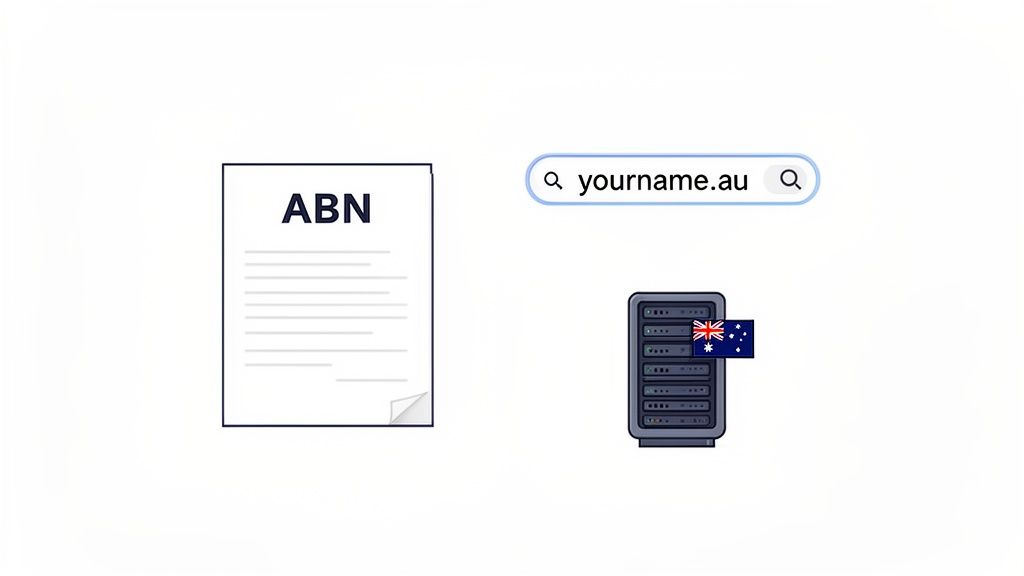
Once you’ve picked a structure, the next non-negotiable step is getting an Australian Business Number (ABN). This unique 11-digit number is your business's official identifier. You'll need it for just about everything – from registering a .au domain and sending out invoices to claiming GST credits. The good news? It’s free to apply for one through the Australian Business Register.
Securing Your Digital Address
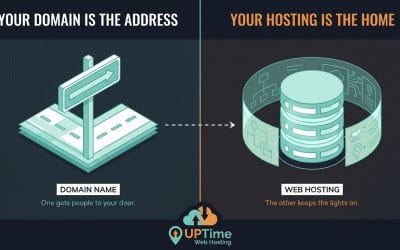
With the legal stuff sorted, it’s time to claim your patch of online real estate. That all begins with choosing the right domain name—your website's address and digital front door.
For any business serious about serving Australian customers, a .au domain is non-negotiable. It’s an instant signal to visitors that you’re a local business, which builds trust right off the bat. Time and time again, research shows that Aussie shoppers prefer to buy from local businesses, and your domain is the very first clue you give them.
Practical Tip: Keep your domain name short, memorable, and easy to spell. Steer clear of hyphens and numbers if you can. For example, if your business sells handmade candles in Melbourne, a name like
melbourneflame.com.auis far more effective and professional thanmelbourne-candles-online-store-123.com.au.
It’s a smart move to lock in your domain name as early as possible, even if your website is months away from launching. This stops anyone else from snapping it up. It's also vital to understand the difference between just registering a domain and truly owning it. To get the full picture, check out our guide on what it means to own your domain name.
Choosing Your Web Hosting Partner
Finally, your website needs a place to live online. That’s where web hosting comes in. Think of it as renting a plot of digital land where all your website's files and data are stored. While it might seem like a purely technical box to tick, your choice of hosting provider has a massive impact on your business.
For an Australian online business, choosing a local hosting provider with servers physically located in Australia is a game-changer. Here’s why it matters so much:
- Speed: Websites hosted on Aussie servers load significantly faster for Australian visitors. A snappy website means a better user experience and, just as importantly, better rankings on Google.
- Support: When you inevitably need a hand, you’ll be talking to a local team that operates in your time zone and understands the Aussie market. No more waiting for someone in another hemisphere to wake up.
- Reliability: A quality provider like UpTime Web Hosting offers a robust, secure home for your site with essentials like nightly backups and security monitoring, protecting all your hard work from technical disasters and online threats.
Nailing these foundational decisions from the get-go gives your online business the stability and credibility it needs to thrive.
Choosing the Right Platform to Build Your Website
Okay, you've sorted the legal stuff and secured your domain name. Now for the exciting part: actually building the digital home for your business. This is the storefront, the portfolio, the central hub where all your customer interactions will happen.
Picking the platform to build your website on is a massive decision. It will directly shape how your site works, how easy it is to manage day-to-day, and how well it can grow with you.
There’s no single "best" platform for every Aussie business. The right choice really comes down to what you're trying to achieve, what your budget looks like, and honestly, how comfortable you are with the tech side of things. Let's walk through the main options so you can make a smart choice from the get-go.

WordPress: The All-Round Powerhouse
When you think about building a website, WordPress is probably the first name that pops into your head. And for good reason. It’s the engine behind over 43% of all websites on the internet, offering an incredible mix of power and flexibility. As an open-source platform, it gives you total control over every aspect of your site's design and function.
For ambitious entrepreneurs who see their business growing, WordPress is the go-to. Add the WooCommerce plugin, and it instantly transforms into a serious ecommerce machine, ready to handle anything from a small collection of handmade goods to a catalogue with thousands of products.
- Ultimate Customisation: With a universe of themes and plugins available, if you can dream it, you can probably build it with WordPress.
- SEO-Friendly: Right out of the box, WordPress is structured in a way that search engines like Google love, giving you a head start on ranking.
- Scalability: It can start as a simple blog and evolve into a complex online store or a full-blown membership site without breaking a sweat.
The trade-off for all this power? It can feel a bit more involved than a simple drag-and-drop builder. But with a good managed WordPress host, the technical headaches like setup, security, and updates are taken care of for you.
Sitejet: The Simple and Speedy Solution
But what if you're a local consultant, artist, or service-based business owner who just needs a professional, great-looking website up and running fast? What if you never want to see a single line of code? This is where a drag-and-drop website builder like Sitejet is a game-changer.
These platforms are built for one thing: simplicity. You pick a professionally designed template, then just drag and drop elements like text, images, and contact forms right where you want them. You’re seeing exactly what your visitors will see, as you build it.
For so many new business owners, the main goal is just getting online quickly without it looking amateur. A website builder tears down the technical walls, letting you focus on your actual business instead of fighting with software.
It’s the most direct route from an idea to a live, working website. The platform handles all the tricky bits—hosting, security, updates—behind the scenes. If you want an all-in-one package that’s incredibly easy to use, this is an excellent place to start. For a closer look at the options, check out our guide on the best website builder for small business in Australia.
Windows Hosting: The Specialist's Choice
While the vast majority of websites run on Linux-based hosting (which is what WordPress and most builders use), there’s a specific niche for Windows hosting. This is the non-negotiable choice for businesses whose operations are built on Microsoft technologies.
If your website or application is coded in languages like ASP.NET or needs a Microsoft SQL Server (MSSQL) database to function, Windows hosting is your only option. You'll typically see this with businesses that have custom-built software, specific enterprise integrations, or developers who work exclusively in the Microsoft ecosystem. It's not for everyone, but for those who need it, it's essential.
Making the Right Decision for Your Business
Choosing your platform isn't just a technical detail; it’s a strategic business move. To help you figure out the best path for your new venture, this simple table breaks it down.
Comparing Your Website Platform Options
| Platform | Best For | Technical Skill Level | Key Advantage |
|---|---|---|---|
| WordPress | Growing ecommerce stores, content-heavy sites, and businesses wanting full control. | Beginner to Intermediate | Unmatched flexibility and scalability for long-term growth. |
| Sitejet | Beginners, service businesses, portfolios, and anyone needing a fast, professional launch. | Beginner | Extreme ease of use with a drag-and-drop interface. |
| Windows Hosting | Businesses using specific Microsoft technologies like ASP.NET and MSSQL. | Intermediate to Advanced | Essential compatibility for Microsoft-based applications. |
At the end of the day, your choice should make it easier for you to build and run your online presence, not harder. Don't be afraid to start simple. A business that gets online quickly with a website builder is miles ahead of one that's still stuck planning the "perfect" WordPress site six months from now.
The key is to pick the right tool for the job you have today, while keeping an eye on where you want to go tomorrow.
Host your website with our 5-star rated, cPanel website hosting plans.
Super fast servers, with security included and hosted in your choice of Australian Data Center.
View cPanel Plans
Securing Your Site and Preparing for Sales
You've picked your website platform – great! Now it's time to tackle two of the most critical pieces of the puzzle for any online business: rock-solid security and a seamless way to get paid.
Let's be blunt: a slow or unsecured website doesn't just look unprofessional; it actively scares potential customers away. In this section, we’ll walk through how to build a digital fortress around your hard work and set up your business to start making money.
Think of website security not as an optional extra, but as the very foundation of customer trust. From the moment someone lands on your site, they're subconsciously looking for signals that tell them it's a safe place to browse and, more importantly, a safe place to open their wallet.
Building a Digital Fortress
For a new business, the thought of cyber attacks can be pretty daunting. But this is exactly where choosing a quality Australian host pays off. They handle the complex, technical security layers for you, turning confusing features into real-world protection that keeps your business safe and online.
Here are the absolute non-negotiables your host should be providing:
- Free SSL Certificate: This is what puts that little padlock icon in the browser's address bar. It encrypts the connection between your website and your visitors, protecting sensitive data like passwords and credit card details. Without one, browsers will flag your site as "Not Secure," which is a guaranteed way to lose a sale.
- Automatic Malware Scanning: A good host is proactive, constantly scanning your website files for any malicious code. If anything suspicious pops up, you get an alert, letting you clean it up before it can cause serious damage to your site or your hard-earned reputation.
- DDoS Protection: Distributed Denial-of-Service (DDoS) attacks are designed to flood your website with junk traffic, knocking it offline. A host with built-in DDoS protection acts like a bouncer at a club, filtering out this malicious traffic so your genuine customers can always get through.
These aren't just techy buzzwords; they are essential safeguards for your revenue and reputation. You can learn more about why this digital certificate is so vital in our detailed article explaining what SSL is and why you need it.
The Importance of Backups
Imagine this for a second: you wake up one morning and all your product listings, customer orders, and blog posts are just… gone. A server glitch or a cyber attack has wiped everything out. For most businesses, that’s a catastrophic, unrecoverable disaster. This is why reliable, automated backups are your ultimate safety net.
Your hosting provider should offer nightly, off-site backups. This means that every single night, a complete copy of your website is saved to a secure server in a completely different physical location. If the worst happens, you can restore your entire site with just a few clicks, minimising downtime and protecting your investment. You can find out more about our robust backup solutions in our knowledge base article on backups.
Setting Up to Get Paid
Once your site is locked down and secure, you need a way to actually process transactions. This is where payment gateways come into play. These services securely handle credit card payments, acting as the bridge between your website's checkout, your customer's bank, and your business bank account.
For any Australian business, it's crucial to offer payment options that people here know and trust. The goal is to make the checkout process as smooth and frictionless as possible.
Some of the most popular choices for Aussie businesses include:
- Stripe: A global leader known for its clean, simple interface and powerful developer tools. It's incredibly flexible and works perfectly with platforms like WooCommerce.
- PayPal: One of the most recognised names in online payments, period. Just offering PayPal as an option can boost your sales because so many customers already have an account and trust the brand implicitly.
- Afterpay: The "buy now, pay later" model is massive in Australia. Integrating a service like Afterpay can make higher-priced items feel more affordable for customers, often giving your average order value a nice bump.
As you get ready to start selling, taking the time to research the best payment gateway for small business is a crucial step for ensuring everything runs smoothly. Thankfully, most modern platforms make integrating these gateways incredibly straightforward, often just a matter of a few clicks to connect your account and you're good to go.
Your Marketing Playbook for a Killer Launch
Your website is live, secure, and ready to take orders. Fantastic. But now the real work begins: opening the digital doors and inviting people inside. A great website without traffic is like a beautiful shop tucked away in a laneway with no sign.
This isn't about throwing money at flashy ads. This is a practical marketing playbook designed for Aussie startups, focusing on smart, low-budget strategies you can put into action today. We'll cover the essentials for getting your business seen on Google, tapping into the social media platforms where your customers hang out, and building your most valuable asset—an email list—right from day one. These are the real-world tactics that drive growth.
Laying the SEO Groundwork
Search Engine Optimisation (SEO) is simply the art of helping Google understand what your business does so it can show your website to the right people. It's not about tricking the system; it's about making your site genuinely useful and easy for search engines to understand. For a new business, this means getting the basics right.
Start by identifying your primary keywords. What would a customer actually type into Google to find what you sell? If you're selling handmade leather wallets in Perth, your keywords are probably things like "handmade leather wallets Perth," "Australian leather goods," or "men's leather bifolds WA."
Once you have your list, gently weave these terms into your website's:
- Page Titles: The main heading that shows up in the browser tab and search results.
- Product Descriptions: Ditch the jargon and explain what you're selling using the words your customers use.
- Headings (H1, H2, H3): Use them to structure your content logically on each page.
- Blog Posts: Writing helpful articles around your keywords is a powerful long-term play. For example, a post titled "How to Care for Your Handmade Leather Wallet" could attract people who are ready to buy.
A crucial step for any local business, and one that's so often missed, is setting up a free Google Business Profile. This is what gets you on Google Maps and in the "local pack" search results. Fill it out completely with your ABN, address (if you have one), opening hours, and photos. It's one of the fastest ways to start pulling in nearby customers.
Tapping into Social Media
While SEO is a long game, social media gives you a direct line to your audience from the moment you launch. The secret isn't to be on every platform, but to be where your ideal customers actually are. For Australian businesses, the data tells a pretty clear story.
Forecasts show over 23.3 million active internet users in Australia, which is a whopping 91% of the population. This is fuelling a massive social commerce trend. In fact, 57% of Aussies have already bought something directly through social media. The platforms leading the charge are Facebook (58%) and Instagram (40%), with social commerce revenue projected to hit AU$8 billion by 2029. You can dig into more insights on Australia's social media habits on sproutsocial.com.
What this data shows is a clear path forward. You don't need to be everywhere. Focus your initial efforts on the platforms where your audience is already shopping and discovering new brands.
Let's look at a practical example: a new online boutique.
Imagine you’ve just launched a store selling eco-friendly baby clothes.
- Instagram: This is your visual playground. Post high-quality photos of your products, use relevant hashtags like
#ecobabyauor#australianmadebaby, and run targeted ads to reach new parents in specific postcodes. - Facebook: Create a business page and start joining relevant Aussie parenting groups. Share helpful content (like "5 Tips for a Sustainable Nursery") and genuinely engage in conversations to build a community and earn trust.
Build Your Most Valuable Asset: Your Email List
From the very first day your site goes live, you need to be collecting email addresses. Your email list is a direct channel to your most engaged customers. It's an audience you own, completely independent of fickle search engine algorithms or social media trends.
Start simple. Place a sign-up form in your website’s footer and maybe consider a pop-up that offers a small incentive. A tried-and-true strategy is offering a 10% discount on their first order in exchange for their email. It just works.
Once you have subscribers on your list, you can:
- Send a Welcome Series: An automated sequence of 2-3 emails that introduces your brand story and points them towards your best products.
- Announce New Products: Give your subscribers the first look at new arrivals. Make them feel like insiders.
- Run Exclusive Sales: Reward your list with special offers to drive repeat business and build that all-important loyalty.
To make this all more efficient as you grow, it’s worth looking into ecommerce marketing automation strategies. These tools can handle the repetitive tasks for you, freeing you up to focus on the bigger picture while your marketing works in the background to turn new subscribers into loyal customers.
Got Questions About Starting Your Online Business? Let's Get Them Answered.
Jumping into an online business is exciting, but it naturally comes with a lot of questions. From figuring out the costs to getting the legal stuff sorted, having clear answers is what gives you the confidence to actually get started. Let's tackle some of the most common queries we hear from aspiring Aussie entrepreneurs.
How Much Does It Really Cost to Start an Online Business in Australia?
The honest answer? It varies. But the good news is you don't need a fortune to get your idea off the ground.
Your main expenses are pretty straightforward: registering your business name (which is about $39 for a year), snagging a .com.au domain (around $20/year), and getting yourself some reliable web hosting.
You can find quality, value-packed hosting plans for just a few dollars a month. Many of these even bundle in essentials like a free SSL certificate, which is one less thing to pay for right at the start. Beyond that, you'll want to think about potential costs for any special software you need, inventory if you're selling physical products, and whatever you plan to spend on marketing.
A lean, service-based business can genuinely get up and running for just a few hundred dollars. An e-commerce store with a big product range will obviously need more upfront cash, but it's never been cheaper or easier to get started.
Do I Actually Need an ABN to Sell Online in Australia?
Yes, absolutely. If you're running a business here in Australia, getting an Australian Business Number (ABN) is non-negotiable. It’s the first step to making your operation official and you’ll need it for a bunch of critical tasks.
You'll need an ABN to:
- Register a .au domain name, which is a huge trust signal for local customers.
- Send out proper, tax-compliant invoices.
- Claim Goods and Services Tax (GST) credits once your business grows.
- Deal with government agencies and other businesses professionally.
Applying for an ABN is completely free on the Australian Business Register (ABR) website. Think of it as the legal foundation for everything you're about to build.
What's the Best Website Platform for a Beginner?
If you've never touched a line of code in your life, a modern website builder like Sitejet is a fantastic starting point. These tools use intuitive drag-and-drop editors and come loaded with professionally designed templates. You can get a genuinely beautiful site online in a matter of hours, not weeks.
Now, if you're willing to spend a little time learning something that offers more power down the track, WordPress is the undisputed king. It does have a slightly steeper learning curve, but the payoff is incredible flexibility. Many hosts, including UpTime, take the pain out of it by offering simple one-click WordPress installations and performance tools that manage the technical side for you. You get all the power without the usual headaches.
For a more detailed breakdown of your options, we've put together some helpful comparisons in our website builder knowledge base articles. Choosing the right platform now will save you a world of pain later on.
You've got the roadmap and the answers to your first big questions. The next step is giving your new online business a fast, reliable home. At UpTime Web Hosting, we're all about 100% Australian hosting with local support to help your venture fly from day one. Explore our hosting plans and launch your business today.