In 2026, think of your website as your hardest-working employee. It’s the one greeting customers at all hours, day or night, without ever needing a coffee break. Trying to run a business with just a social media page or an ancient, clunky website is like hanging a permanent "Closed" sign on your digital front door. Investing in professional small business website design services isn't just an expense anymore; it's one of the most important moves you can make for your business.
Why Your Website Is Your Most Important Employee
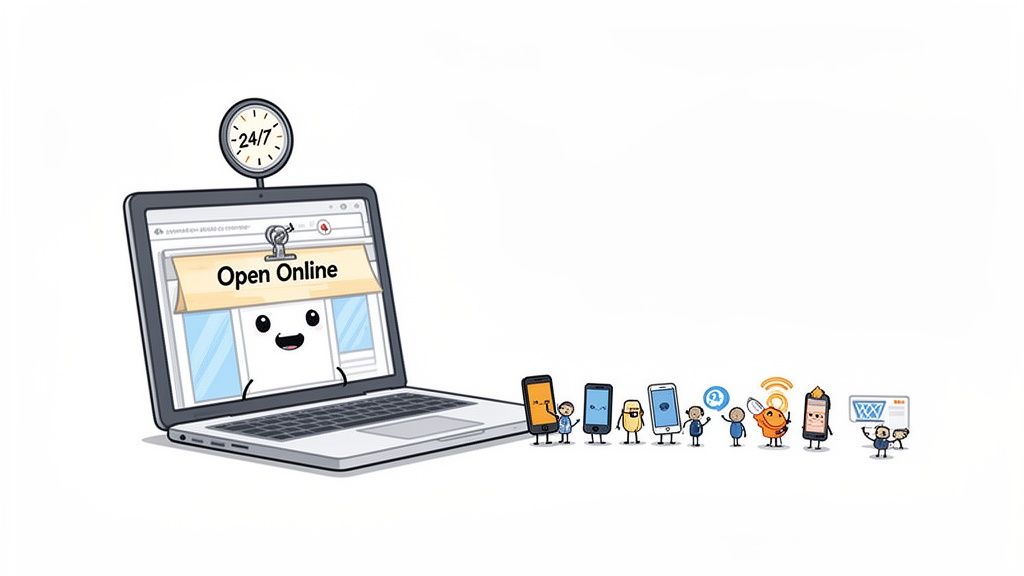
It helps to think of your website as your digital shopfront. Just like a physical store, the first impression matters—a lot. If your shop is cluttered, the lighting is terrible, or customers can't find what they're looking for, they’ll simply walk out. Your website is no different.
A well-built site becomes your tireless salesperson, receptionist, and support agent all rolled into one. It’s out there working for you around the clock, attracting new visitors, answering questions, and turning them into paying customers, even while you’re asleep. As more and more business happens online, having that 24/7 presence is absolutely essential.
The Mobile-First Reality for Australian Businesses
The game has changed. These days, a customer's first interaction with your business almost always happens on their smartphone. This isn’t a trend anymore; it's just the way things are, which makes a mobile-friendly site completely non-negotiable.
The numbers back this up. A late-2025 survey of Aussie small to medium businesses revealed that a massive 42% are planning a website redesign for 2026—a significant jump from 31% the year before. The driving force behind this? Mobile. With over 65% of first-time customer interactions now happening on a phone, old desktop-only sites are seeing their bounce rates soar and search rankings plummet.
A slow, broken, or clunky mobile experience isn't just a minor frustration. It’s a direct signal to more than half of your potential customers that your business isn’t up to scratch. A smooth mobile design ensures your "digital shopfront" is always open and inviting, no matter what device someone is using.
Turning Your Website into a Lead Generation Engine
But a great website does more than just look pretty; it actively works to grow your business. It’s the heart of your digital marketing, acting as the central hub that converts traffic from Google, social media, and email campaigns into actual leads and sales.
Think of it this way: a plumber in Perth with a well-optimised website can capture emergency leads from people frantically Googling "burst pipe help Perth." A clear "Call Now" button and a simple contact form can turn a moment of panic for a homeowner into a new job for the plumber in seconds. That's the power of smart, strategic design in action.
This is a fundamental shift in how business is done. If you're just getting started, our guide on how to start an online business in Australia provides a great roadmap, and a professional website is the absolute cornerstone of that journey.

Performance you can feel, backed by clients who depend on it. Read how our support and uptime create long‑term customer success.Power Your Business with Better Hosting
What You Actually Get With Website Design Services
When you pay for small business website design services, you're buying a lot more than just a nice-looking homepage. It’s not just about aesthetics; it's about building a functional business asset from the ground up.
Think of it like hiring an architect and a builder for a new shop. You get the blueprints, a solid foundation, properly wired rooms, and finally, the keys to the front door. A professional website project is no different—it delivers a complete package that's ready to start attracting customers.
The first step is always the blueprint, which in the web world are your custom design mockups. This is where a designer takes your brand, your goals, and who you're trying to reach, and turns it all into a visual concept. It’s far more than picking colours; it's about mapping out the path a visitor will take, from the moment they land on your site to the moment they buy something or send an enquiry.
From Blueprint to Functional Reality
Once you’ve signed off on the design, the "construction" phase kicks in. This is where those mockups are coded into a live, working website. One of the most critical parts of this is ensuring the site has a responsive design.
This simply means your website will look great and work perfectly whether someone is viewing it on a huge desktop monitor or on their phone while waiting for a coffee. It’s not a "nice-to-have" anymore; it's absolutely essential for reaching today's on-the-go audience.
Next, your developer will set up a Content Management System (CMS). This is the engine room of your website.
Think of a CMS as the keys to your new digital storefront. It gives you the power to update text, swap out images, or publish a new blog post without having to call a developer or learn a single line of code.
For most small businesses in Australia, WordPress is the go-to CMS. It’s incredibly flexible, and its massive library of plugins means it can be adapted for almost any need, from a simple menu for a cafe to a complex booking system for a consultant.
Core Deliverables in a Website Design Package
Beyond the look and the underlying code, a proper website package should include a few other non-negotiables. Each one plays a part in turning your site into a tool that actually grows your business. To get a real sense of what quality looks like, it pays to familiarise yourself with the 10 Website Design Best Practices for Small Businesses.
A professional web design package should always deliver:
- Foundational SEO: This is the digital equivalent of putting a big, clear sign above your shop door. It involves setting up your page titles, meta descriptions, and image tags so search engines like Google can understand what your business is about and show it to the right people.
- eCommerce Integration: If you’re selling products, this is a must. It covers setting up a secure online store, complete with product pages, a shopping cart, and a payment gateway so you can take payments safely and easily.
- Professional Content Integration: Your designer will take all your words and photos and place them strategically into the new design. Some agencies even offer copywriting or photography services to make sure your message is as professional as your new site.
It's shocking, but 41% of Australian small businesses still don't have a website, often relying entirely on social media. This is a huge risk, especially when you consider that 94% of first impressions online are related to web design. A professional site builds trust in a way social media can't. You can reviewing the latest Australian website design statistics to see just how much a good site matters.
This gap presents a massive opportunity for savvy businesses to get ahead. The first step is understanding what goes into a website and what it might cost, and you can learn more about budgeting with our guide to website creation costs.
How Site Speed and Security Impact Your Bottom Line
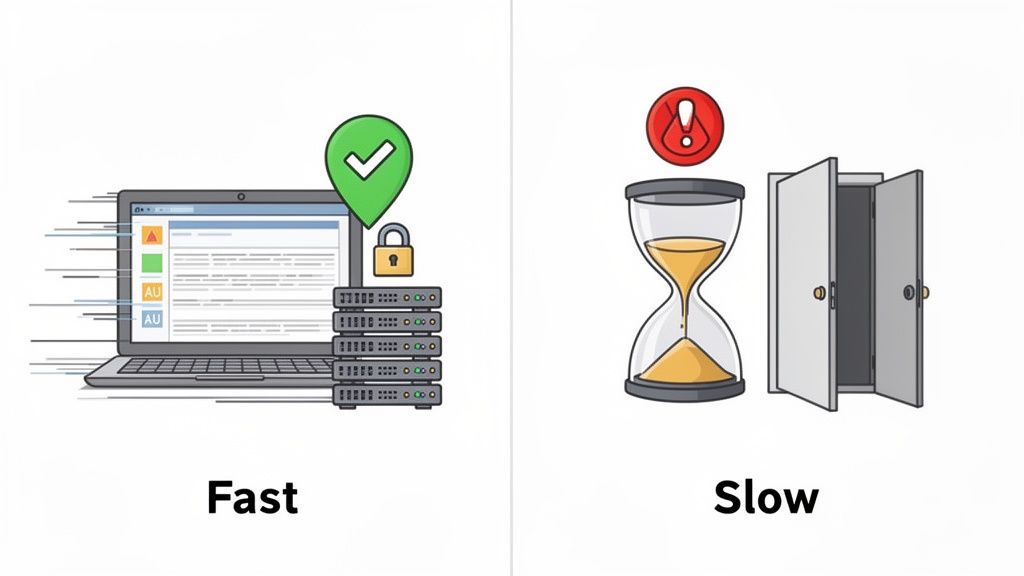
Think of it this way: a beautiful website that’s slow or insecure is like a stunning shop with a broken door and flimsy locks. It puts customers off before they even step inside and leaves your business wide open to trouble. When you're looking at small business website design services, speed and security aren't just tech specs—they're fundamental to your success.
Slow loading times are a silent conversion killer. Be honest, how long do you wait for a page to load before hitting the 'back' button? Not long, right? Your customers are exactly the same.
In fact, a tiny one-second delay in page load time can slash conversions by a staggering 7%. Worse, studies show 40% of users will simply leave if a site takes longer than three seconds to load. For businesses in Sydney or Melbourne, where "near me" searches are gold, Google actively punishes slow mobile pages by pushing them down the search results. Just ask the Sydney accounting firm that saw a 43% jump in bookings after launching a faster, smarter site. You can even explore more about how local businesses are leveraging web design trends in Sydney.
The Australian Advantage of Local Hosting
So, what actually makes a website fast? A massive factor is the physical distance your data has to travel. If your website is hosted on a server in the US, a visitor from Brisbane has to wait for that information to ping all the way across the Pacific Ocean and back again.
This is exactly why Australian-based hosting is vital for local businesses. By choosing a provider with data centres right here—like UpTime Web Hosting's servers in Sydney, Melbourne, Brisbane, and Perth—you dramatically cut down this travel time, known as "latency." The result? Information travels a shorter distance, pages load quicker, and your customers get a much smoother experience.
Choosing local hosting is like setting up your shop in the same city as your customers instead of on another continent. Everything is just faster and more responsive, which builds trust and keeps visitors engaged.
Security as Your Digital Front Door Lock
While speed invites customers in, security is what keeps them—and your business—safe. A website without solid security is an open invitation for hackers and can lead to a damaged reputation and serious financial pain.
Good website security comes down to two things: prevention and response. Think of them as having digital security guards and alarm systems for your business.
Here are the non-negotiables:
- SSL Certificates: This is the little padlock you see in the browser bar and what turns "http" into "https". It encrypts the connection between your website and your visitor, protecting sensitive data like contact details and credit card numbers from being stolen.
- Malware Scanning: This works like a security guard on patrol, constantly scanning for and removing nasty software that could hijack your site, steal information, or harm your visitors.
- Firewalls and DDoS Protection: A firewall is your website's bouncer, blocking shady traffic before it can cause any trouble. DDoS (Distributed Denial-of-Service) protection stops attackers from flooding your site with traffic to knock it offline.
These features aren't optional extras anymore. They are essential parts of any professional web design package, protecting your investment and making sure your customers feel safe doing business with you. On top of this, you can also improve your WordPress speed with a cache plugin to make a fast and secure foundation even better.
Host your website with our 5-star rated, cPanel website hosting plans.
Super fast servers, with security included and hosted in your choice of Australian Data Center.
View cPanel Plans
Breaking Down Website Design Costs and Timelines
So, you need a website. One of the very first questions on any business owner’s mind is, "How much is this going to cost, and how long will it take?" It’s a fair question, but the answer isn’t always simple. It's a bit like asking how much a car costs – a basic hatchback has a very different price tag to a custom-built performance vehicle.
Getting your head around the typical investment and timeline is vital for setting a realistic budget and managing expectations. The cost of small business website design services can swing wildly depending on the site's complexity, the level of custom work, and the specific features you need to run your business online.
A good designer or agency will always be upfront with a detailed quote. To arm yourself with the right knowledge, it's worth reading our detailed guide on what goes into web page design costs. This will help you spot any hidden fees and make a much more informed choice.
Understanding Common Pricing Tiers
Most website projects fall into one of three main buckets. Each one offers a different level of customisation and functionality, designed for businesses at different stages. You can think of it like buying a home: are you looking for a ready-to-move-in apartment, a semi-custom new build, or a completely bespoke, architect-designed house?
Here’s how that breaks down for websites:
Template-Based Websites: This is the fastest and most budget-friendly route. A designer will take a quality pre-built template and apply your brand's colours, logo, and content. It’s a fantastic starting point for brand new businesses or anyone on a tight budget.
Semi-Custom Websites: This is the sweet spot for many growing businesses. The project often starts with a solid foundation or theme, but the designer then builds significant custom layouts, features, and unique touches. You get far more flexibility than a straight template, without the price tag of a fully custom job.
Fully Custom Websites: This is the top-shelf option. The entire website is designed and developed from the ground up, just for you. It's the perfect fit for established businesses with very specific needs, complex integrations like booking systems, or a laser focus on a particular user experience.
Knowing which category you likely fall into helps you have a much more productive conversation with potential designers. For example, a local cafe just needing a menu and contact form would be perfectly served by a template-based site. An online store with thousands of products, on the other hand, is definitely heading into custom territory.
A Look at Typical Costs and Timelines
To give you a clearer picture, it helps to see what you can generally expect to invest in terms of money and time here in Australia. Just remember, these are ballpark figures. The final price will always depend on the specific agency or freelancer and exactly what's involved in your project.
To help you budget, we've put together a table outlining the common service tiers.
Typical Website Design Service Tiers
| Service Tier | Typical Cost Range (AUD) | Estimated Timeline | Best For |
|---|---|---|---|
| Template Customisation | $1,500 - $4,000 | 2-4 Weeks | New businesses, simple brochure sites, or those on a tight budget needing a professional online presence quickly. |
| Semi-Custom Design | $4,000 - $10,000 | 4-8 Weeks | Growing businesses that need a unique look, specific features, and more control over their brand presentation. |
| Fully Custom Build | $10,000+ | 8-16+ Weeks | Established businesses with complex needs, such as custom eCommerce, unique user workflows, or third-party system integrations. |
This table should give you a solid starting point for figuring out where your business fits and what kind of budget you should be planning for.
Crucial Tip: Always ask what's included after the website goes live. Make sure you clarify the number of revision rounds, if they provide any training on how to use your new site, and what ongoing support and maintenance options are on the table. This simple step can save you from a lot of unexpected costs down the track.
Choosing Your Web Design Partner
Figuring out who will build your website is one of the biggest calls you'll make for your business. Get it right, and you're setting yourself up for years of growth. Get it wrong, and you could be facing months of headaches and a serious dent in your bank account.
When it comes to small business website design services, you’ve really got three main paths to take: bringing a designer in-house, teaming up with an agency, or hiring a freelancer.
To make sense of it all, let's borrow a simple analogy from the food world.
The Three Flavours of Web Design Partners
Think of your options a bit like this:
Hiring In-House: This is like having your own personal, full-time chef. They're always on hand, know your tastes (your brand) inside and out, and can whip up whatever you need, whenever you need it. The catch? They come with a full-time salary and all the associated costs.
Partnering with an Agency: An agency is like a full-service catering company you'd hire for a big event. They roll in with a whole team—designers, developers, project managers, and strategists—to pull off a large project with absolute precision. They handle everything from start to finish, offering a complete package that's often on the pricier side.
Engaging a Freelancer: A freelancer is like hiring a specialist pastry chef to create a stunning wedding cake. They have incredible expertise in one specific area, are brought in for a single, well-defined project, and offer their focused skills for a set price. For smaller jobs, they’re often more flexible and affordable than an agency.
This decision tree shows how your budget often points you toward a certain website tier and, naturally, the type of partner who's the best fit for that project.
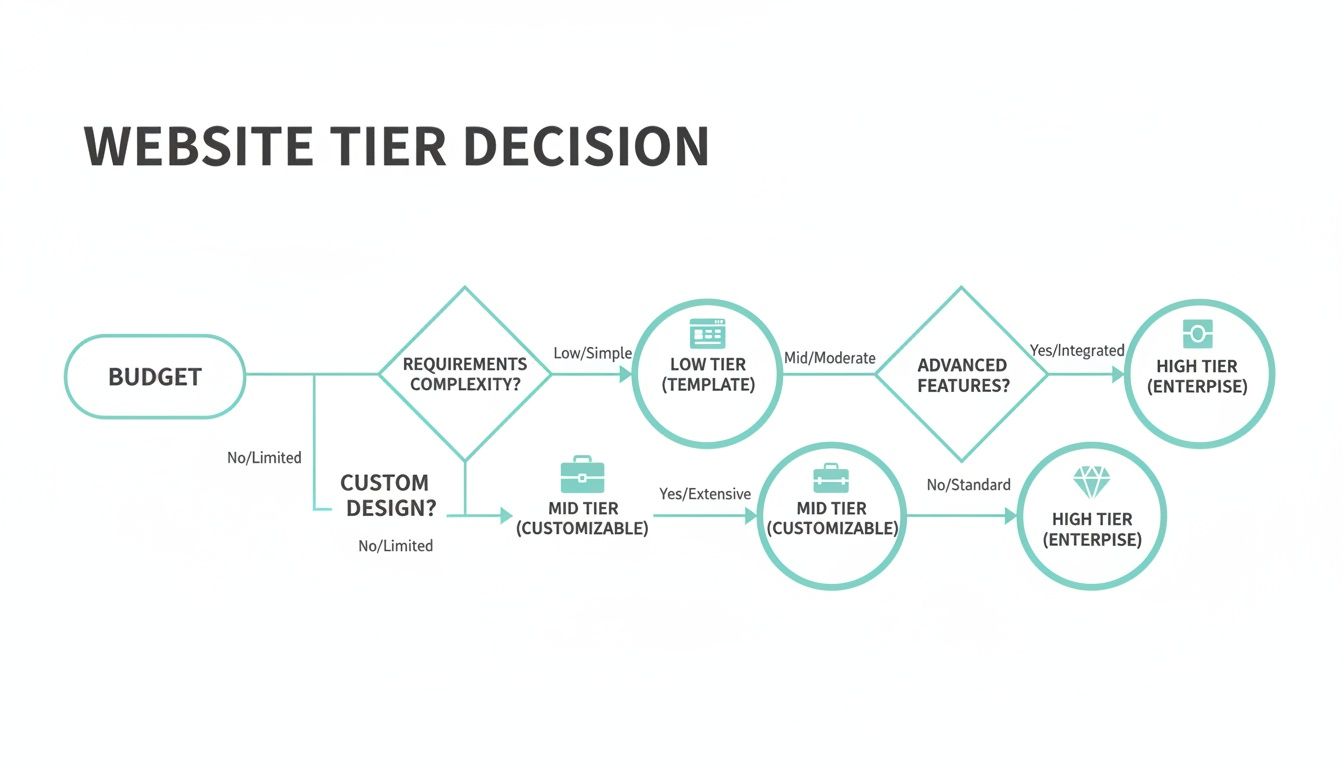
The main takeaway here is that your budget is the biggest driver. It directly shapes the level of custom design and features you can afford, which usually aligns perfectly with one of these three partner models.
Weighing the Pros and Cons
Each choice comes with its own set of trade-offs around cost, expertise, availability, and scale. An in-house designer gives you unmatched availability but is easily the most expensive option in the long run. Freelancers are fantastic for specific, one-off tasks but might be juggling multiple clients, limiting their availability.
As you look at your options, understanding the benefits of working with a professional web design agency can help you decide. Agencies offer a blended team of specialists—from SEO pros to graphic designers—all under one roof. This integrated approach helps avoid the communication breakdowns that can happen when you're trying to manage several freelancers at once.
For many small businesses, a hybrid approach hits the sweet spot. You might hire a freelance designer for a brilliant visual identity, then lean on a solid hosting provider like UpTime Web Hosting for the technical heavy lifting, security, and ongoing support.
This strategy gives you top-tier design talent without the overheads of an agency or a full-time employee. At the same time, your hosting partner takes care of all the critical backend jobs, making sure your site stays fast, secure, and always online. This balance of specialised skill and reliable infrastructure is a smart, cost-effective way to grow.
Of course, choosing the right platform is also crucial. You can dig into our analysis of Wix vs WordPress to see which content management system might be the best fit for your chosen path.
Your Checklist for Hiring a Website Designer
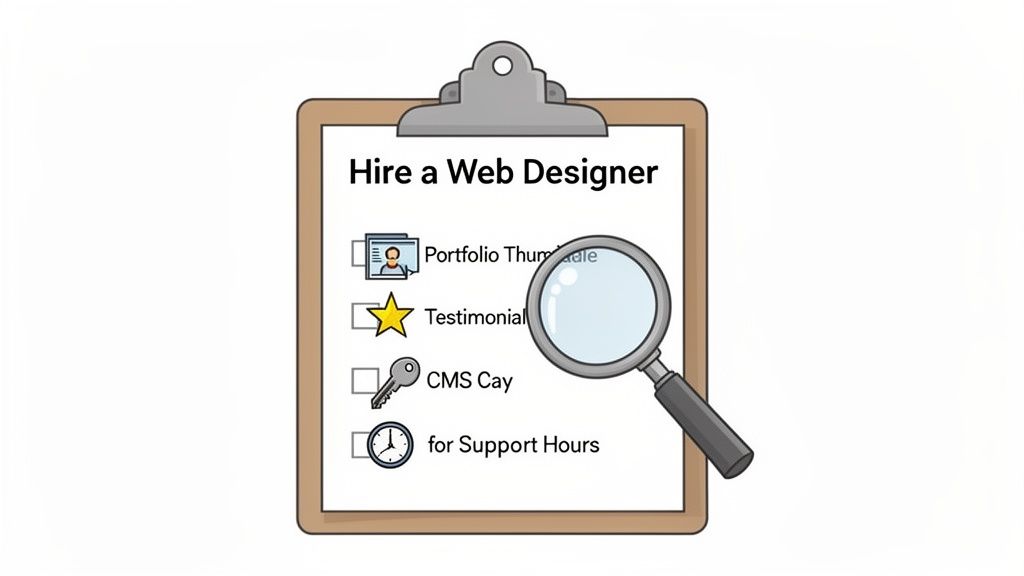
Choosing the right person or agency for your small business website design services is a massive decision. It’s not just about getting a good-looking site; it’s about finding a partner who genuinely gets what you’re trying to build.
To help you get it right, we’ve put together a practical checklist. Think of it like hiring a key team member. You need to look past the slick sales pitch and focus on their track record, their process, and whether they’re a good fit for your business.
Assess Their Work and Reputation
First things first, you need to do a bit of digging into their past work. A flashy portfolio is a decent start, but you’re looking for proof that they can deliver for a business just like yours.
Review Their Portfolio: Don’t just scroll through the pretty pictures. Look for websites they’ve built for businesses in your industry. If you’re opening a cafe in Perth, have they actually designed successful sites for other local hospitality businesses? This shows they understand your world.
Check Real Client Testimonials: Go beyond the glowing quotes they’ve picked for their homepage. Hunt down reviews on Google, LinkedIn, or other independent platforms. Even better, ask if you can have a quick chat with one or two of their past clients to get the real story.
Understand Their Design Process: A true professional will have a clear, structured plan. Ask them to walk you through it—from the initial discovery session and design mockups to development, feedback rounds, and the final launch. A step-by-step process is a great sign of an organised, reliable partner.
Key Questions to Ask About Support and SEO
A brilliant website launch is just the beginning. What happens the day after, and the month after that, is what really determines long-term success. Make sure you get clear answers to these questions before you sign on the dotted line.
The relationship with your web designer shouldn't stop the moment your site goes live. The best partners are invested in your growth and provide the support and tools you need to succeed long after the initial build is complete.
Here are the non-negotiables to ask:
- What does post-launch support look like? Is there a warranty period to fix any bugs? What does it cost to get ongoing maintenance or make small tweaks down the road?
- How do you handle foundational SEO? Do they just install a plugin and call it a day, or do they actually put in the work on keyword research, page titles, and meta descriptions to help you show up on Google?
- What training is included? Will they show you how to update your own content, add a new product, or publish a blog post? A great partner empowers you to take control of your own site.
Red Flags to Watch For
While you’re looking for all the right signs, it’s just as crucial to spot the red flags. Some promises are simply too good to be true and should have you running for the hills.
- Guarantees of #1 Google Rankings: Honestly, no one can guarantee a #1 spot on Google. It's a classic sales gimmick used to rope in unsuspecting clients, and it’s an impossible promise to keep. This is a huge sign of a dodgy operator.
- Vague Contracts or Pricing: Your proposal should be crystal clear. If the scope of work is fuzzy or the pricing is confusing, it's a recipe for disaster. Don't be afraid to walk away.
- Poor Communication: If they’re slow to respond or unclear in their emails while they’re trying to win your business, just imagine what it’ll be like once they’ve got your money.
For any Australian business, local know-how is essential. Check that your designer has experience with .au domain registrations, offers support during your business hours, and gives you transparent pricing that clearly states if GST is included. A local partner who understands the Aussie market will make the entire process smoother and more effective. For more tips, check out our guide on how to improve your website's performance.
Register your new domain name at competitive market prices including free domain add-ons like privacy, DNS Hosting, Custom Nameservers and Forwarding.
Always the best price and no nasty renewal price hikes.
Register A Domain Name
Got Questions About Website Design? We've Got Answers
As you get closer to kicking off your new website project, it's natural for practical questions to pop up. That’s a good thing—it shows you’re thinking strategically about your investment. Let's tackle some of the most common questions we hear from business owners just like you.
What Are the Ongoing Costs After My Website Is Built?
Once your site goes live, it doesn't just run on its own. There are a few small but crucial costs to keep it online, secure, and working properly. Think of it like the basic running costs of a brick-and-mortar shop—you’ve got to keep the lights on and the doors locked.
Typically, these ongoing costs include:
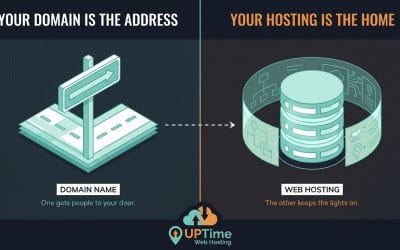
- Web Hosting: This is essentially the "rent" you pay for your website's home on the internet. It's the service that keeps your site visible to the world.
- Domain Name Renewal: This is the yearly fee to keep your unique website address (like
yourbusiness.com.au). - Maintenance Plans: Most agencies offer these plans to handle things like software updates, security checks, and regular backups. It’s like getting your work ute serviced to catch small issues before they become major, expensive problems.
To get a clearer idea of what hosting involves, you can check out our range of Australian web hosting options.
What Does "Mobile-First Design" Actually Mean?
You’ll hear this term a lot, and for good reason. "Mobile-first" is a design approach where we plan the website for the smallest screen—a smartphone—from the very beginning. Only after the mobile version is perfected do we adapt the design for larger screens like tablets and desktops.
It's not about just making a big website shrink to fit a small screen. It’s a deliberate strategy to prioritise what’s most important for the huge number of customers who will find you on their phones first. This ensures your contact number, address, and key services are easy to find and use on a small touchscreen, without any frustrating pinching or zooming.
How Do I Know If My New Website Is Actually Working?
Looks are one thing, but results are what matter. Measuring your website's success is the only way to know if you're getting a real return on your investment. Instead of guessing, you can track specific numbers that tell a clear story.
A great website isn't just one that looks good; it's an asset that actively helps you hit your business goals. When you track the right metrics, you can make smart decisions to improve its performance over time.
You can measure your site's success by keeping an eye on:
- Traffic: How many people are actually visiting your site?
- Conversion Rate: What percentage of those visitors are doing what you want them to do (like filling out a contact form or buying something)?
- Bounce Rate: How many people leave your site after looking at only one page? A lower number here is always better.
- Leads Generated: How many real enquiries or sales can you trace directly back to the website?
Getting a handle on these numbers is the first step. For a deeper dive into how a well-planned site can boost these figures, have a look at our guide on how to organise your website content.
Ready to build a website that works as hard as you do? UpTime Web Hosting offers fast, secure, and reliable Australian hosting that provides the perfect foundation for your new site. Start your online journey with us today.