Figuring out the cost of a new website can feel like guessing the length of a piece of string—the answer is always "it depends." In Australia, a web page design can range from a few hundred dollars for a basic DIY approach to $5,000–$50,000+ for a complex, custom-built site from a top-tier agency. The final price tag really hinges on how complex the design is, the features you need, and who you hire to build it.
To make it simpler, think of it like buying a car. You could get a reliable used hatchback (a DIY site), a brand-new family sedan (a template-based professional site), or a high-performance, custom-built vehicle (a fully bespoke agency site). Each option serves a different purpose and comes with a very different price. This guide will break down these choices so you have a clear picture of the investment your business needs.
The Three Tiers of Web Design Investment
To really get your head around the costs, it helps to understand the scope of comprehensive web design services available these days. Generally, they fall into three main approaches, each with its own cost structure and ideal use case.
This chart gives you a quick visual breakdown of the typical investment levels for DIY, template-based, and fully custom website projects in Australia.
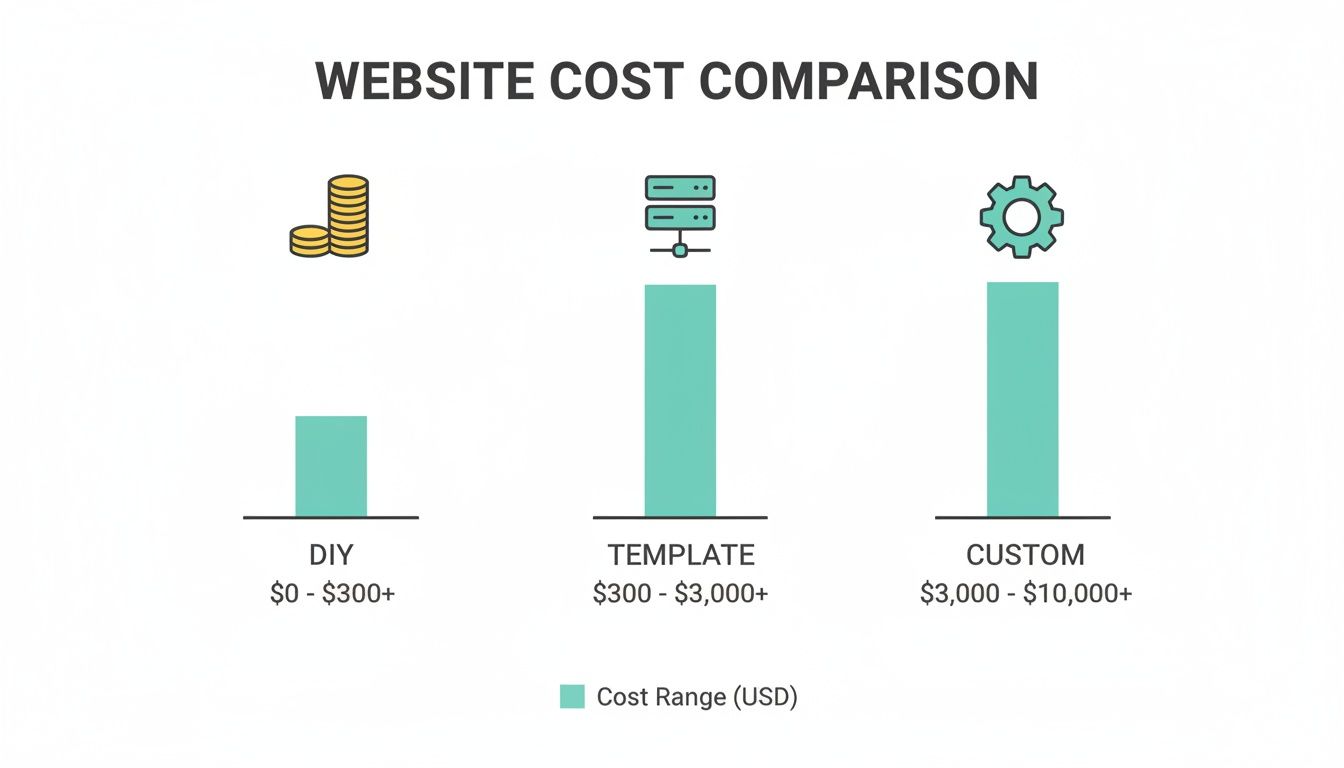
As you can see, the required investment grows quite a bit as you move from a self-managed DIY project to a professionally crafted custom solution with all the bells and whistles. Getting this clear from the start helps you line up your budget with your business goals.
Australian Web Page Design Costs At A Glance
To put it all into perspective, here’s a simple table summarising the typical costs you can expect for different types of website builds here in Australia.
| Website Build Approach | Typical Cost Range (AUD) | Best Suited For |
|---|---|---|
| DIY Website Builder | $300 – $800 | Startups, hobbyists, or businesses with very tight budgets needing a simple online presence. |
| Freelancer (Template-Based) | $1,500 – $5,000 | Small businesses needing a professional, polished website without a fully custom design. |
| Freelancer (Custom Design) | $5,000 – $15,000 | Growing businesses wanting a unique design and specific features tailored to their brand. |
| Small Agency (Custom Design) | $15,000 – $30,000 | Established businesses looking for a strategic, high-performance website with more complex integrations. |
| Large Agency (Custom Design) | $30,000 – $100,000+ | Large companies and enterprises requiring extensive custom development, strategy, and ongoing support. |
This table should give you a solid baseline for what to expect, helping you figure out which path makes the most sense for your business right now.
Why A Clear Budget Matters
Setting a realistic budget is the most critical first step. It dictates whether you go down the DIY path, hire a freelancer, or partner with an agency, and it shapes the entire project's scope. Without a clear number in mind, you risk either overspending on features you don't really need or underspending and ending up with a site that can't actually help your business grow.
A well-planned website isn’t just an expense; it’s one of the most critical assets your business can own. Its initial cost should be viewed as an investment in your digital storefront, brand reputation, and future growth.
Understanding what drives the cost prepares you to make an informed decision. In the sections that follow, we'll explore everything from freelancer hourly rates and agency project fees to the ongoing expenses many business owners overlook, like hosting. For small businesses looking for value, exploring affordable web hosting in Australia is an excellent way to manage long-term costs effectively. This guide will give you the knowledge to create a precise budget and invest wisely in your online future.
Choosing Your Path: DIY, Freelancer, or Agency?
Deciding who will build your website is one of the biggest calls you'll make. It directly shapes your web page design cost, the timeline, and what you get at the end. You really have three main routes: rolling up your sleeves and doing it yourself (DIY), hiring a solo expert (a freelancer), or bringing in a full team (an agency). Each path has its own pros and cons, and the right one for you depends on your business, your budget, and your goals.
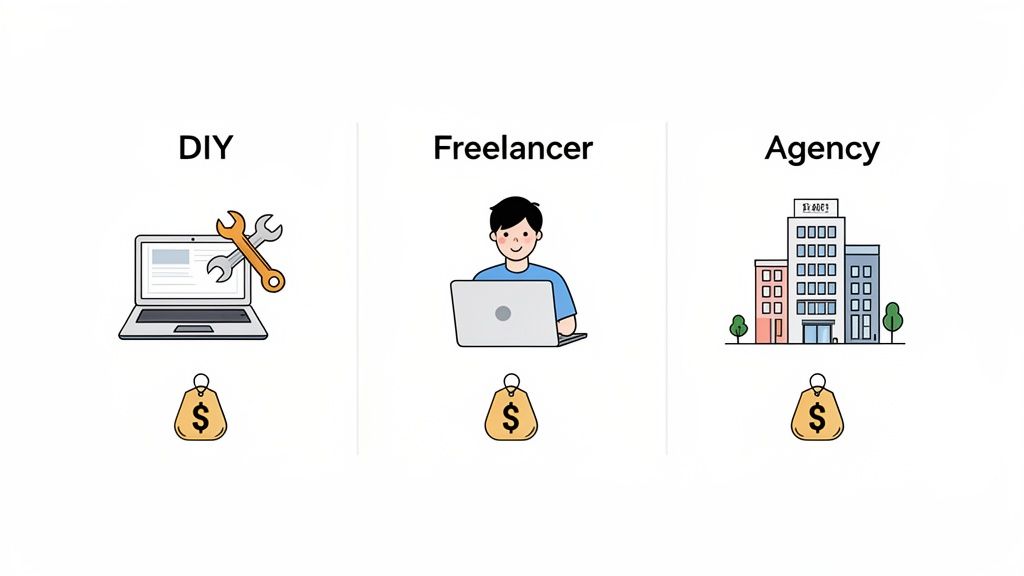
Think of it like renovating a kitchen. The DIY approach saves you the most money, but you’ll have to learn plumbing, tiling, and maybe even a bit of electrical work. Hiring a freelancer is like getting a skilled carpenter to build and install your cabinets perfectly. An agency? That’s the full-service contractor who handles everything from the initial design and demolition right through to the final coat of paint.
The Do-It-Yourself (DIY) Approach
Going DIY is easily the most budget-friendly option. It's a great fit for startups, hobbyists, or any business just getting off the ground with minimal cash to spend. These days, modern website builders have made this path incredibly accessible with drag-and-drop tools and ready-made templates, so you don't need to know a single line of code.
- Practical Example: A local artisan who makes custom jewellery needs a simple online gallery for their work and a contact form. Using a platform like Wix or Squarespace, they can build a visually appealing 3-4 page site themselves over a weekend for less than $400 a year.
- Pros: The lowest upfront cost, you have total creative control, and you can make updates instantly whenever you want.
- Cons: It can be a massive time sink, the final quality rests entirely on your design skills, and you might not have the technical SEO know-how to get your site ranking.
With this approach, your biggest costs are your own time and a subscription to a platform. If you're leaning this way, check out our guide on the best website builder for a small business in Australia to find the right tool for the job.
Hiring a Freelancer
When you need a professional finish but aren't quite ready for a massive project, a freelancer is the perfect middle ground. These independent pros often specialise in specific areas like WordPress development, graphic design, or eCommerce, bringing a deep level of expertise in their chosen field.
- Practical Example: A growing consulting firm needs a polished, credible site that builds trust and generates leads. They hire a freelance web designer for $4,000 to customise a premium WordPress theme, ensuring a professional look and a clear user journey without the overheads of an agency.
Freelancers give you a personalised service, meaning you're talking directly to the person doing the actual work. This one-on-one relationship can make the whole process super efficient and ensure the final product is exactly what you envisioned.
The only catch is that a freelancer's time can be limited, and they might not have a broad skillset that covers marketing, copywriting, and high-level strategy. The web page design cost is definitely higher than DIY but is usually much more affordable than an agency.
Partnering With a Web Design Agency
An agency brings a whole team of specialists to your project—we're talking designers, developers, marketers, copywriters, and project managers. This all-in-one approach is best for established businesses with more complex needs.
- Practical Example: A national retailer wants to launch a powerful eCommerce platform with custom inventory management, integration with their in-store POS system, and an ongoing digital marketing plan. They partner with an agency for $40,000 to handle the complex build and ongoing SEO strategy.
- Pros: You get access to a huge range of experts, a streamlined and managed process, and a strategic approach that lines up your website with your bigger business goals.
- Cons: This is the most expensive option by a long shot, and the process can be less flexible than working directly with a freelancer because of their structured workflows.
The price difference between these options is pretty significant. In Australia, freelance web designers typically charge somewhere between $50–$150 per hour, while agencies will set you back $80–$200 per hour or more. In big cities, those rates can climb even higher—Sydney freelancers, for instance, average around $120/hour.
It’s also worth remembering that many small businesses outgrow their basic DIY platforms within just two years. When that happens, they face a pretty hefty bill to move their site somewhere else. Choosing the right path from the get-go helps make sure your initial investment keeps paying off as you grow.

Performance you can feel, backed by clients who depend on it. Read how our support and uptime create long‑term customer success.Power Your Business with Better Hosting
The Key Factors That Drive Your Website Quote
Getting a web design quote can sometimes feel like you're trying to decipher a mechanic's estimate—a long list of parts and labour that mysteriously adds up to a big number. But understanding what actually goes into that final figure is the key to making sure you get exactly what you pay for. The web page design cost isn't just a number pulled out of thin air; it’s a direct reflection of the time, skill, and complexity needed to build your digital home.
Think of it like building a house. The final cost depends on the size, the materials you choose, and any custom features you want. A simple five-page website is a bit like a cosy one-bedroom flat—functional, straightforward, and affordable. On the other hand, a 50-page site with an online store and a private member's area is more like building a multi-storey home with a pool and custom cabinetry. It just requires a lot more resources to get the job done.
Number and Complexity of Pages
The most straightforward factor that shapes your quote is the page count. It’s a simple equation: more pages mean more work. Every single page needs its own design, content layout, and optimisation. A simple "About Us" page takes far less effort to put together than a dynamic "Services" page loaded with interactive elements and multiple, detailed sections.
Let’s look at two quick scenarios:
- Website A: A local plumber needs five basic pages—Home, About, Services, FAQs, and a Contact form. This is a pretty standard, predictable project, likely falling in the $4,000 - $6,000 range.
- Website B: A real estate agency needs over 20 pages. This includes individual property listings that need constant updates from a third-party feed, unique agent profile pages, and a regularly updated blog. The cost here could easily exceed $15,000.
It’s easy to see that Website B will cost a lot more. It's not just about the higher page count, but also the complexity and the need for dynamic, ever-changing content.
Custom Design vs Templates
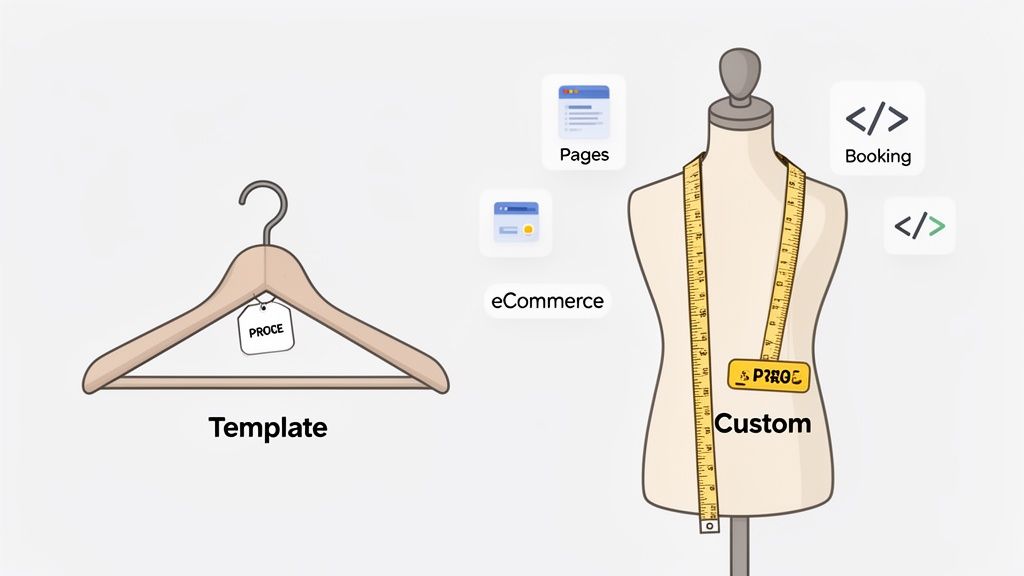
This is one of the biggest forks in the road for your budget, and it really comes down to one question: do you want an off-the-rack suit or a tailored one? A website template is like that off-the-rack suit—it’s fast, affordable, and generally looks good. A custom design is a fully tailored suit, crafted from scratch to fit your brand, goals, and audience perfectly.
A template gives you a pre-built framework, which dramatically cuts down on design and development time. The trade-off? You're locked into the template's structure, and your site might end up looking a bit like others who used the same one. A custom design, however, gives you complete creative freedom but requires a lot more time from designers and developers to create wireframes, mockups, and unique code from the ground up.
A custom design is a strategic investment in your brand's unique identity. While a template gets you online quickly, a bespoke site is built to solve your specific business challenges and create a memorable user experience that sets you apart from competitors.
Ecommerce and Specialised Functionality
Want to sell products or services directly from your site? That’s fantastic, but be prepared for the complexity—and the cost—to jump. An eCommerce build is much more than just slapping a "Buy Now" button on a page. It means setting up product pages, integrating payment gateways like Stripe or PayPal, building a shopping cart, managing inventory, and ensuring the entire checkout process is secure.
The difference in cost is significant. For instance, a standard 6–10 page brochure website in Australia might average around $5,000–$10,000. But the moment you add eCommerce functionality, that quote can easily climb into the $10,000–$25,000+ range. To get a better feel for how these features impact costs, it's worth checking out typical web design plans and pricing that agencies offer.
Other specialised features that will add to the bill include things like:
- Booking Systems: A must for businesses like salons, clinics, or consultants.
- Membership Portals: If you plan on offering exclusive, members-only content.
- Custom Calculators: Invaluable for industries like finance or construction.
- Third-Party Integrations: Connecting your site to other essential tools like your CRM or email marketing platform.
Content Creation and SEO
A stunning website with nothing on it is like an empty shop. Your quote may or may not include content services, so it's vital to ask this question upfront.
Content creation is the process of writing persuasive copy for each page, sourcing high-quality images, and maybe even producing videos. If you can provide all the content ready to go, you'll save a fair bit of money. If you need the designer or agency to create it for you, this will be a separate line item on your quote, usually charged per page or by the hour.
Similarly, Search Engine Optimisation (SEO) is another critical piece of the puzzle. Most designers will include basic on-page SEO (like setting up page titles and meta descriptions). However, a comprehensive SEO strategy that involves deep keyword research, content planning, and technical optimisation will be an additional investment. It's a foundational step you really don't want to skip if you want people to actually find your site on Google.
Uncovering The Hidden And Ongoing Website Costs
Getting that final invoice for your website design can feel like you've crossed the finish line. But really, it’s more like the first lap of a long race. A website isn't a one-off purchase like a new office desk; it's a living, breathing asset that needs constant fuel and care to keep performing. Too many business owners get a nasty surprise when they realise the build fee is just the beginning. Several recurring costs are absolutely essential to keep their digital shopfront open, secure, and running like a well-oiled machine.
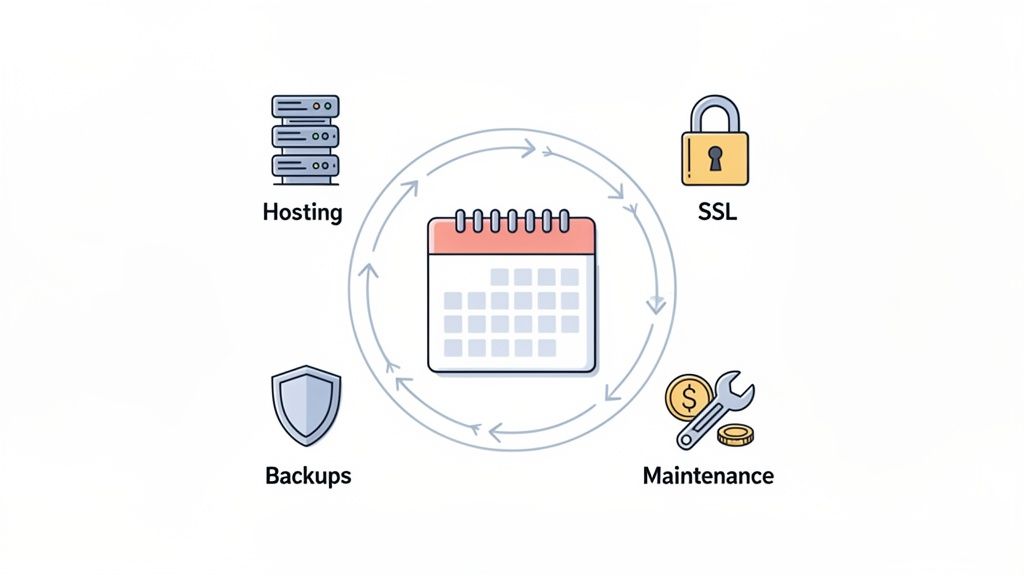
A great way to think about it is like owning a car. The initial purchase price is your web design cost. But to actually keep it on the road, you've got registration (your domain), a parking spot (hosting), insurance (security), and regular servicing (maintenance). These aren't optional extras—they're the fundamental costs of ownership.
Core Recurring Costs You Must Budget For
Forgetting to factor in these ongoing expenses is one of the biggest and most common budgeting mistakes people make. They are predictable, they are necessary, and they are vital for your website’s long-term health and success.
Here are the non-negotiables you'll be looking at year after year:
Domain Name Registration: This is your website's street address on the internet (like
yourbusiness.com.au). You don't own it forever; you register it for a set period, usually one or more years, and you have to renew it to keep it. Budget around $10–$25 per year for a standard.com.audomain.Web Hosting: If the domain is your address, hosting is the actual block of land your website is built on. It’s the server space where all your site's files live, making them accessible to anyone who visits. Good quality hosting is critical for speed and reliability, with costs ranging from $15–$50 per month for decent shared hosting in Australia. Our web hosting plans offer a reliable and affordable option for businesses of all sizes.
The Necessities of Security and Maintenance
Just having your site online isn't enough—it needs to be safe and fully functional. This is where security certificates and maintenance plans come into play, protecting both your business reputation and your visitors' data.
An SSL (Secure Sockets Layer) Certificate is what gives you the "s" in "https" and that little padlock icon in the browser bar. It encrypts the data flowing between your site and its users, which is non-negotiable for protecting sensitive info like contact forms and credit card details. Without one, Google will literally flag your site as "Not Secure," which is a death sentence for user trust.
A website without ongoing maintenance is like a car that never gets an oil change. It might run for a while, but eventually, performance will grind to a halt, security holes will pop up, and a major breakdown is just around the corner.
This is exactly why a Website Maintenance Plan is so important. This service handles all the crucial behind-the-scenes jobs like software updates, security scans, and regular backups. It ensures your site stays compatible with new browsers, is shielded from hackers, and can be quickly brought back to life if disaster strikes. These plans typically cost anywhere from $50 to over $200 per month, depending on the level of support you need. We dive deeper into the importance of website maintenance in our detailed guide.
Bundling Services for Predictable Costs
Trying to manage all these separate costs can be a real headache. That’s why finding a reliable partner who bundles these essentials can save you a world of time, money, and stress.
For example, many of UpTime Web Hosting's plans include a free SSL certificate, powerful firewalls, and automated nightly backups as standard. This approach rolls multiple, often variable, expenses into a single, predictable fee. By choosing a provider that includes these features, you can dodge surprise renewal bills and rest easy knowing your site’s foundations are always covered. This frees you up to focus on growing your business, not juggling technical admin.
Host your website with our 5-star rated, cPanel website hosting plans.
Super fast servers, with security included and hosted in your choice of Australian Data Center.
View cPanel Plans
How To Estimate Your Own Web Page Design Cost
Trying to turn vague price ranges into a solid budget can feel like guesswork, but it’s more straightforward than you might think. All you need to do is break down your project into a checklist of what you actually need. This simple process helps you walk into a conversation with a designer with a clear scope and a realistic budget in mind, setting you up for a smooth partnership from the start.
Think of it like writing a shopping list before heading to the supermarket. You go in with a plan, knowing what you need and roughly what it'll cost. This stops you from grabbing things you don't need (like fancy features that sound cool but don't add value) and makes sure you don’t forget the essentials.
Start with a Page Count
The absolute foundation of your estimate is how many pages your website will have. Every single page is a distinct piece of work that involves design, development, and filling it with content. Begin by listing every page you can think of. Then, sort them into two columns: "must-haves" and "nice-to-haves."
A pretty standard small business website usually includes:
- Homepage: Your digital front door and first impression.
- About Us: The place to share your story, introduce your team, and state your mission.
- Services/Products: A dedicated page for each of your main offerings.
- Blog/News: Your spot for articles, updates, and industry insights.
- Contact Us: A simple page with a contact form, map, and your details.
Most businesses start with a simple 5-10 page "brochure" style site. As a general guide in Australia, a basic website for a small business will typically set you back between $4,000 and $12,000. If you want a deeper dive, research on Australian website development costs offers a fantastic breakdown of different project sizes.
Itemise Your Essential Features
Next up, list the specific functions your website needs to actually do its job and help your business. This is where the web page design cost can really shift, so the more specific you are, the better. By putting a ballpark figure next to each feature, you get a much clearer picture of where the money is going.
Here’s a simple template you can use to build your own estimate. Just start with the base cost for a standard 5-page site and then add on the features you need.
| Feature or Requirement | Ballpark Cost Range (AUD) | Your Notes |
|---|---|---|
| Base 5-Page Website | $4,000 – $7,000 | Includes basic design, development, and a contact form. |
| Additional Pages (per page) | $300 – $600 | Add this for each page you need beyond the first five. |
| Professional Copywriting (per page) | $250 – $500 | If you need a pro to write the words for your site. |
| Basic Blog Setup | $1,000 – $2,500 | Covers the main blog page and a single post template. |
| eCommerce (up to 25 products) | $5,000 – $9,000 | For setting up a simple online shop. |
| Custom Photo Gallery | $800 – $1,500 | Great for photographers, artists, or portfolio-driven businesses. |
| Booking/Appointment System | $1,500 – $4,000 | A must-have for service businesses like consultants or clinics. |
By creating this feature-based checklist, you move from a vague idea of "a new website" to a concrete project brief. This document becomes an invaluable tool for getting accurate, comparable quotes from different designers and agencies.
Factor In Content and Imagery
Finally, you need to be honest about where the content is coming from. A stunning design is just an empty frame without powerful words and great images to fill it. Do you already have professional photos of your team and products? Are you planning to write all the website copy yourself?
If the answer is no, you’ll need to budget for these services. Professional photography can run anywhere from $500 to over $2,000, and good copywriting can add another $250–$500 per page. Being realistic about what you can create yourself is key to getting an accurate final number.
Our guide on how much you need to build and manage your website gives you more detail on these extra costs. With this checklist in hand, you’re now ready to have a productive, budget-focused chat with any web professional.
Making A Smart Investment In Your Digital Future
Thinking about your website purely in terms of its initial web page design cost misses the bigger picture. Your website isn't just another line-item expense; it's one of the most critical assets your business will ever own. It's your digital storefront, brand ambassador, and lead generation engine, working for you 24/7.
From a DIY build on a shoestring budget to a deep strategic partnership with an agency, the path you choose really sets the stage for your online success. We've seen how things like custom features, eCommerce functionality, and the total page count shape the initial quote. But the real key to a smart investment is looking beyond that first invoice to the ongoing costs, like maintenance and security, that keep your digital asset working hard for you.
Protecting Your Digital Asset
You wouldn't build a physical shop on shaky ground, and the same logic applies to your website. This is where high-quality hosting becomes non-negotiable. It’s the foundation that ensures your site is fast, secure, and always there when a customer comes looking. A cheap foundation can completely undermine even the most beautiful design, leading to painfully slow load times, glaring security holes, and lost sales.
Your website is your always-on sales rep. The initial investment is just the beginning; protecting it with reliable hosting ensures it can keep working for you, building trust and turning visitors into loyal customers.
Investing in a robust hosting solution is the smartest move you can make to protect your design investment. For example, all our plans are built on a fast, secure Australian network and include essentials like free SSL certificates and nightly backups. This simplifies your ongoing costs while giving you the performance and security needed to maximise your return.
Ready to give your new website the powerful foundation it deserves? Check out our guide to finding the best Australian web hosting or get in touch with our local team to find the perfect plan for your business.
Common Questions About Website Costs
Thinking about website expenses can bring up a lot of questions. To help you feel more confident about where your money is going, we've answered some of the most common queries we hear about the real web page design cost in Australia.
How Long Does It Take to Build a Website?
Honestly, the timeline for building a website can vary just as much as the price. If you're going the DIY route with a builder like Sitejet, you could have a simple site live in a weekend.
Hiring a freelancer to spruce up a template usually takes around 2-4 weeks. A fully custom website from an agency? That could be anywhere from 6 weeks to 4 months or even longer, especially if it's complex or involves a lot of back-and-forth on revisions.
Think of it this way: a five-page brochure site for a local plumber will be a much quicker job than a 50-product eCommerce store needing payment gateway setups and thorough testing. The biggest tip I can give you is to have all your content ready to go. Content delays are the number one reason project timelines get pushed out.
Can I Pay for My Website in Instalments?
Yes, absolutely. Most freelancers and agencies in Australia are pretty flexible with payment plans, and it's rare to be asked for the full amount upfront. A very common structure is 50% upfront to book you into their schedule, with the final 50% due on completion, just before the site goes live.
For bigger, more complex projects, you might see the cost broken down into key milestones:
- Deposit: Usually 30-40% to kick things off.
- Design Approval: A second payment is often due once you've signed off on the design mockups.
- Final Payment: The remaining balance is paid right before launch.
Always make sure you clarify the payment schedule before signing any contracts. You want to be sure it fits comfortably within your budget. For more tips on this, check out our knowledge base article on building and managing your website budget.
Does the Cost Include a Mobile-Friendly Design?
These days, a mobile-friendly (or "responsive") design isn't an optional extra—it's an absolute must-have. Any designer or agency worth their salt will automatically build your website to look and work perfectly on any device, from a big desktop monitor right down to a smartphone.
With most web traffic now coming from mobile phones, a site that isn't responsive is practically invisible to a huge chunk of your potential customers. Make sure your quote explicitly states that responsive design is included.
If it's not listed as a standard part of the package, that's a massive red flag. A mobile-first approach is vital for giving your visitors a good experience and for ranking well in Google, so this should be a non-negotiable part of your project.
Your website is a serious business asset, and it deserves a secure and reliable home. At UpTime Web Hosting, we offer fast, local Australian hosting that’s built to protect your investment and make sure your site always performs at its best. Take a look at our plans and find the perfect foundation for your new website. https://uptimewebhosting.com.au