Your First Big Decision: Choosing the Right Website Builder
You've probably got the domain idea in one tab, a half-written homepage in another, and a running list of things you still need to sort out. Logo. Email. Hosting. Contact form. Privacy policy. Maybe online bookings or a basic shop. Most startup founders in Australia hit the same point early: you need a site live fast, but you also don't want to rebuild everything three months later.
That's why the best website builder for startups isn't the one with the flashiest ad or the longest feature list. It's the one that matches how your business starts. In Australia, that usually means a small team, limited technical support, and a need to launch without hiring a developer first. That context matters because Australia has about 2.6 million actively trading businesses, with the vast majority being small businesses. A startup site here often has to do several jobs at once: establish credibility, collect leads, explain the offer, and stay easy to manage.
There's another practical point. Online presence is mainstream, but not universal. The Australian Bureau of Statistics found that 59% of employing businesses had a website or social media presence in 2022–23. That leaves a lot of businesses still trying to get online quickly, which is exactly where website builders win.
For most founders, the primary trade-off comes down to this. Do you want the fastest possible launch, the strongest design control, the best content flexibility, or the cleanest path into eCommerce? In Australia, I'd add a few more filters that generic roundups miss: .au domain handling, GST-inclusive billing, local support hours, and whether your site is served well for Australian visitors.
Table of Contents
- 1. Sitejet Website Builder | UpTime Web Hosting
- 2. Wix
- 3. Squarespace
- 4. Webflow
- 5. Shopify
- 6. WordPress.com
- 7. Framer
- Top 7 Website Builders for Startups, Comparison
- Making Your Choice & Launching Your Startup

Performance you can feel, backed by clients who depend on it. Read how our support and uptime create long‑term customer success.Power Your Business with Better Hosting
1. Sitejet Website Builder | UpTime Web Hosting
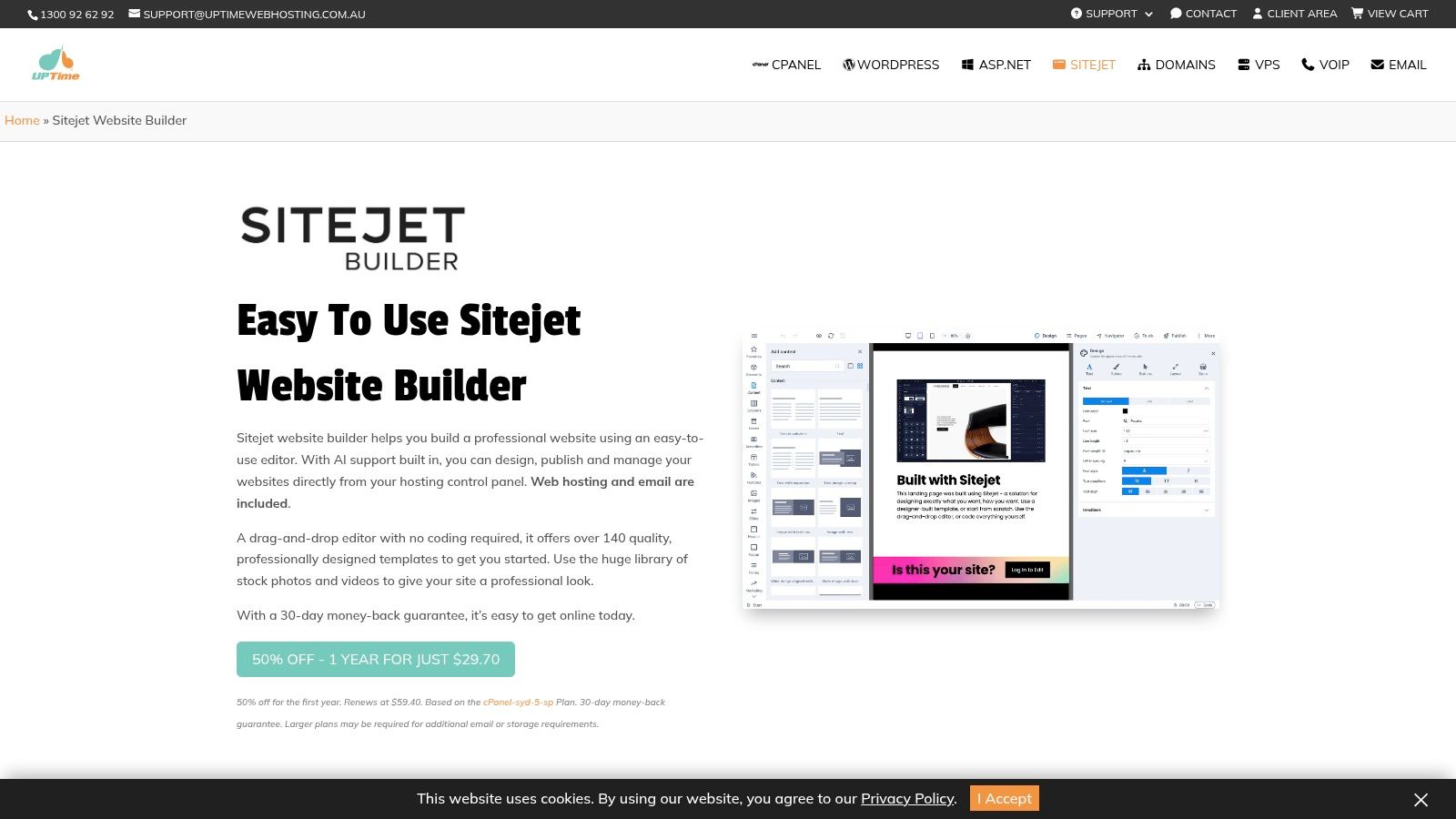
If you're an Australian founder who wants one provider to handle the site, hosting, email, security, and support, Sitejet Website Builder from UpTime Web Hosting is one of the most practical options on this list.
The biggest reason is operational simplicity. You're not piecing together a builder from one company, hosting from another, email from somewhere else, then trying to work out who owns the problem when something breaks. UpTime wraps Sitejet into a local hosting stack, which is exactly what many startups need in their first year.
Why it suits Australian startups
Australia's startup and small business environment is heavily weighted toward teams that need fast setup and low overhead. That's one reason builders have become a mainstream launch stack rather than a fallback option. Broader website adoption patterns back that up too: WordPress powers about 43.5% of all websites and about 64% of CMS-based sites, while DIY website builders are used on more than 18 million websites globally and Wix holds around 45% market share among website-builder sites. The takeaway isn't that every founder should pick the same tool. It's that using a builder is now the normal path, not the compromise.
Sitejet fits that reality well. You get a visual builder, responsive templates, built-in SEO editing, hosting, SSL, backups, and business email from one Australian provider. For a founder trying to validate an offer, that matters more than endless customisation.
Practical rule: If you don't have in-house engineering, choose the platform that removes the most admin, not the one with the most theoretical flexibility.
A common startup scenario is a service business launching with five core pages: home, about, services, pricing or enquiry, and contact. Sitejet handles that neatly. A local consultant, trades startup, early-stage agency, or B2B software team can get a clean site online without plugin wrangling or design debt.
Where it works best
UpTime's hosting footprint is the main Australian advantage. The company runs servers in Sydney, Melbourne, Brisbane and Perth, which helps if your visitors are local and you care about data locality, support timing, and a simpler compliance story. That matters because, for Australian businesses, performance and compliance depend more on the underlying stack than the editor itself. Local hosting options, automated security, backups, caching, image optimisation and mobile responsiveness are the practical features that shape real-world speed and reliability for AU users, as explained in this Australian startup website builder performance guide.
From a founder's point of view, the useful bits are straightforward:
- Fast setup: AI-assisted setup and template-driven design help you go from blank page to publishable site quickly.
- Local operations: Australian hosting, Australian support, and GST-inclusive pricing reduce friction when you're comparing bills and trying to get help during business hours.
- Lower maintenance: SSL, backups, malware scanning, DDoS protection, and performance tuning are part of the stack instead of an afterthought.
- Business basics included: Domain, hosting, email, and website builder live in one account.
If you're weighing this against a global builder, UpTime also has a useful breakdown of Sitejet vs Wix for Australians, especially around local support and hosting context.
What to watch before you choose it
Sitejet is strongest when your startup site is a marketing site, brochure site, landing-page-driven lead engine, or straightforward service business website. It's less suited to highly bespoke product experiences, complex marketplace logic, or custom web applications.
That doesn't make it limiting for most early-stage founders. It just means you should be honest about the job the site needs to do. If the site's main role is credibility, enquiries, and a clean path to launch, this is a strong Australian-first option. If you expect deep plugin ecosystems, custom app behaviour, or unusual integrations, WordPress or a more developer-oriented platform may fit better.
2. Wix
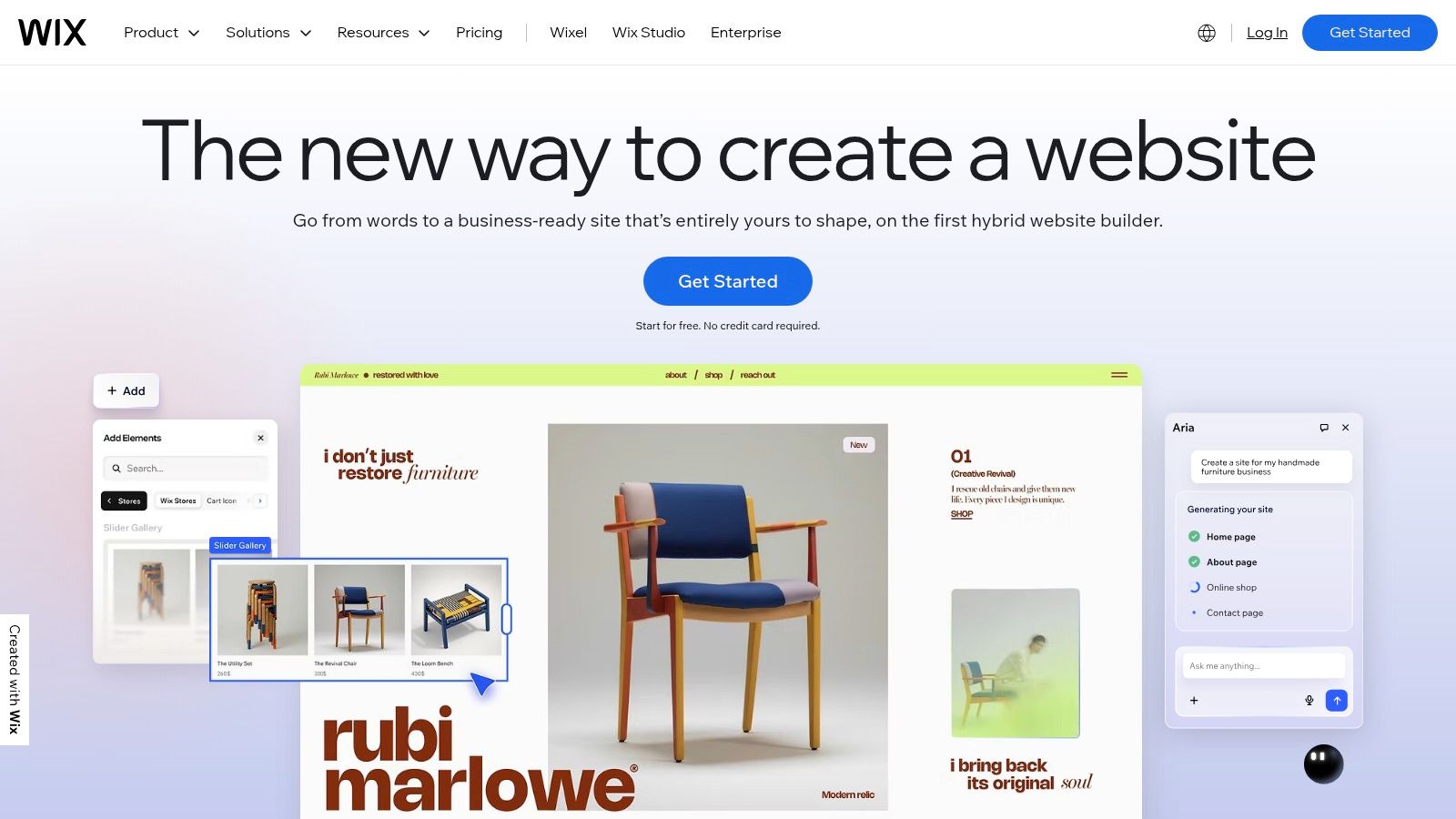
Wix is the platform I'd point a non-technical founder to when speed matters more than perfection. If you need a site up this week, want a lot of visual control, and don't want to think about hosting, it's a sensible choice.
For Australian startups, Wix works best as an all-rounder. You can launch a landing page, a service business site, a startup brochure site, or even a small online store without learning much technical jargon. The editor is approachable, the template library is broad, and built-in tools for forms, bookings, SEO basics, and content updates cover a lot of early-stage needs.
Best for founders who need speed
Wix has scale, and that matters because established adoption lowers risk for startups. The challenge with early website decisions isn't only design. It's choosing a platform your team can maintain after launch. A builder with a mature editor, large template library, and well-worn workflows is often the safer call than a niche tool that looks exciting in a demo.
The best use case is a founder-led business that needs to look polished fast. Think consultant, allied health startup, small agency, coaching brand, professional service, or local eCommerce concept testing demand. You can create the main pages, connect a domain, add lead forms, and hand the site to a team member without a major training process.
Wix is easy to recommend when the website's main job is getting out of draft mode and into the market.
Wix also has an app marketplace, which gives it more room to stretch than simpler builders. If you want bookings, member areas, forms, or email marketing add-ons, you can usually find a path without leaving the platform.
Where Wix starts to pinch
The trade-off is that convenience can turn into platform lock-in. If you outgrow the structure later, moving to a different setup can be clunky. Design freedom can also create inconsistency if too many people edit the site without a clear style guide.
Australian merchants should also note one practical point from the plan notes for this article: Wix Payments isn't currently available in Australia, so local stores use third-party gateways instead. That's not a dealbreaker, but it does mean one more payments decision to make.
A few founder-level cautions:
- Great for launch, weaker for deep rebuilds: If your site will become a heavily customised product hub later, you may outgrow it.
- Free plan is not for serious launch use: Ads and limited resources hurt credibility.
- eCommerce is capable, but not purpose-built like Shopify: Fine for smaller stores, less ideal when retail is your whole business.
For a startup that needs to move fast, Wix is still one of the easiest answers to the best website builder for startups question. Just choose it because it fits your current operating model, not because you assume it'll suit every future stage.
Host your website with our 5-star rated, cPanel website hosting plans.
Super fast servers, with security included and hosted in your choice of Australian Data Center.
View cPanel Plans
3. Squarespace
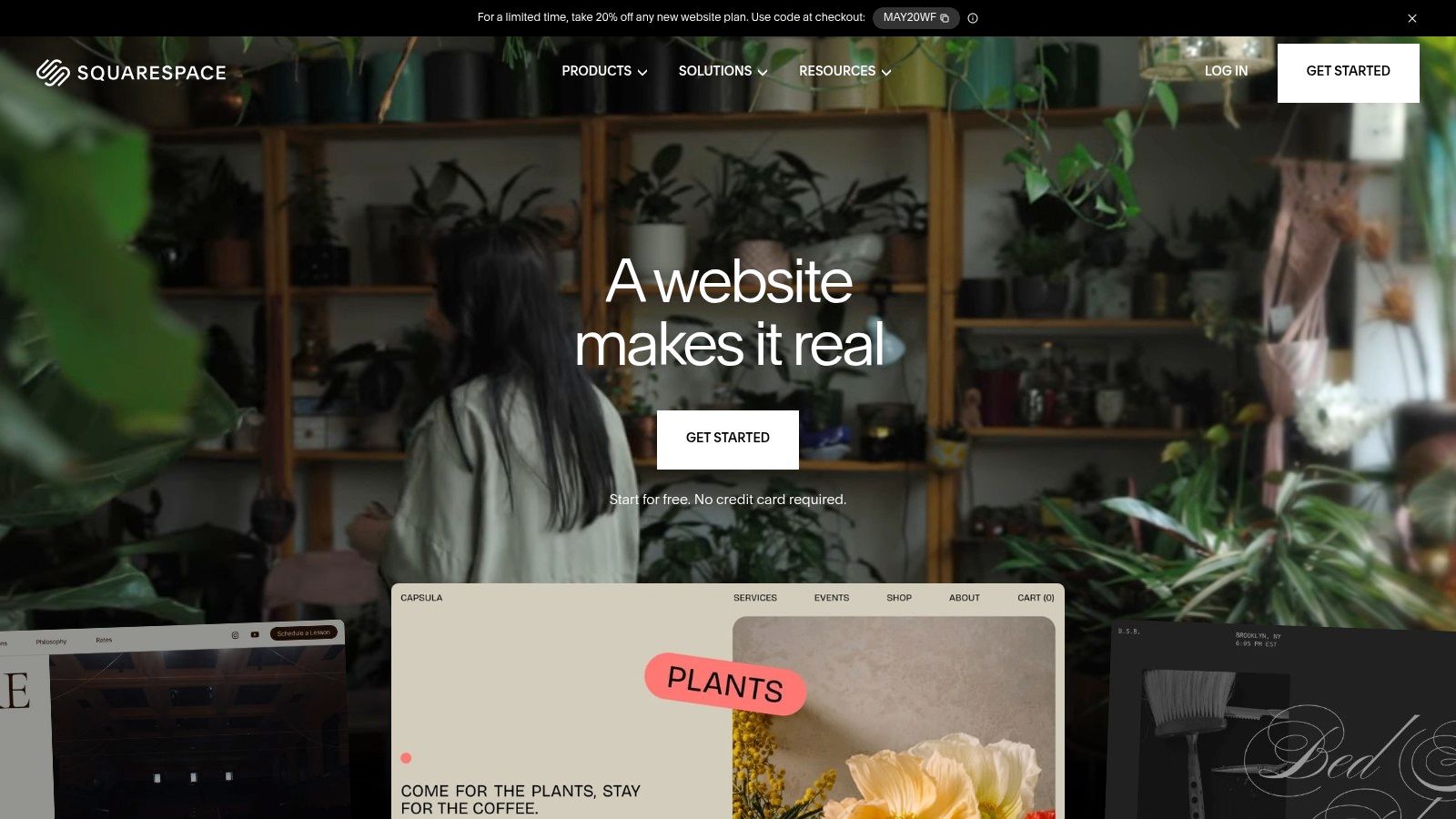
Squarespace is the builder I'd choose when brand presentation is part of the product. If investors, partners, clients, or media are going to judge your startup partly by how polished the website feels, Squarespace usually delivers a better first impression than most DIY platforms.
It's especially good for creative, hospitality, wellness, consulting, architecture, and premium service startups. The templates are design-led, the hosting is managed, and the built-in tools cover the essentials without pushing you into plugin overload.
Where Squarespace shines
The main appeal is control without chaos. Squarespace gives founders enough flexibility to shape a site, but not so much freedom that they accidentally destroy the layout. That makes it strong for teams who want a polished, consistent site and don't have a designer checking every update.
For Australian startups, this often translates into a smoother first launch. You can register a domain, publish a clean site, add contact forms, create service pages, sell basic products or digital offers, and keep everything under one roof. If you're building a brand-first business and don't want your website to look like a generic template after five minutes of editing, Squarespace is still one of the best builder choices.
A practical example. A new studio, clinic, boutique consultancy, or founder-led personal brand can look credible on Squarespace quickly because the visual defaults are strong. That matters when the site is standing in for the team you haven't hired yet.
If you want outside help polishing the site rather than building something fully custom, this guide to small business website design services is useful for understanding where managed design support fits.
The Australian domain and flexibility trade-off
Squarespace has two common limits in Australia. The first is domain handling. It can register .au and .com.au domains, but .au domains can't be transferred into Squarespace, so some Australian businesses register elsewhere and connect the domain instead. That isn't hard, but it's one more thing to manage.
The second limit is extensibility. Squarespace is excellent until you need something unusual. Once your startup starts wanting niche integrations, more advanced automation, or highly custom workflows, you can feel the edges faster than you would on WordPress or Webflow.
A polished default is an advantage early on. It becomes a constraint only when your business model gets more complicated than your website builder expects.
Choose Squarespace if appearance, ease of use, and low maintenance matter most. Don't choose it if you already know your site will become a complex content system or a heavily integrated platform.
4. Webflow
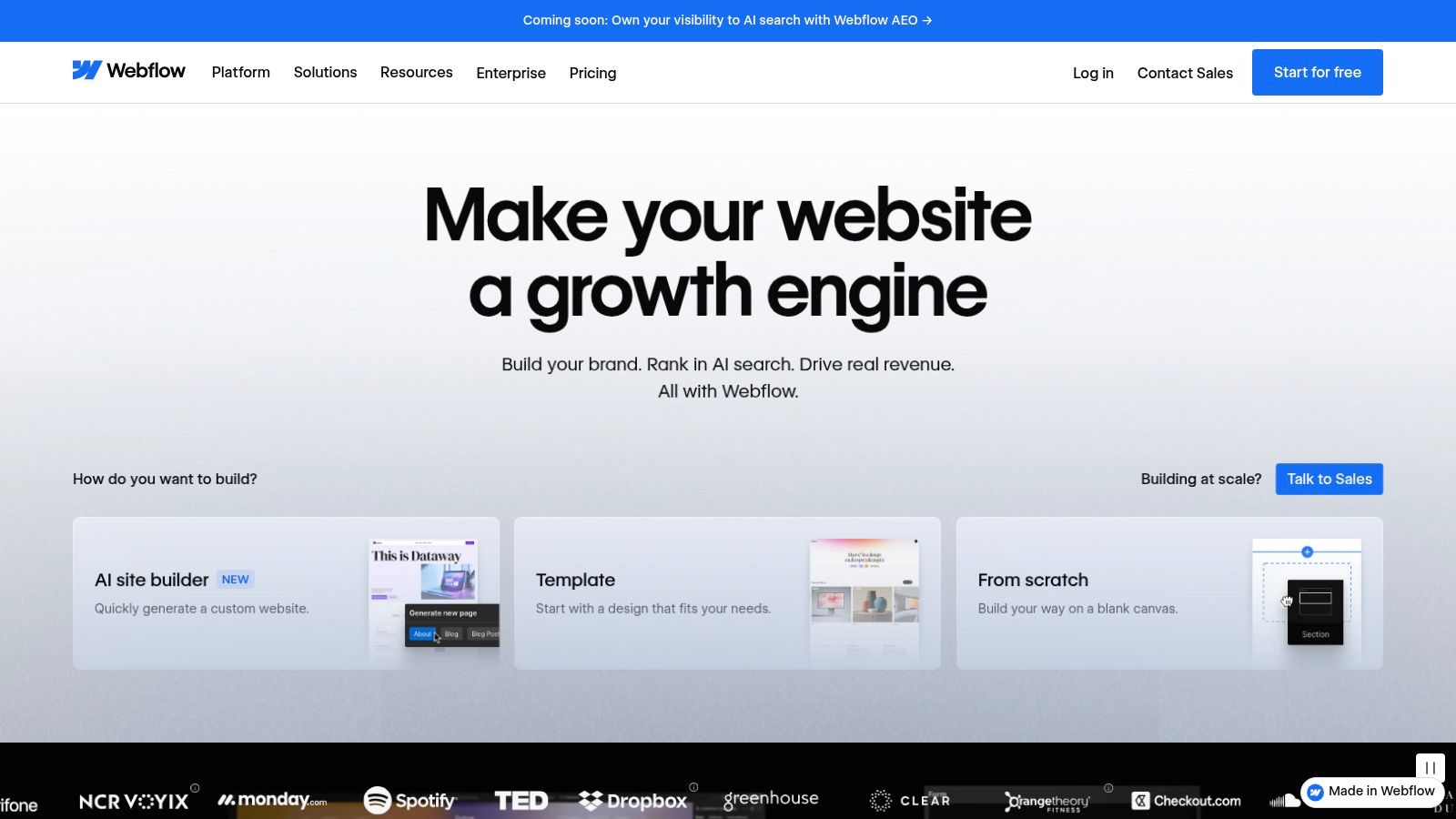
Webflow sits in a different category from Wix and Squarespace. It's still a website builder, but it behaves more like a design and production environment than a simple drag-and-drop tool. For the right startup, that's a major advantage.
If your team cares significantly about layout precision, CMS structure, responsive behaviour, and visual polish, Webflow can produce a far more customized result than most no-code builders. It's a strong fit for software startups, funded ventures, product-led brands, or agencies building a serious marketing site.
Who should choose Webflow
Webflow works best when someone on the team is comfortable thinking in terms of sections, classes, breakpoints, and structured content. You don't need to hand-code everything, but you do need more system awareness than you would on a basic builder.
That extra complexity pays off when the website is a serious growth asset. If your startup plans to run content marketing, publish structured case studies, maintain product pages, and keep brand control tight, Webflow gives you room to do that cleanly. Its CMS is one of the strongest reasons to choose it.
The other advantage is output quality. Webflow appeals to teams that want custom-looking sites without committing immediately to a fully coded build. In practice, that means a startup can launch a professional marketing site before it hires a frontend developer.
Where founders get stuck
The downside is obvious once you log in. Webflow has a steeper learning curve, and that can slow down a founder who just needs a live site and a contact form. It's not the best first choice if nobody on the team wants to own the site properly after launch.
Plan structure can also feel more complicated than it should. Founders need to check site limits, CMS needs, form usage, localisation, and workspace permissions before assuming the platform will stay simple as they grow.
A few good use cases:
- Content-heavy SaaS site: Product pages, blog, resources, team pages, and SEO landing pages.
- Design-led startup: Strong branding, unique layouts, and a need for fine-grained visual control.
- Agency-backed launch: A designer or marketer can build in Webflow, then hand over a structured site.
Webflow is not the easiest answer to the best website builder for startups question. It is often the best answer when the startup already knows the website will become an important marketing system, not just an online brochure.
5. Shopify

If your startup is selling products from day one, Shopify is the platform that usually saves the most pain later. It's built for commerce first, not adapted into commerce after the fact.
That distinction matters. A founder can get seduced by a prettier general-purpose website builder, then spend months fighting checkout limitations, inventory friction, shipping apps, or tax setup. Shopify avoids most of that because store operations are the core product.
Why Shopify wins for retail-first startups
For Australian founders, Shopify makes sense when the site's main purpose is selling, not just explaining the business. Product catalogue, checkout, inventory, orders, shipping, tax handling, discounting, and app integrations are all part of the expected workflow.
That means it works well for physical products, DTC brands, online retail, subscription concepts, and hybrid service-plus-product businesses. If you know there will be a cart on the site early, I'd usually start here rather than trying to stretch another builder into an online store.
A practical example is a startup launching skincare, apparel, packaged goods, gifts, or specialty food online. Shopify gives you a clear operating system for the store side of the business, which is often more important than total visual freedom in the first year.
If you're still mapping the basics of local eCommerce setup, this guide to selling products online in Australia helps frame the wider decisions around payments, setup, and store operations.
Don't choose your eCommerce platform based on homepage aesthetics alone. Choose it based on how easily your team can process orders, update products, and keep checkout friction low.
What Shopify doesn't do as naturally
Shopify can absolutely run a content site, but that isn't where it feels most natural. If your startup is mainly content-led, media-led, or brochure-led with only a minor store attached, a different platform may feel more flexible.
There's also the cost creep issue. Shopify's core product is strong, but app and add-on decisions can push up ownership cost as your store becomes more advanced. That's not unusual in eCommerce. It's just something founders should expect rather than discover later.
Shopify is best when commerce is central. If your startup needs the best website builder for startups with a retail-first model, this is usually the shortlist answer. If selling is secondary, it may be more platform than you need.
Register your new domain name at competitive market prices including free domain add-ons like privacy, DNS Hosting, Custom Nameservers and Forwarding.
Always the best price and no nasty renewal price hikes.
Register A Domain Name
6. WordPress.com
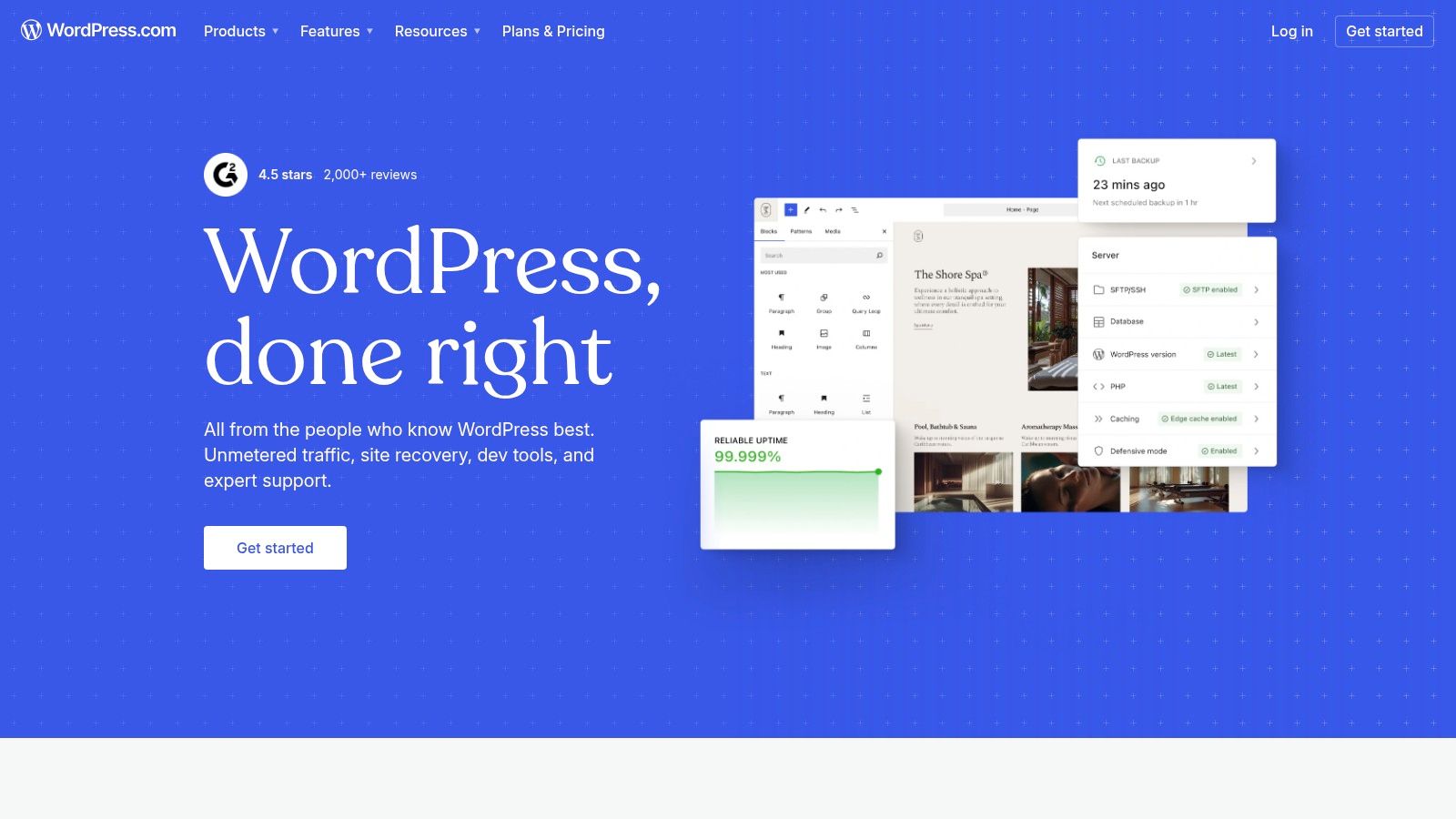
WordPress.com is the option for founders who expect content, SEO, and long-term flexibility to matter more over time. It gives you managed infrastructure and a simpler starting point than self-hosted WordPress, while still keeping you closer to the broader WordPress ecosystem.
That positioning is useful. Plenty of startups don't just need a website. They need a site that can grow into a content library, landing page system, announcement hub, documentation base, or WooCommerce store later.
Why content-led startups still choose WordPress
WordPress remains a mainstream choice because it's familiar, extensible, and well supported. In Australia, that matters for practical reasons. If you ever need help, it's easier to find someone who can work on WordPress than someone who specialises in a narrower builder.
This makes WordPress.com a solid pick for B2B startups, education businesses, media projects, consultants, software companies with active blogs, and founders who care about organic search. If your growth plan includes publishing resources, articles, guides, or location pages, WordPress is still one of the strongest foundations.
The hosted model also lowers the stress level compared with self-managing a full WordPress stack. You still get a path to themes, plugins, and commerce features on the right plans, but you don't start by worrying about server maintenance.
If your business is likely to lean into WordPress properly, this overview of WordPress website creation is a good reference point before choosing between hosted and more custom setups.
The operational trade-off
WordPress.com is more flexible than stricter all-in-one builders, but that flexibility comes with more moving parts. Themes, plugins, content structure, and editor choices all affect how easy the site is to maintain.
There's also one Australian caveat worth remembering from the broader local context. Once your startup starts collecting leads, bookings, payments, or customer files, data location and overseas disclosure become more than a technical footnote. Australia's Privacy Act 1988 and Australian Privacy Principle 8 require businesses to take reasonable steps when disclosing personal information overseas, and the Australian Cyber Security Centre has flagged third-party and cloud supply-chain risk as a practical issue for SMEs. This Australian-focused discussion of builder compliance gaps is useful because most generic roundups barely touch the issue.
WordPress.com is a smart middle path for founders who want room to grow without managing infrastructure themselves. Just don't mistake “managed” for “set and forget”. The choices you make inside WordPress still shape the site's complexity.
7. Framer
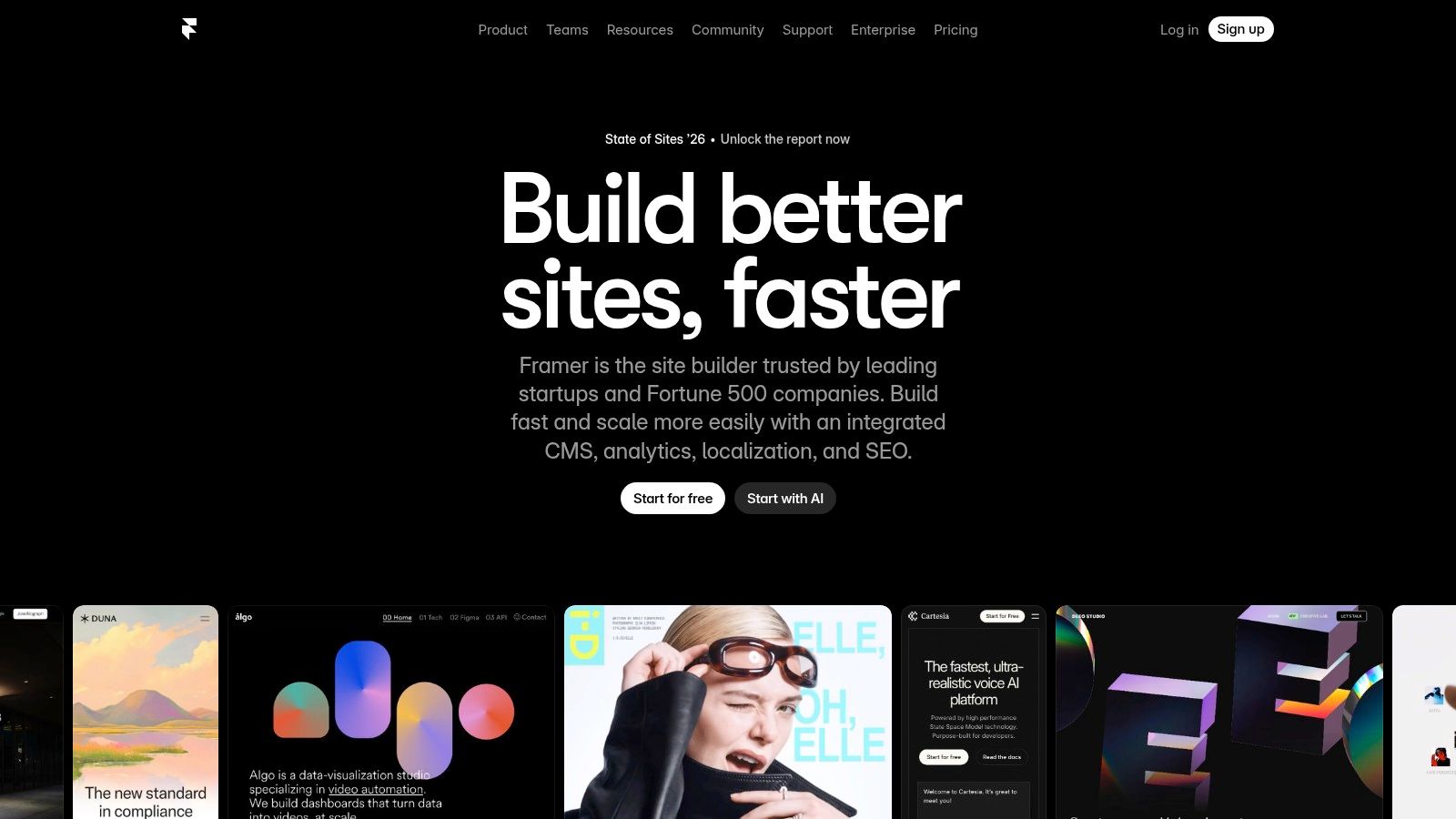
Framer is a good fit for startups that care about launch speed and design sharpness more than deep site architecture. If your goal is a polished product page, investor-facing launch site, or campaign landing page, Framer can get there quickly.
It's one of the more modern-feeling builders on this list. The visual workflow suits founders, marketers, and designers who want the site to feel current without waiting on engineering.
When Framer is the right move
Framer works best for early-stage product launches, startup landing pages, waitlists, campaign microsites, and brand-forward single or small multi-page sites. The animations, components, and fast publishing workflow make it attractive when the website is mostly about messaging and presentation.
This is particularly useful for software, AI, creative-tech, and startup launches where the site is telling a story rather than managing a complex business process. A founder can test headline positioning, product visuals, screenshots, and early CTAs without getting bogged down in heavier setup.
Framer also makes sense when speed of iteration matters. If your homepage copy is changing every week as the product evolves, that lightweight editing flow helps.
Where Framer stops being enough
The limits show up when your site becomes larger, more structured, or more operationally demanding. If you need a substantial CMS, broader team workflows, or a site that doubles as a long-term content engine, Framer can start to feel narrow.
Australian founders should also look beyond the editor and remember the underlying hosting and performance basics. Local relevance still matters. Hosting quality, SSL, backups, caching, image handling, and support model affect real-world reliability more than slick animations do. This guide on what to consider when choosing web hosting services is worth reviewing before you assume any builder solves the whole problem by itself.
A beautiful launch page is useful. A site your team can still manage six months later is more useful.
Framer is strong for startup storytelling and quick launch execution. It's less convincing as the single long-term platform for a business that expects complex content, broader operations, or heavier integration needs.
Experience Microsoft 365 Business Standard for free for 30 days.
Up to 25 users with full access to email, OneDrive and Teams. Includes full versions of desktop apps of Outlook, Word, Excel, PowerPoint and more.
Try Microsoft 365
Top 7 Website Builders for Startups, Comparison
| Platform | Implementation complexity | Resource requirements | Expected outcomes | Ideal use cases | Key advantages |
|---|---|---|---|---|---|
| Sitejet Website Builder (UpTime) | Very low, no-code, AI-assisted setup | Minimal, templates + included Australian hosting/email/security | Fast launch of polished, compliant marketing sites | Resource‑strapped startups and small businesses needing local hosting/compliance | Local servers/support, built-in security stack, templates + AI |
| Wix | Low to medium, visual drag-and-drop; Studio adds complexity | Low, native tools and apps; some paid apps may be needed | Quick publish; scales to more complex sites with apps | Startups, agencies, small stores needing easy growth path | Large template library, App Market, strong ecommerce tools |
| Squarespace | Low, designer-focused editor (Fluid Engine) | Low, integrated hosting/tools reduce add‑ons | Highly polished, brand-forward websites | Brand-led startups and creatives prioritising visuals | High design quality, all‑in‑one stack, reliable hosting |
| Webflow | Medium–high, advanced visual design, steeper learning curve | Medium, design skillset, CMS/API use for complex sites | Production-grade HTML/CSS, fine responsive control, strong CMS | Designers, product teams, content-heavy marketing sites | Clean code output, powerful CMS, localization and APIs |
| Shopify | Low to medium, commerce-first, theme/app driven | Medium, inventory, apps, payment/shipping integrations and fees | Scalable, retail-ready online stores with best-in-class checkout | Merchants with commerce as core from day one | Robust ecommerce features, large app ecosystem, AU-ready integrations |
| WordPress.com | Medium, managed platform but plugins add complexity | Medium, themes/plugins, optional WooCommerce increase maintenance | Flexible, extensible sites with large ecosystem and managed ops | Startups needing extensibility and access to many plugins/themes | Massive plugin/theme ecosystem, managed hosting and WooCommerce option |
| Framer | Low, no-code, rapid Figma-to-live workflow | Low, per-site pricing; limited CMS for large sites | Very fast, animated landing and marketing pages | Landing pages and marketing sites needing polished animations | Rapid iteration, animation support, affordable entry tiers |
Making Your Choice & Launching Your Startup
If you're still deciding, don't ask which platform is “best” in the abstract. Ask which one reduces friction for the next stage of your business.
For many Australian founders, the first stage is simple. You need a domain, a professional email address, a credible homepage, a services or product page, a contact path, and hosting that doesn't become tomorrow's problem. That's why all-in-one platforms keep winning. They remove decisions at the exact point where founders already have too many.
The best website builder for startups usually depends on the business model:
- Choose Sitejet with UpTime Web Hosting if you want an Australian-first setup with local hosting, local support, GST-inclusive pricing, and one provider handling the practical stack.
- Choose Wix if you need speed, broad ease of use, and a simple way to get a polished site online without technical help.
- Choose Squarespace if your brand presentation matters heavily and you want a more curated, design-led look.
- Choose Webflow if the website will become a serious marketing asset and your team can handle a steeper learning curve.
- Choose Shopify if selling products is core from the start.
- Choose WordPress.com if content, SEO, and long-term flexibility are central to growth.
- Choose Framer if you need a sharp, modern launch site quickly and you're not building a large content system yet.
For Australian businesses, there are a few extra filters I'd treat as essential. Check how the platform handles .au domains. Check whether pricing is clear and whether GST is visible. Check where support sits and whether you can get help in your own working day. If you're collecting customer data, forms, payments, or files, check where data and backups may live and whether that works for your privacy obligations.
That last point often gets ignored in generic builder roundups. It shouldn't. A startup may begin with a simple landing page, but once you add forms, lead capture, bookings, client records, or eCommerce, trust and compliance become commercial issues, not just legal ones. Founders who choose well early usually avoid messy migration projects later.
My practical advice is to launch a site that is slightly better than you think you need, but no more complicated than your team can manage. A startup website should help you sell, explain, validate, and respond quickly. It shouldn't become a side business you never meant to run.
If you're also building in a category that may attract specialist capital, it's worth understanding how investors look at adjacent infrastructure businesses too. This roundup of investors for web hosting startups is more relevant to platform founders than ordinary business owners, but it's a useful reminder that web infrastructure is still a serious business layer, not just a commodity utility.
The short version is this. If you want the most Australian-relevant, operationally tidy path, an integrated local setup has real advantages. If you want the broadest global ecosystem, there are strong options too. The right choice is the one your team can launch confidently, run reliably, and grow without regretting in six months.
If you want an Australian provider that can handle the practical side properly, UpTime Web Hosting is worth a close look. It gives startups a clean path from domain and email to local hosting and Sitejet website builder, with support from an Australian team and infrastructure in Sydney, Melbourne, Brisbane and Perth. For founders who want less platform juggling and more time spent launching, that kind of integrated setup is hard to beat.