VPS web hosting uses virtualisation to give each website its own dedicated slice of a physical server, offering more control and reliability than shared hosting at a fraction of dedicated server cost. In Australia, the practical difference often comes down to where that virtual server is located, how it's managed, and whether your business needs local data handling.
You may be seeing the warning signs already. Your Australian business website worked perfectly on shared hosting when it launched, but pages now slow down during busy periods. A neighbouring site's traffic surge appears to affect your own performance, and you're unsure whether upgrading means paying for an entire physical server.
For many small and medium businesses, VPS hosting is the middle ground. You still share a data-centre building with other customers, but your website runs inside an isolated virtual environment with allocated resources and greater administrative control. The Australian decision adds three questions that generic hosting guides often miss: How far are your visitors from the server? Where is your data governed? Who will maintain the server when something breaks?
Table of Contents
- Understanding the VPS Web Hosting Scenario
- How VPS Technology Works
- Comparing Hosting Options for Your Business
- Australian Infrastructure Benefits
- Real-World VPS Use Cases in Australia
- Managing Your VPS Effectively
- Making the Right VPS Decision

Performance you can feel, backed by clients who depend on it. Read how our support and uptime create long‑term customer success.Power Your Business with Better Hosting
Understanding the VPS Web Hosting Scenario
A Sydney café owner might first notice the problem on a Monday morning. The menu site loads slowly, the online booking form takes longer to respond, and the owner assumes the issue is with the website design. After checking the site at a quieter time, everything appears normal. The inconsistency points towards the hosting environment rather than a single oversized image or faulty plugin.
Shared hosting places many websites on one physical server and gives them access to a common pool of resources. That arrangement can suit a new brochure site, a portfolio, or a small blog. It becomes less comfortable when several sites compete for processing power, memory, storage activity, or database capacity at the same time. A useful overview of the main alternatives is available in this guide to common types of web hosting.

Why the slowdown becomes a business problem
A slow page can frustrate a prospective customer before they reach your services, opening hours, product catalogue, or enquiry form. For an online shop, instability during a busy sales period can interrupt browsing and checkout. For an agency, repeated performance complaints create support work that's difficult to explain when the website itself hasn't changed.
VPS hosting addresses the resource-sharing problem by giving your site a separate virtual server environment. It doesn't automatically fix poorly written code, unoptimised images, or a weak database query. What it does provide is a more predictable foundation, so you can diagnose those issues without another customer's workload constantly changing the conditions.
The Australian angle
A locally hosted VPS can also reduce the distance between your website and Australian visitors. That matters for websites where every interaction includes page requests, security handshakes, database activity, or payment steps. The upgrade isn't “more RAM”. It's a decision about consistent resources, geographic placement, and operational responsibility.
How VPS Technology Works
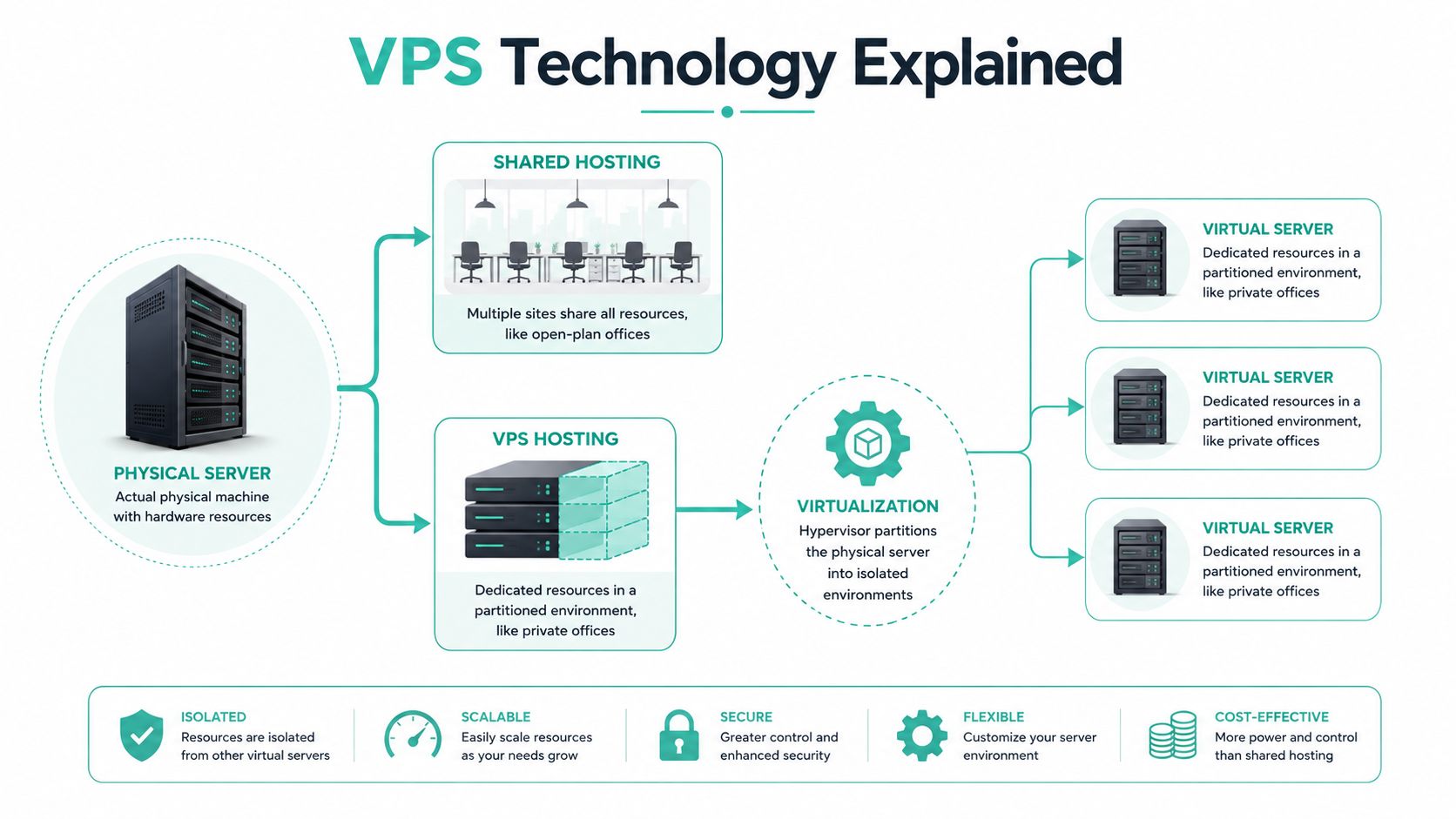
Virtualisation turns one physical server into several separated virtual machines. The easiest way to understand the arrangement is to compare it with a building.
A physical server is the building. Shared hosting is similar to an open-plan office where many businesses use the same general facilities. Dedicated hosting is the equivalent of leasing the entire building. A VPS is a private office or apartment within the building. You share the physical structure, power systems, network connection, and data-centre facilities, but your virtual space is separated from the other tenants.
The virtualisation layer
The software responsible for this separation is commonly called a hypervisor. It sits between the physical hardware and the virtual servers, assigning each environment its share of CPU processing, memory, storage, and networking capacity.
That allocation is the important distinction. On shared hosting, websites generally draw from a broader pool, so another customer's activity can affect the available headroom. On a VPS, the provider assigns resources to your virtual environment, giving your applications a more stable operating base. The exact limits still depend on the plan, and a VPS can run out of capacity if your own website grows beyond its allocation.
The process works in a straightforward sequence:
- Physical hardware runs the host system. The data-centre server provides the underlying processing, memory, storage, and network connections.
- The hypervisor creates isolated environments. Each VPS receives its own virtual operating system and resource allocation.
- Your website runs inside that environment. Files, databases, applications, and services operate as they would on a standalone server.
- The provider manages the physical layer. Hardware maintenance and data-centre operations remain separate from your website administration.
What isolation does and doesn't mean
Isolation improves predictability, but it doesn't mean you've rented an entirely independent machine. Other virtual servers still occupy the same physical hardware, so the provider's capacity planning and infrastructure quality matter. A poorly provisioned host can undermine the benefits of an otherwise suitable VPS plan.
You may also receive root or administrative access, depending on the service. That access lets a developer install software, adjust server settings, and select an operating environment that suits an application. WordPress owners who need a more controlled setup can also consult this WordPress VPS setup guide before deciding whether they need that level of configuration.
Practical rule: VPS resources are only useful when the plan, operating system, security configuration, and application are all maintained properly.
Host your website with our 5-star rated, cPanel website hosting plans.
Super fast servers, with security included and hosted in your choice of Australian Data Center.
View cPanel Plans
Comparing Hosting Options for Your Business
The right hosting type depends on what you're running and how much responsibility you want to carry. Price alone can produce a poor decision, especially when a cheap plan creates slow pages, difficult troubleshooting, or unexpected administration work.
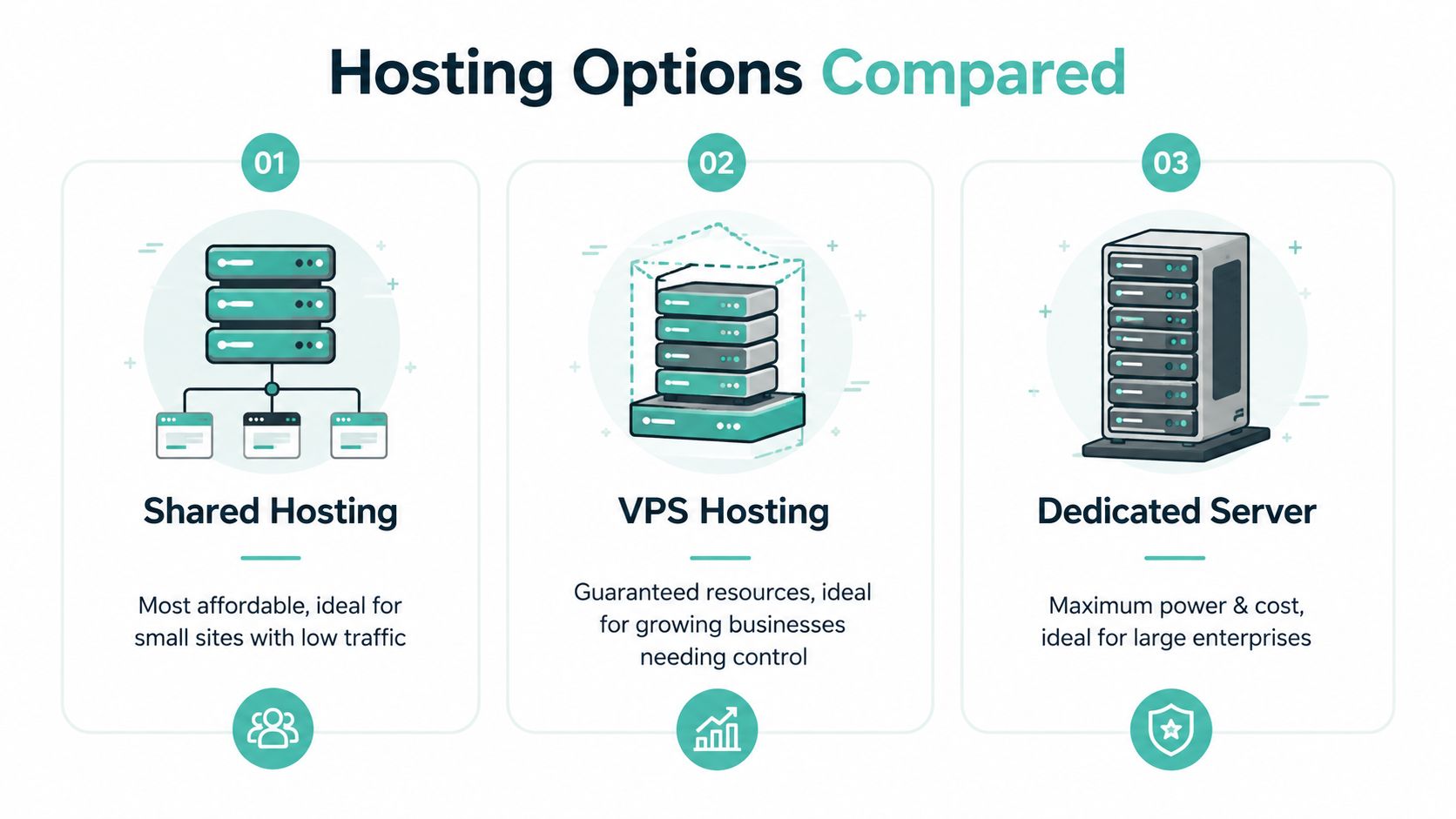
| Hosting type | Performance and resources | Control | Best fit |
|---|---|---|---|
| Shared hosting | Resources are shared across multiple websites, so performance can vary | Usually simpler and more restricted | A small website with modest requirements |
| VPS hosting | An allocated virtual environment offers more predictable capacity | More configuration freedom and possible root access | A growing business website, application, or online store |
| Dedicated hosting | One physical server is reserved for one customer | Maximum control over the machine | A demanding workload with the budget and expertise to operate it |
Shared hosting remains a sensible starting point
A new service website with a few pages, a contact form, and business information may not need VPS resources. Shared hosting is easier for many owners because the provider handles much of the underlying server setup. The trade-off is that your site has less control over the environment and can be more exposed to resource contention.
Dedicated hosting solves a different problem
A dedicated server gives you the physical machine, but that control comes with greater cost and operational responsibility. You may need someone who understands server security, operating-system updates, application deployment, monitoring, and recovery procedures. It's powerful, but it can be more infrastructure than a typical local business website requires.
VPS balances control and practicality
VPS hosting suits a business that has outgrown shared hosting but doesn't need a whole server. You can select a local Australian location, configure software for a particular application, and increase resources as requirements change. For a side-by-side local option, review this Australian VPS hosting comparison from UpTime Web Hosting.
The most important comparison is not “Which plan has the largest specification?” It's “Which environment gives the website enough capacity without assigning the business more administration than it can handle?”
Australian Infrastructure Benefits
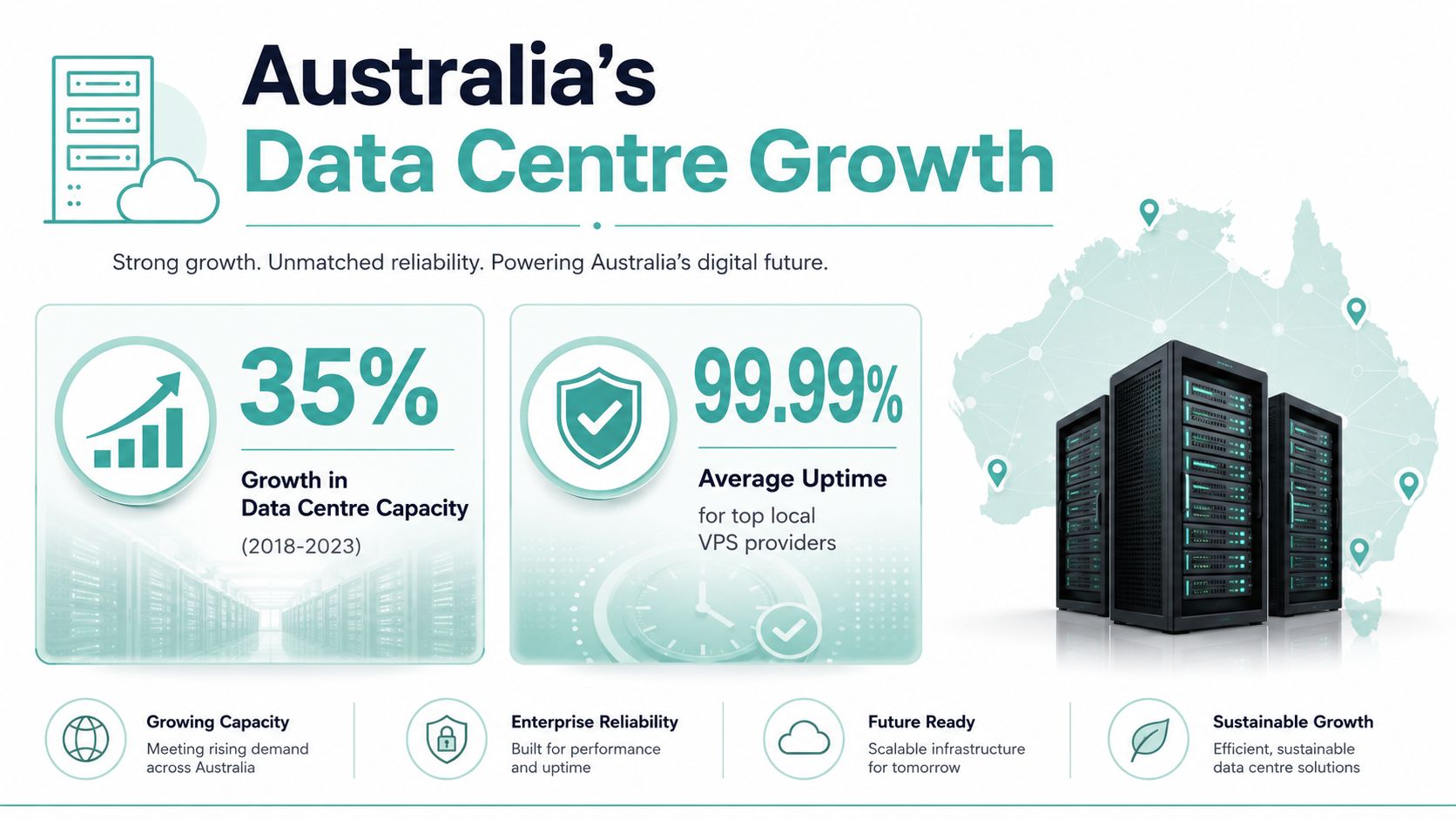
Australian VPS hosting becomes more compelling when you consider the infrastructure underneath it. VPS instances run on physical servers inside data centres, so expansion of local data-centre capacity gives Australian providers more room to offer in-country virtual servers.
Australia has approximately 162 operational data centres, with current capacity around 1.4GW to 1.5GW, projected to reach 3.2GW by 2030, according to Australian data-centre infrastructure reporting. The same reporting identifies 60 sites below 1MW, 99 sites between 1MW and 99MW, and 3 sites above 100MW. These figures describe the physical ecosystem, not a guarantee that every VPS provider offers every location.
Latency follows geography
For an Australian audience, server location can matter more than a modest difference in processor specifications. Sydney-based VPS hosting can provide single-digit millisecond latency to eastern Australian users, with round-trip times of approximately 10 to 18 milliseconds to Melbourne and 12 to 22 milliseconds to Brisbane, as documented in the same infrastructure source.
Another Australian VPS latency guide cites Sydney-local round-trip times of roughly 2 to 10 milliseconds, Melbourne at around 10 to 15 milliseconds, Brisbane at 15 to 20 milliseconds, and Perth at 50 to 60 milliseconds from Sydney. Those measurements are presented in this Sydney-focused Australian VPS guide, and actual results vary with networks, routes, congestion, and the user's connection.
That delay affects more than the first page request. TLS handshakes, database queries, application calls, and checkout steps can each add network travel. If most customers live on the east coast, an east-coast VPS may improve their experience more effectively than a small CPU upgrade.
Data sovereignty needs careful interpretation
Australian hosting can help keep information within Australian jurisdiction, but a server location alone isn't a complete compliance assessment. You still need to understand your provider's ownership, support access, backups, subprocessors, security controls, and contractual terms.
For government and sensitive workloads, use the Australian government cloud certification framework as a service-selection filter rather than treating a generic VPS listing as automatically compliant. AUCloud, for example, describes itself as a sovereign cloud infrastructure provider for Government, Defence, and National Security organisations in this ACT Government company profile.
Real-World VPS Use Cases in Australia
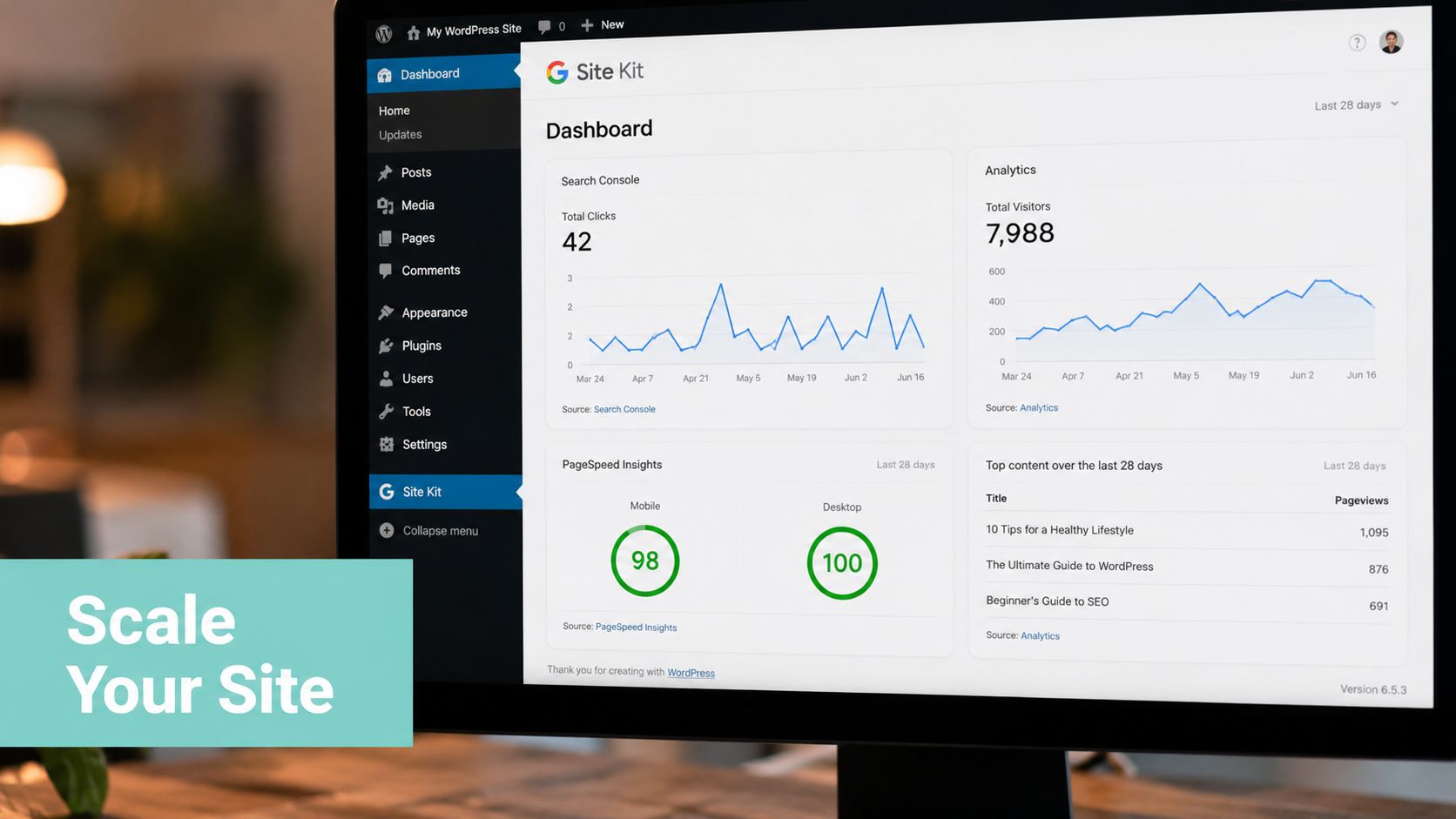
A WordPress site often reaches the VPS decision gradually. The owner adds a shop, booking system, image library, membership area, or marketing integrations. Each feature may work alone, but together they create a workload that shared hosting handles less comfortably. A VPS gives the site a more controlled environment for its web server, database, caching, and scheduled tasks.
WordPress and content-heavy websites
A local professional-services firm might use WordPress for articles, landing pages, lead forms, and appointment requests. If the site becomes sluggish while visitors browse several pages, the business can investigate caching, plugins, database queries, and image delivery inside a VPS environment with more predictable capacity.
That doesn't mean VPS is automatically the right answer for every WordPress website. A simple site with limited requirements may remain well served by managed WordPress or shared hosting. The upgrade makes sense when control and predictable resources solve a problem you can identify.
Online shops and booking systems
An Australian retailer needs more than a fast homepage. Product searches, customer accounts, stock checks, payment redirects, email notifications, and administrative tasks can all use server resources. VPS hosting lets the operator tune the environment around the shop rather than accepting the restrictions of a general shared platform.
A booking site has similar needs. A customer who can browse services but can't complete a booking has still experienced a failed website. Local hosting can also reduce network travel for Australian customers, particularly when the application repeatedly communicates with its database.
Windows and application workloads
Some organisations need ASP.NET, Windows-based software, or Microsoft SQL Server. A Linux shared-hosting plan may not support those requirements. A Windows VPS can provide the operating environment needed by the application, while giving the development team more control over installed components and server settings.
Agencies and internal services
A digital agency might use a VPS to separate several client sites, staging environments, testing tools, or internal applications. That consolidation can simplify administration, but it also concentrates responsibility in one environment. Backups, monitoring, access controls, and recovery planning become essential rather than optional.
Register your new domain name at competitive market prices including free domain add-ons like privacy, DNS Hosting, Custom Nameservers and Forwarding.
Always the best price and no nasty renewal price hikes.
Register A Domain Name
Managing Your VPS Effectively
The central management question is simple: Who maintains the operating system and server services?
With an unmanaged VPS, your team normally handles configuration, security updates, software installation, monitoring, troubleshooting, and recovery. Australian guidance places unmanaged plans at approximately AUD 6 to AUD 9 per month, while managed layers add roughly AUD 10 to AUD 15 per month, as outlined in this Australian VPS hosting overview. Treat those figures as indicative pricing context, not a quote for a particular plan.
Choose the management level first
An experienced developer or systems administrator may prefer unmanaged hosting because it provides direct control and avoids paying for administration they can perform themselves. A business owner who only wants to run a website, email service, or application usually has a different calculation. The lower monthly fee can be outweighed by the time required to investigate an outage or apply a security fix correctly.
A managed VPS provider can handle much of the routine server work, but you should confirm the boundaries before ordering. Ask whether management includes operating-system patches, malware response, service monitoring, backup checks, migration support, and assistance with application-level issues.
Use a control panel where it fits
cPanel can make everyday tasks more approachable. You can manage websites, email accounts, databases, SSL settings, and files through a graphical interface instead of performing every operation from a terminal. The Australian cPanel access guide explains access through the client area and direct access by adding /cpanel to a domain, with port :2082 available as a fallback when required.
A control panel doesn't remove the need for security or good administration. It reduces friction for common hosting tasks.
Check the protection layers
Look for free SSL certificates, malware scanning, DDoS-protected firewalls, CloudLinux optimisation, and encrypted off-site nightly backups. Confirm how long backups are retained, whether restoration is included, and whether the backups are isolated from the main server.
UpTime Web Hosting offers fully managed VPS hosting with cPanel, dedicated virtual resources, Australian-based support, and monitoring. It's one local option for businesses that want VPS capacity without taking on every server-administration task themselves.
Making the Right VPS Decision
VPS hosting is usually a sensible next step when shared hosting has become a measurable constraint rather than a theoretical concern. Look for repeated slowdowns, resource-limit warnings, application requirements that shared hosting can't support, or a need to control the server environment more closely.
Australian businesses should then assess location. If most customers are in Sydney, Melbourne, Brisbane, or Canberra, an east-coast VPS may provide a better experience than an offshore server. If customers are mainly in Perth, compare routes and test from the places where your visitors live. Geography should be part of the specification, not an afterthought.
A practical decision checklist
- Identify the workload: Is the VPS for WordPress, an online shop, a booking system, an ASP.NET application, an internal tool, or several services?
- Check the current limitation: Look for resource alerts, slow database operations, service failures, or configuration restrictions rather than upgrading because the site “feels important”.
- Choose the location: Match the data centre metro with your largest user group and consider Australian data-handling requirements.
- Select management carefully: Pick unmanaged hosting only if your team can maintain patches, security, monitoring, backups, and recovery. Otherwise, compare managed plans.
- Confirm inclusions: Check cPanel, SSL, malware scanning, firewall protection, backup design, support channels, and restoration assistance.
- Review commercial terms: Look for transparent GST-inclusive pricing, renewal costs, contract conditions, and fees for migration or extra administration.
- Plan for growth: Make sure the provider can increase CPU, memory, storage, or related capacity without forcing an unsuitable redesign.
One further consideration is provider concentration. A 2025 AWS outage affected widely used services during Australian dinner time, which illustrates why businesses should understand dependencies rather than assuming that a large cloud platform eliminates every availability risk. A VPS isn't immune to outages, but local support, documented backups, monitoring, and a tested recovery process can make the operational response clearer.
The best VPS decision is therefore not the plan with the biggest numbers. It's the service that matches your Australian audience, application, compliance needs, technical capability, and recovery expectations.
UpTime Web Hosting provides fully managed VPS hosting with Australian infrastructure, cPanel options, security features, backups, monitoring, and local support channels. Visit UpTime Web Hosting to compare a managed VPS approach with your current hosting setup and discuss the location and administration requirements for your business.