You've probably got a Facebook Page that's active enough to feel useful but not profitable enough to feel strategic. You post updates, answer messages, maybe boost the odd post, and you know customers are paying attention. What's less clear is how that attention becomes actual revenue.
That's where most Australian small businesses get stuck. They search how to make money on Facebook and get buried under creator advice, U.S.-centric tactics, and vague promises about “monetising content” without much detail on what works for a local business with real overheads, limited time, and a need for reliable cash flow.
The practical answer is simpler than the hype. Facebook can produce money in a few different ways. Some are Facebook-native, like ads, subscriptions, and Stars. Others are far more dependable for small business owners, like generating leads, selling your own products, booking services, and moving people onto assets you control such as your website and email list. If you're still building confidence with traffic strategy, Victoria O'Hare's guide to Facebook strategies for women over 50 is a solid reminder that simple, audience-first execution often beats flashy tactics.
If your business still needs the basics sorted before you push harder on social traffic, it also helps to get the commercial foundations right first, including your site, offer, and setup. This broader guide on how to start an online business in Australia is a useful companion if you're joining the dots between Facebook activity and real business infrastructure.
Table of Contents
- From Likes to Livelihood Unlocking Facebook's Potential
- Preparing Your Page for Monetisation The Foundations
- Direct Revenue From Facebook Creator Tools
- Driving Sales for Your Australian Business
- Monetisation Strategies for Any Account Size
- Building a Resilient Monetisation Strategy

Performance you can feel, backed by clients who depend on it. Read how our support and uptime create long‑term customer success.Power Your Business with Better Hosting
From Likes to Livelihood Unlocking Facebook's Potential
Most business owners don't need another speech about “showing up consistently”. They need a commercial model that makes sense. If your Facebook activity isn't leading to enquiries, sales, repeat customers, or a stronger database, it's not monetisation. It's just publishing.
Facebook is still a serious attention platform in Australia. That matters because attention is the raw material. Revenue comes from what you do with it. For some businesses, that means creator tools. For most, it means using content to move a prospect toward a product page, a booking form, a quote request, or a conversation with your team.
The business-first way to think about Facebook
A local retailer, a consultant, a tradie, and a course creator can all “make money on Facebook”, but they shouldn't use the same model.
- Retail businesses usually do best when posts lead to product views, Shop clicks, Marketplace interest, or website purchases.
- Service businesses tend to win with lead forms, booked calls, and follow-up sequences.
- Community-led brands may have a credible path into subscriptions, Stars, or direct fan support.
- Niche experts often monetise trust through partnerships, referrals, or paid offers off-platform.
Facebook attention only becomes income when you connect it to a clear commercial action.
That's the shift many businesses miss. They chase reach instead of outcomes. Reach can help, but reach without a next step won't pay wages.
What works better than chasing viral posts
In practice, the strongest Pages usually do a few things well:
- They publish content tied to a business objective.
- They offer one obvious next action.
- They measure what leads to revenue, not just reactions.
- They build a system that still works if Facebook changes tomorrow.
If you're looking up how to make money on Facebook, start there. Not with gimmicks. Not with recycled creator hype. Start with the question every good operator asks first: what exactly do I want this Page to sell?
Preparing Your Page for Monetisation The Foundations
A Brisbane plumber runs Facebook ads to a Page with an old phone number, no clear service area, patchy posting history, and no booking link. The ads can still get clicks. The business still loses money. That is what weak Page setup looks like in practice.
Start with page readiness
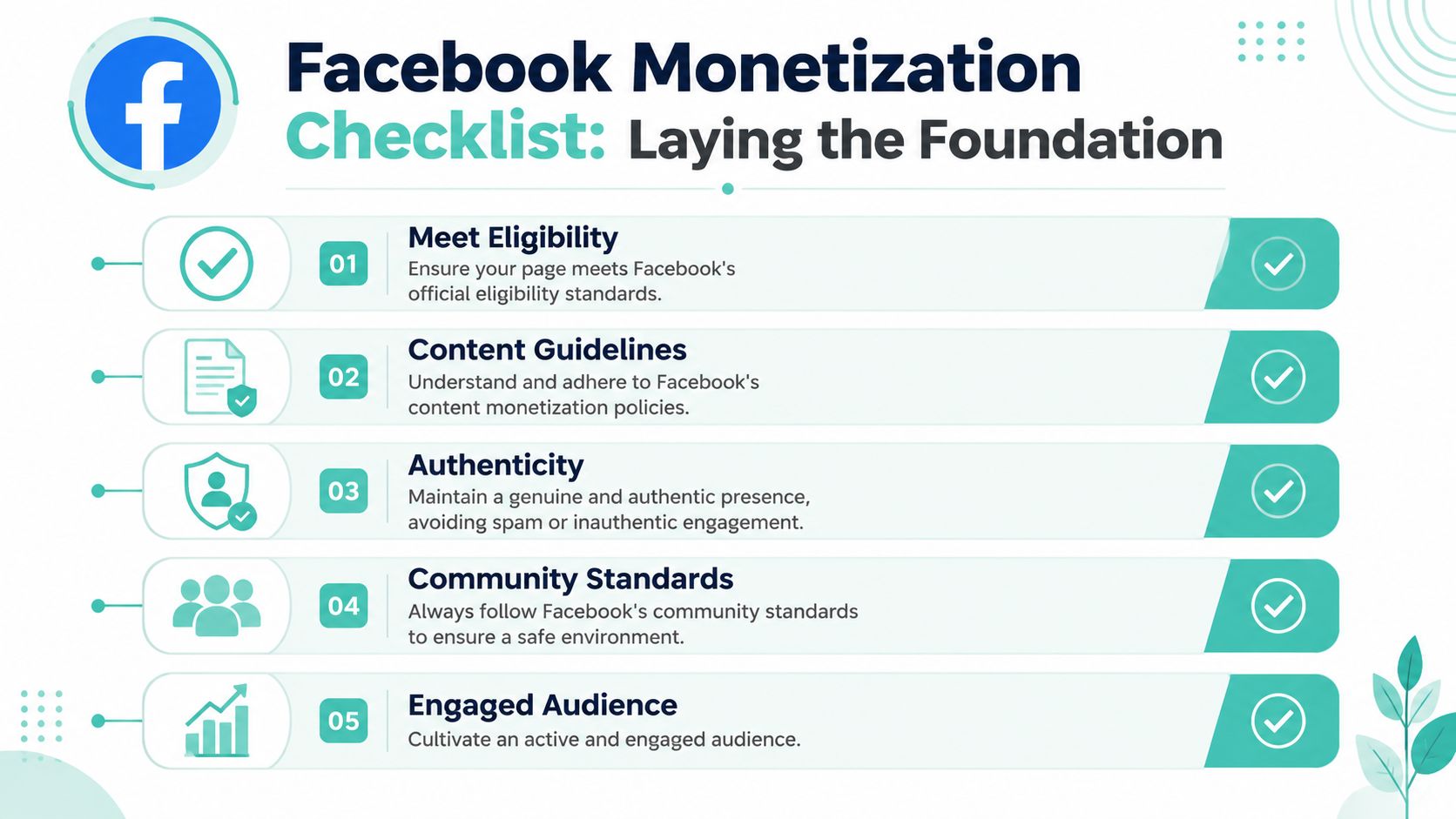
Before chasing any revenue option, get the Page into working order. For Australian businesses, that usually matters more than chasing every new Facebook payout feature, because the most substantial income often comes from leads, bookings, and website sales after someone leaves the platform.
Check these basics first:
- Use a proper business Page: Build from a legitimate business presence, not a personal profile with half-finished branding.
- Open Meta Business Suite or the Professional Dashboard: Check what features are available, what restrictions exist, and what Facebook wants fixed.
- Review policy status: Resolve warnings, content restrictions, or identity issues before you spend time on growth.
- Stay active: Recent publishing activity helps keep the Page credible and ready for both audience growth and tool access.
- Make business details consistent: Your Page name, category, ABN-facing business identity, contact details, website, and service area should match everywhere.
Many small business Pages encounter difficulties with their online presence. The offer might be solid, but the setup looks neglected, which hurts trust before a prospect ever clicks through.
If the Page itself needs work, use this guide on how to make a business Facebook Page as a practical checklist.
Set up the parts that actually support revenue
A Page is only monetisation-ready if it can send people somewhere useful.
For a retailer, that means product pages that load properly, pricing that is current, and a clear path to checkout. For a service business, it usually means a quote form, booking page, phone number, or Messenger process your team monitors. If those off-platform steps are clunky, Facebook attention does not turn into revenue in any reliable way.
That trade-off matters. Some owners spend weeks polishing content while the website is slow, the form is broken, or nobody follows up leads within a reasonable timeframe. Fix the sales path first.
The benchmark that changes expectations
Facebook's built-in monetisation tools can be useful, but some of them sit behind meaningful eligibility requirements. For businesses considering in-stream ads, the threshold is high enough to rule out the idea as a short-term plan for many Pages.
That changes the conversation quickly. A local business with a modest audience usually gets better commercial results by using Facebook to drive enquiries or sales off-platform than by trying to force a creator model before the Page is ready.
Practical rule: Build around the revenue path you can use now, not the one Facebook might offer later.
What “foundation” really means
A Page that is ready to monetise usually gets five things right:
| Foundation area | What good looks like |
|---|---|
| Identity | Real business branding, complete profile, clear offer |
| Compliance | No ongoing policy issues, no spam-heavy posting habits |
| Content | Regular recent publishing in formats your audience will actually engage with |
| Audience | Relevant local attention, not inflated follower numbers from the wrong market |
| Conversion path | A product page, booking flow, lead form, or sales conversation that is ready to handle traffic |
Follower count gets too much attention here. A smaller Page with a clear offer, strong local relevance, and a clean handoff to your site or sales process will usually outperform a larger Page that looks busy but sends people nowhere useful.
Host your website with our 5-star rated, cPanel website hosting plans.
Super fast servers, with security included and hosted in your choice of Australian Data Center.
View cPanel Plans
Direct Revenue From Facebook Creator Tools
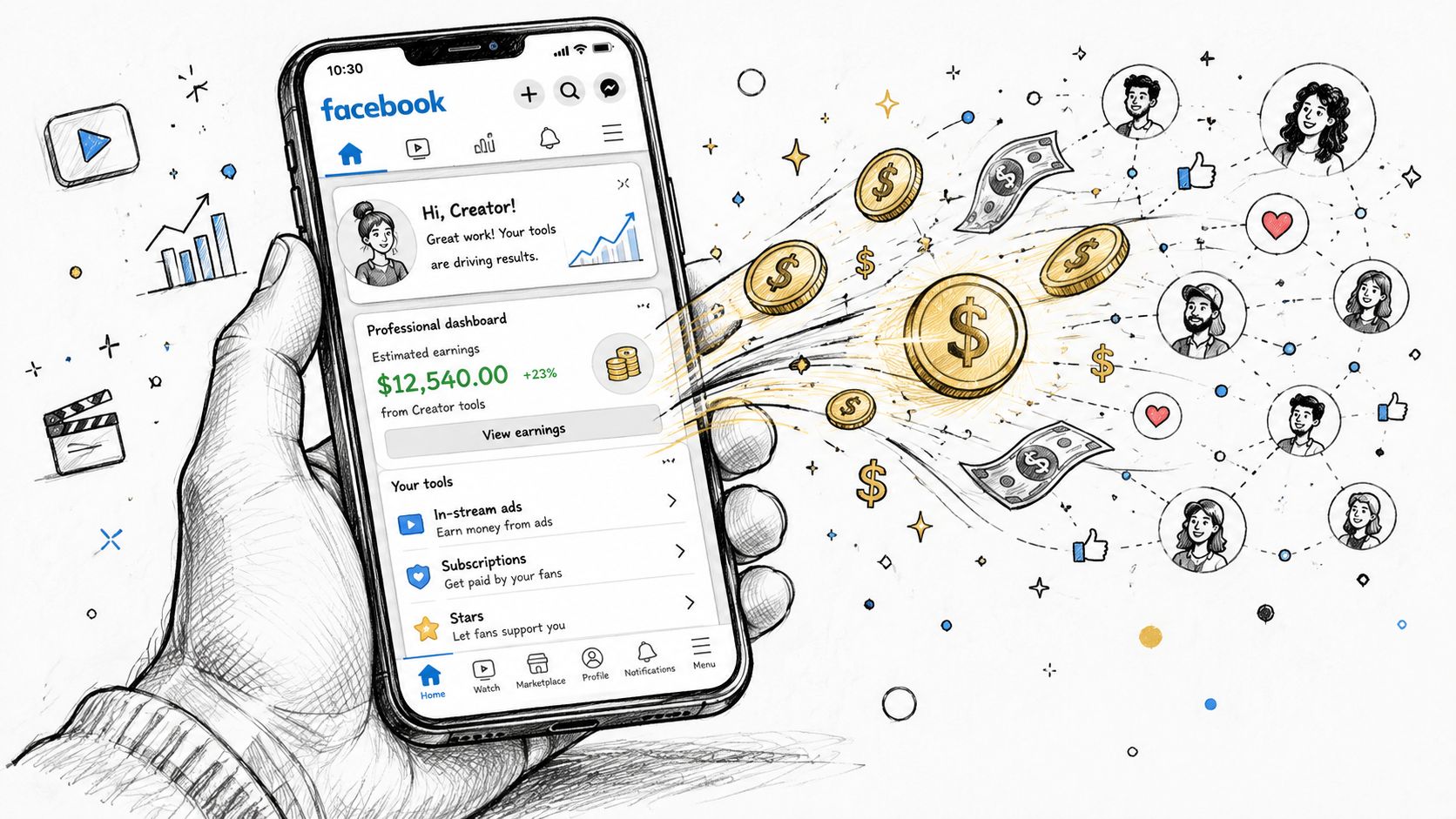
This is the part that is often meant when asking how to make money on Facebook. They're talking about Facebook paying them directly. That path is real, but it suits some businesses far better than others.
Which tool suits which business
The easiest way to think about creator tools is to match each one to a business model.
| Tool | What it is | Best fit | Main hurdle |
|---|---|---|---|
| In-stream ads | Ads placed in eligible video content | Video-led publishers, educators, commentators | Eligibility thresholds and watch time |
| Subscriptions | Recurring support for exclusive content | Community-led brands, coaches, niche educators | Need for loyal ongoing audience value |
| Stars | Fan tipping on eligible content, often live content | Personal brands, entertainers, live hosts | Requires audience habit and participation |
| Branded content | Paid partnership content with brands | Trusted niche pages and local category leaders | Need for brand fit and audience credibility |
A video-heavy page with regular episodes, explainers, or live sessions can make sense for in-stream ads. A service business that barely publishes video usually shouldn't force that model. Likewise, subscriptions only work if followers have a reason to pay regularly for access, insight, or community.
For businesses running affiliate offers alongside content, it also helps to understand the payout side clearly. This knowledge base note on requesting an affiliate payout is a useful reminder that monetisation isn't just about clicks. Admin, tracking, and payout mechanics matter too.
What usually goes wrong
The most common mistake is assuming access equals income. Even when a business qualifies, creator tools only work when the content format and the audience behaviour line up.
A practical workflow is to verify eligibility in the dashboard, pick one revenue path, and use the Monetization tab to see what you qualify for and why you may not yet qualify. Meta's own guidance also stresses checking policy and commerce issues before enabling commerce features, while warning against trying to do everything at once in a fragmented setup.
Here's the blunt version:
- In-stream ads work when people watch long enough.
- Subscriptions work when people want continued access.
- Stars work when followers feel connected enough to tip.
- Branded content works when your audience trusts your recommendations.
If your content gets polite engagement but doesn't build repeat viewing, direct payout tools usually disappoint.
A grounded way to decide
Ask these questions before chasing direct monetisation:
- Does your page already produce repeat viewers?
- Do people ask for more detailed help, access, or exclusives?
- Can you publish on a schedule that supports the tool?
- Would direct Facebook income outperform selling your own offer?
If the answer to the last question is no, don't force it. Creator tools can be valuable, but many Australian small businesses make more by using Facebook to support the business they already own.
Driving Sales for Your Australian Business
A Brisbane retailer posts a short video of a new winter range at 7:30 pm. By 9:00 pm, a few people have clicked through, two have bought, and one has saved the product page to come back later. That is how Facebook makes money for many Australian businesses. It drives buying intent off the platform and into your own sales process.
What this looks like in practice
For a suburban homewares store, Facebook works best as a product discovery channel. Short videos, styled photos, and customer favourites create interest, then send people to a product page, collection page, or Shop item. The sale happens because the post did its job clearly. It showed the product, answered a few objections, and gave the shopper one obvious next step.
Service businesses use the same principle differently. A mortgage broker, accountant, tradie, or clinic usually gets better results from educational content tied to a single action, such as booking a call, requesting a quote, or filling out a lead form. Broad motivational posts rarely convert well in the Australian small business market. Useful posts do.
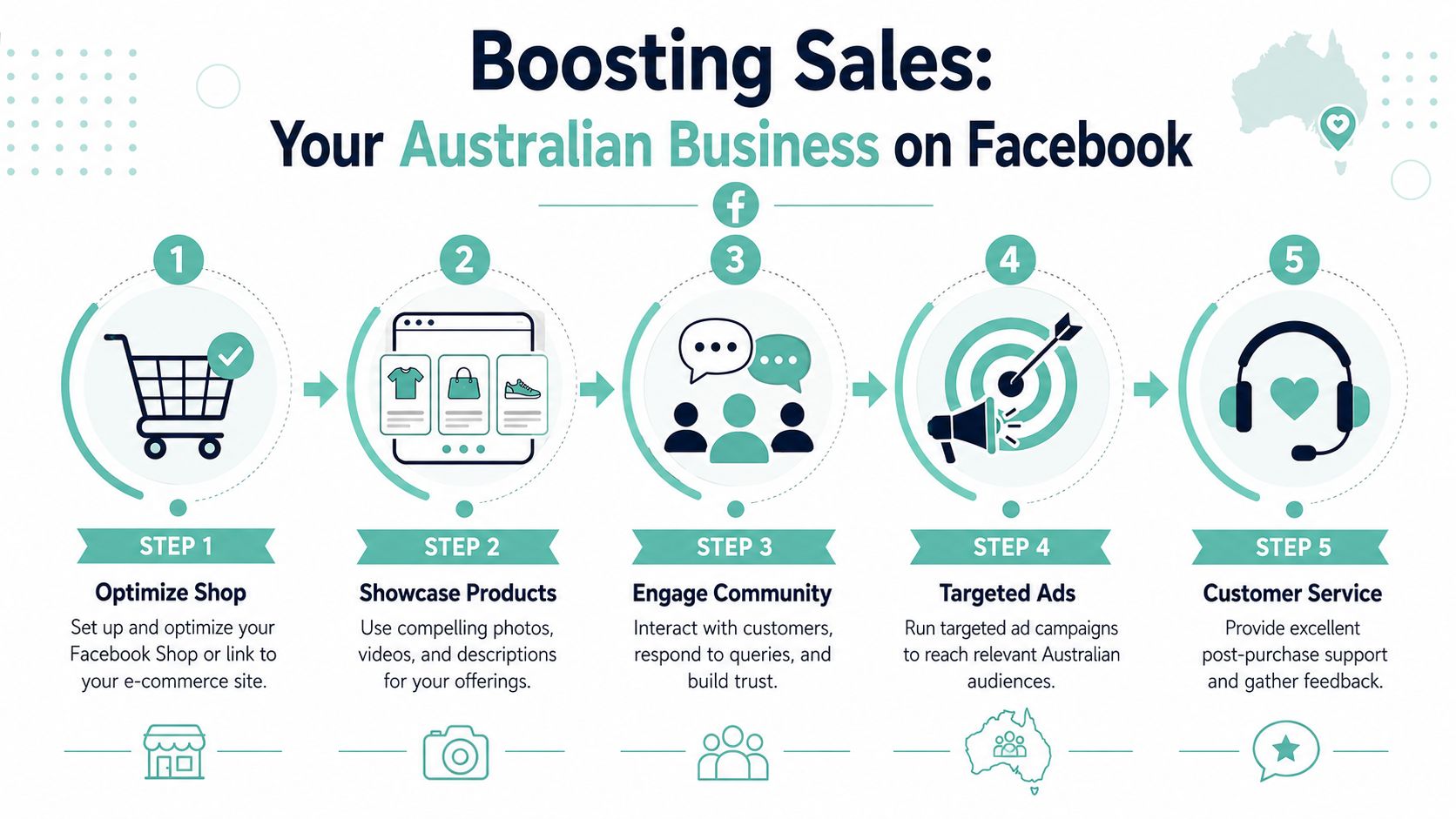
The practical lesson is simple. Facebook content should support a commercial path you already control. For product businesses, that often means a website with proper checkout, delivery information, and follow-up email flows. If you need that side sorted, this guide on selling products online in Australia covers the eCommerce setup Facebook cannot handle for you.
The one CTA rule most pages ignore
Pages lose sales when every post asks for too much at once. A post tries to get comments, profile visits, website clicks, messages, and shares. The result is weak intent and messy reporting.
Give each post one job.
That job might be:
- Product discovery through a Shop item or a website category page
- Local selling through a Marketplace listing
- Lead generation via an instant form or booking page
- Conversation start through Messenger for higher-value services
A furniture store can post a styling reel with one CTA to browse a collection. A local gym can post a short training tip with one CTA to claim a trial. A consultant can post a myth-busting carousel with one CTA to book a call.
This sounds basic, but it fixes a common problem. Clear posts convert better because the buyer does not have to guess what to do next.
Choose the sales path that matches the offer
Facebook gives businesses a few different ways to turn attention into revenue, and each one has trade-offs.
| Channel | Best for | Watch-out |
|---|---|---|
| Facebook Shop | Browsable product catalogues | Weak images, thin descriptions, and inconsistent stock data reduce clicks |
| Marketplace | Local buyers and fast-turn items | Unclear pricing attracts low-quality messages and time-wasters |
| Lead forms | Service businesses and quote-based offers | Broad forms create admin load without enough qualified leads |
I usually advise Australian businesses to pick the shortest path from interest to sale. If the product is simple and price-led, Shop or Marketplace can work. If the sale needs trust, explanation, or a quote, send people to a lead form, booking page, or landing page you can track properly.
For product businesses wanting sharper conversion tactics, Million Dollar Sellers has a practical piece on mastering Facebook sales for e-commerce brands.
The businesses that get reliable results from Facebook treat it as a traffic and demand channel. Attention starts on Facebook. Revenue lands in your website, your CRM, or your sales pipeline.
Monetisation Strategies for Any Account Size
If you don't have a large following, that doesn't rule out revenue. It just changes the model. Smaller Pages can still monetise effectively when the audience is specific, engaged, and willing to act on a recommendation.
Trust can monetise before scale does
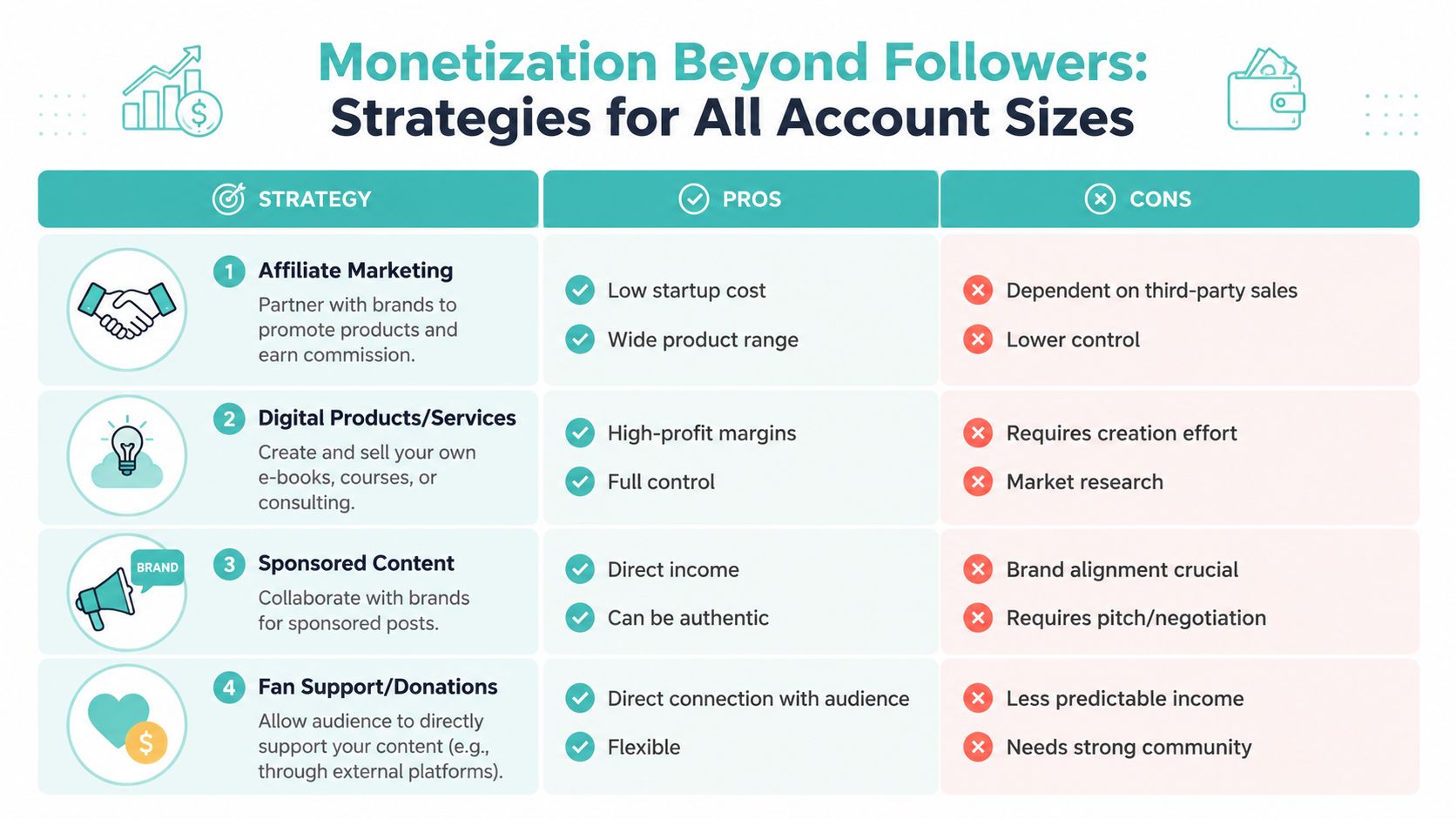
Two options stand out here: affiliate marketing and branded content.
Affiliate marketing works when you recommend tools, products, or services that help your audience, then earn a commission if someone buys or enquires through your link. This suits niche pages well. Think consultants recommending software, parenting pages recommending useful products, or local business educators recommending trusted service providers.
Branded content is different. You're being paid by a brand to create content and tag that relationship properly. For Australian businesses, the Branded Content feature can bypass the in-stream ad threshold, and creators using sponsored content can generate revenue comparable to ad breaks because success is driven by engagement and trust, not just follower count.
That's the important shift. You don't always need Facebook to formally “monetise” your page before your page can produce income.
A simple decision guide
Use this as a rough filter:
- Choose affiliate marketing if your audience asks for recommendations and you can point them to something useful.
- Choose branded content if your page has a clear niche, good engagement, and a credible fit for partnerships.
- Choose your own digital offer or service if you already have expertise people would pay for directly.
- Choose external support options if you've built a strong community and want flexible fan backing outside Facebook-native tools.
For some operators, adding a simple offer layer outside the platform is smarter than waiting for Meta access. If you want another example of an external revenue model, Loyaltie's page on how to become a Loyaltie vendor is a useful reference point for thinking about offer-based monetisation beyond native social payouts.
A smaller audience that trusts you is often easier to monetise than a larger audience that only scrolls past.
Where people get this wrong
The usual mistakes are predictable:
- Posting affiliate links with no context.
- Accepting sponsored content that doesn't fit the audience.
- Hiding the commercial relationship.
- Recommending products the page owner doesn't rate.
That last one does the most damage. Once trust slips, monetisation gets harder everywhere else too. Your leads get colder, your comments get thinner, and even your own offers become harder to sell.
The better approach is simple. Recommend less. Explain more. Tie the recommendation to a real problem your audience already has.
Register your new domain name at competitive market prices including free domain add-ons like privacy, DNS Hosting, Custom Nameservers and Forwarding.
Always the best price and no nasty renewal price hikes.
Register A Domain Name
Building a Resilient Monetisation Strategy
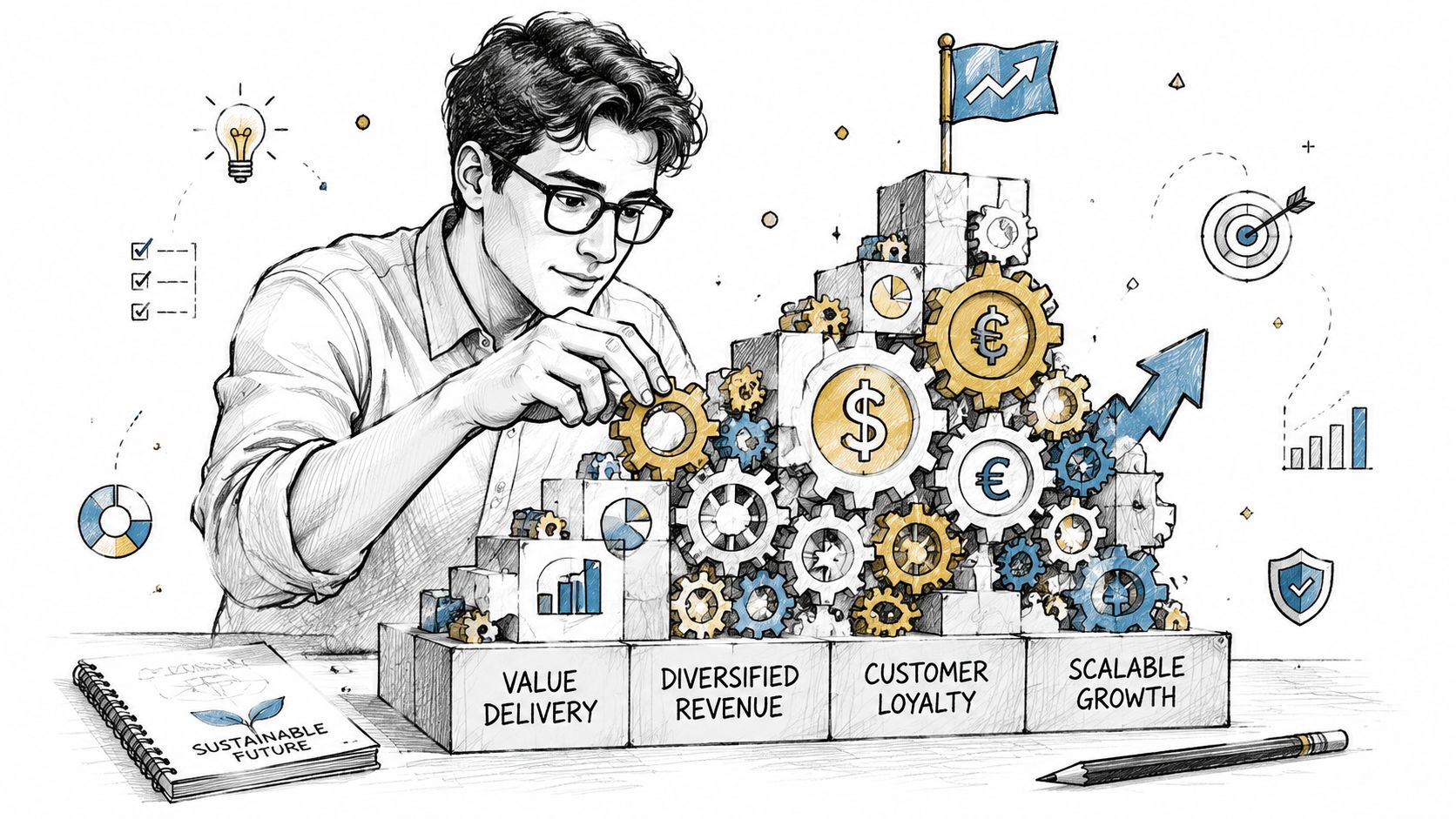
The strongest Facebook revenue strategy is rarely “make Facebook pay me”. It's “use Facebook to feed a business that I control”. That distinction matters more now than ever for Australian operators.
Why owned assets matter more than platform payouts
Australia had about 21.2 million Facebook users in 2025, equal to 80.9% of the population, which makes Facebook a major audience channel for local businesses. But the more defensible monetisation model is to use that reach to drive people to an owned asset such as a website, converting attention into off-platform leads and sales rather than relying only on Facebook-native payouts, as noted in Meta's business learning guidance.
That's the strategic core. Facebook is excellent for discovery, retargeting, nurturing, and proof. It's less reliable as the sole place where your business should earn.
A website matters because you control the structure, the offer, the tracking, and the next step. If local visibility is part of your growth plan too, this guide on local SEO in Australia is a useful companion because it helps turn social interest into search-led demand you also own.
What to measure if you want durable results
Most Pages measure the wrong things. Reactions and views can be useful indicators, but they're not the end result.
Track things that connect to revenue:
- Which post type produces enquiries
- Which offer gets clicks but not conversions
- Which audience segment books, buys, or replies
- Which CTA produces qualified leads instead of empty activity
If you're serious about how to make money on Facebook, the key metric isn't “did this post perform”. It's “did this post move someone toward a sale”.
Build your Facebook strategy like a funnel, not a popularity contest.
That usually means a sequence. A helpful post earns attention. A stronger follow-up earns the click. A landing page or lead form captures intent. Your site, inbox, sales process, or booking system closes the loop.
The long-term view
A resilient model usually looks like this:
| Layer | Role in revenue |
|---|---|
| Facebook content | Builds visibility, trust, and repeat attention |
| Offer page or lead form | Captures commercial intent |
| Website or shop | Converts interest into owned enquiries or sales |
| Email or follow-up | Recovers missed opportunities and drives repeat business |
That structure survives algorithm shifts far better than a Page that depends entirely on native monetisation access. It also gives you better control over margin, customer experience, and remarketing.
The businesses that win on Facebook in Australia tend to be the ones that treat the platform as a traffic and trust engine first. The money follows from that.
If you're turning Facebook traffic into leads or sales, your website has to carry its weight. UpTime Web Hosting gives Australian businesses fast local hosting, solid security, and responsive support so your landing pages, online store, and enquiry forms don't let good traffic go to waste.