If you build websites for Australian clients, run a niche blog, or handle digital marketing for small businesses, you've probably had the same thought at least once. You recommend hosting all the time, yet once the setup is done, the revenue usually stops while the support questions keep coming.
A web hosting affiliate program fixes that when you choose carefully. Instead of dropping random links into content and hoping for the odd signup, you build a repeatable referral system around a service people already need. In Australia, that only works well when the offer fits local expectations around support, billing clarity, and disclosure.
Table of Contents
- The Affiliate Opportunity in Australian Web Hosting
- How to Evaluate and Choose a Hosting Affiliate Program
- Joining and Setting Up Your Affiliate Account
- Creating Promotions That Actually Convert
- Measuring, Analysing, and Optimising Your Performance
- Australian Tax, Payout, and Legal Essentials
- Frequently Asked Questions

Performance you can feel, backed by clients who depend on it. Read how our support and uptime create long‑term customer success.Power Your Business with Better Hosting
The Affiliate Opportunity in Australian Web Hosting
A lot of affiliates enter hosting the wrong way. They chase whichever program flashes the biggest payout, write a thin “top hosts” page, then wonder why the clicks don't turn into income. In the Australian market, hosting referrals work better when they come from genuine client conversations, local business content, and trust built over time.
That matters because affiliate isn't a fringe channel here. In Australia, affiliate marketing accounted for 16% of online retail transactions in 2023, according to the IAB Australia Affiliate Marketing Guide referenced by Blog Pros on hosting affiliate payouts. That tells you the channel is already embedded in how Australians buy online, including considered purchases where people compare providers before committing.

Hosting is a strong affiliate category because the buyer is usually already in decision mode. They're launching a business site, moving a slow WordPress install, setting up email, or cleaning up a messy stack of domains and old cPanel accounts. That's much closer to purchase intent than broad lifestyle niches.
Why Australian hosting referrals are different
Australian buyers don't just ask about price. They care about where support sits, whether invoices are easy to understand, whether backups are included, and whether the provider feels accountable when something breaks.
If your audience includes local businesses, web designers, and solo operators, it helps to understand how they compare providers in the first place. A useful starting point is this overview of Australian web hosting providers, because it reflects the kinds of criteria local buyers use.
Practical rule: The easiest hosting referrals come from content that matches a real buying question, not content written to “do affiliate SEO”.
A sustainable web hosting affiliate program isn't built on one viral page. It's built on recurring relevance. You keep publishing useful comparisons, migration advice, speed guidance, and setup tutorials, then place your recommendation where the buyer is already evaluating options.
How to Evaluate and Choose a Hosting Affiliate Program
The biggest mistake I see is treating affiliate commission as the product. It isn't. The host is the product, and the commission only matters if the offer converts cleanly and doesn't damage your reputation.
Why conversion quality matters more than headline commission
A hosting affiliate program looks attractive when the payout is simple and prominent. But if the provider has unclear pricing, weak support, confusing onboarding, or poor tracking, that headline number won't help much. You'll send traffic, lose trust, and spend time answering complaints from people you referred.
Look at the full referral path:
- Offer fit: Does the host suit the audience you already serve, such as small business owners, agencies, bloggers, or WordPress users?
- Sales friction: Are plan names, inclusions, and billing terms easy to understand?
- Local relevance: If your traffic is Australian, does the provider support Australian use cases such as local billing, local support expectations, and locally relevant infrastructure?
- Tracking confidence: Can you see clicks, referrals, and payout status without guessing?
- Retention logic: Will the customer still feel good about the purchase after the first invoice?
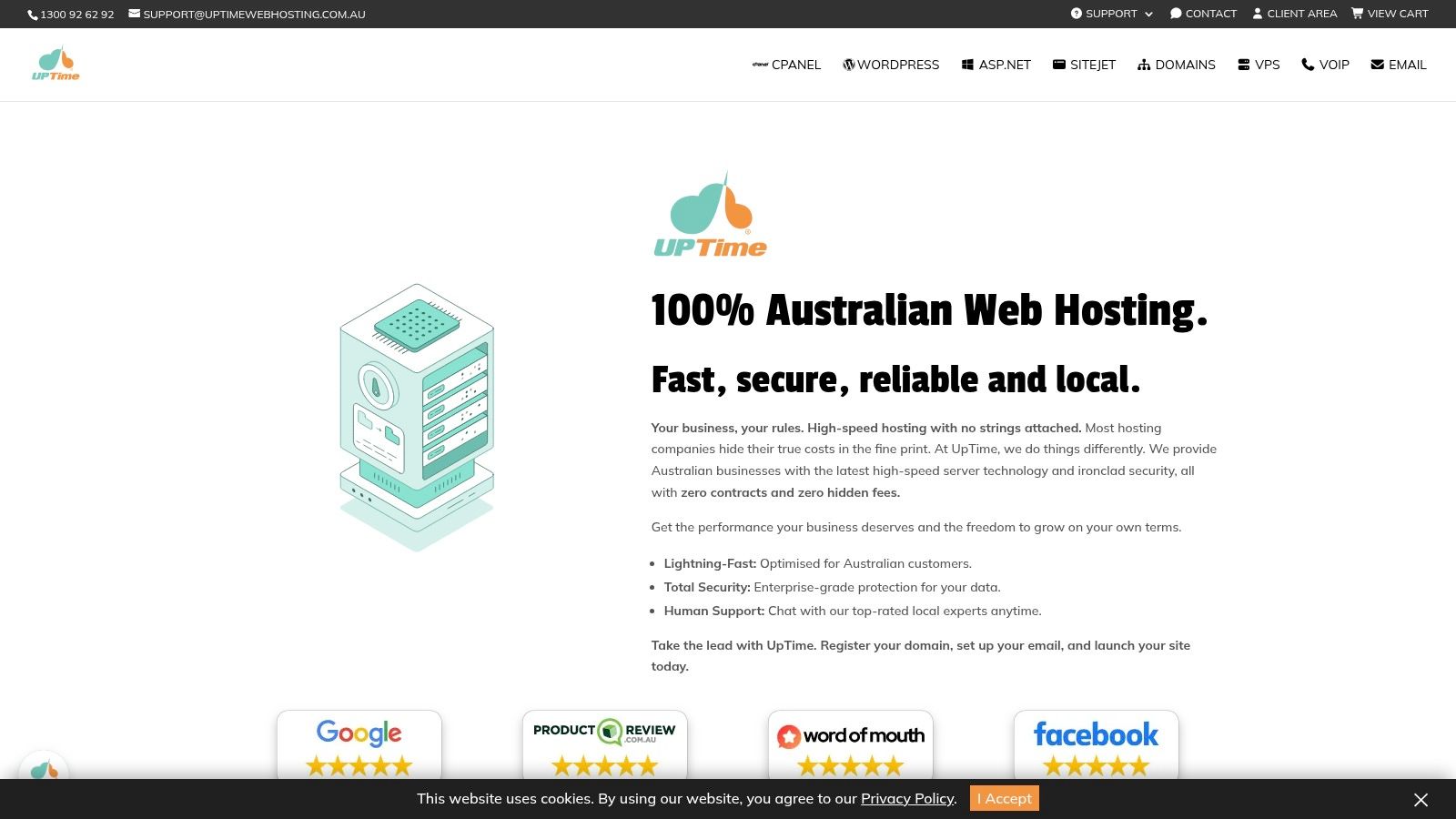
One practical example is UpTime Web Hosting, which is relevant for Australian affiliates because it operates as a 100% Australian provider and includes local hosting products such as cPanel, WordPress and Windows hosting, plus domains, email, backups, security features, and local support. Those details matter because they give you concrete reasons to recommend a service instead of leaning on generic “fast and reliable” copy.
For evaluation criteria on the buyer side, this guide on factors to consider when choosing web hosting services is also useful. The same factors that help a customer choose a host should shape how you choose an affiliate partner.
Commission Models Compared
Different commission structures suit different traffic sources. A developer with ongoing client relationships may prefer one setup, while a content publisher may prefer another.
| Model | How It Works | Pros | Best For |
|---|---|---|---|
| One-time commission | You earn once when a referred customer completes a qualifying purchase | Simple to understand, easier to forecast, suits high-intent traffic | Review pages, migration guides, launch-focused content |
| Recurring commission | You earn while the referred customer stays active under program rules | Better long-term income potential, aligns with retention | Agencies, educators, niche publishers with stable audiences |
| Hybrid structure | You receive an upfront payment plus some ongoing value or account benefit | Balances immediate cash flow with longer-term upside | Affiliates mixing content, client referrals, and support |
| Store credit or loyalty benefit | Referral value may be applied against your own hosting costs or account spend | Useful if you already host sites or client services with the provider | Freelancers and agencies managing multiple hosted properties |
What to check before you apply
Before joining any web hosting affiliate program, I'd check these points in order.
Read the payout terms carefully. You want to know when commissions become payable, what reversals look like, and whether there are restrictions around self-referrals or brand bidding.
Test the product yourself. If possible, use the dashboard, support channel, billing flow, and control panel. You can't write convincing copy about migrations, backups, Sitejet, LiteSpeed, or cPanel if you've never touched the platform.
Review the affiliate assets. Some programs give you deep links, landing pages, banners, and reporting tools. Others give you one generic link and leave the rest to you.
Check whether the program matches your promotion style. A host that works well for comparison articles may not suit a consultant who recommends services inside client projects.
A good affiliate partner makes your recommendation easier to defend when a client asks, “Why this host?”
That's the true test. If you'd hesitate to put the recommendation into an email with your name on it, skip the program.
Host your website with our 5-star rated, cPanel website hosting plans.
Super fast servers, with security included and hosted in your choice of Australian Data Center.
View cPanel Plans
Joining and Setting Up Your Affiliate Account
Most hosting affiliate setups are simpler than people expect. The friction usually comes from not knowing where the account menu sits, how to generate a deep link, or what the dashboard labels mean.
Start with the account basics
If you're using UpTime's system as your working example, the cleanest place to begin is their walkthrough on how to create your affiliate account. That gives you the account path without trial and error.
After login, focus on three things first:
- Your primary affiliate link: This is the default referral URL tied to your account.
- Dashboard reporting: You want to know where clicks, signups, and pending payouts appear.
- Promotional materials: Check for banners, logos, or prebuilt landing links, but don't rely on them as your main strategy.
If the platform allows custom tracking or sub-IDs, use them early. It's much easier to separate blog traffic, newsletter clicks, and client resource page referrals from day one than to untangle everything later.
Set up links you can actually use
Don't stop at the homepage affiliate link. Build a small set of referral links for the pages you'll mention most often.
For example, you might prepare links for:
- A general hosting page for broad “getting started” content.
- A WordPress-focused page if your audience mostly runs brochure sites, blogs, or WooCommerce.
- A knowledge base or migration page if you publish educational content that helps people move hosts.
- A contact or support page for leads who want to talk before buying.
Most beginners quickly improve by matching the destination to the reader's stage of intent, rather than dropping the same generic link into every article. A person reading about backups needs a different next click than someone comparing starter plans.
Keep a simple spreadsheet with link name, destination, placement, and purpose. It saves a lot of confusion once you have content across multiple pages.
Once those links are ready, your account setup is effectively done. From there, the job becomes traffic quality and message fit.
Creating Promotions That Actually Convert
The hard part of affiliate marketing isn't getting a link. It's getting the right person to click at the right time. Affiliate marketers report that 45.3% cite traffic generation as their main challenge, while 25.1% say search algorithm updates hurt performance, according to Wix's affiliate marketing statistics roundup. That lines up with what most hosting affiliates experience in practice. Traffic quality decides everything.
Build around search intent
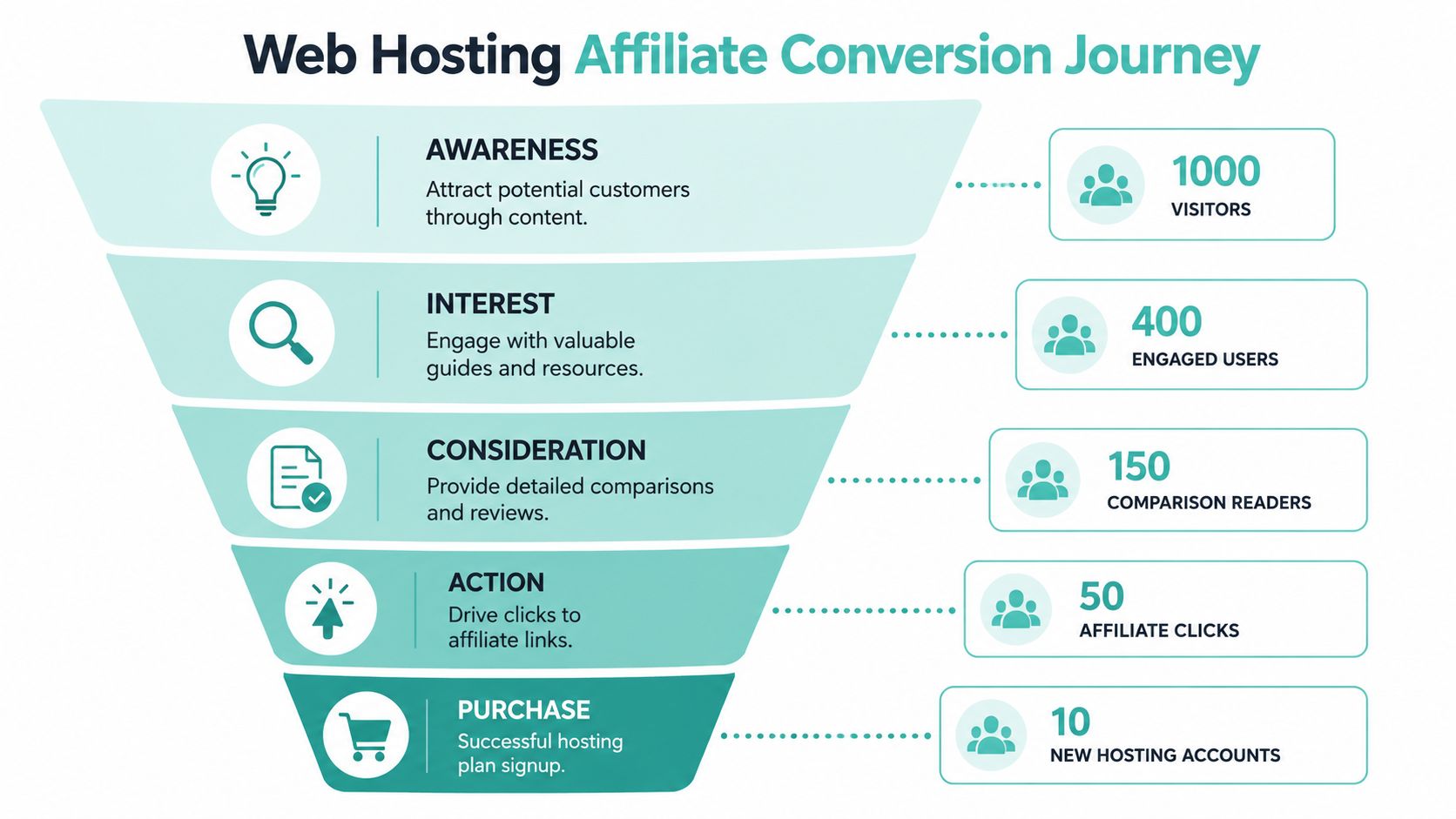
Hosting content converts when it sits close to a buying decision. The pages that usually work are not broad opinion posts. They're intent-rich assets.
A few formats that tend to hold up well in the Australian market:
- Comparison pages: “Australian WordPress hosting for tradies”, “hosting for local service businesses”, or “cPanel hosting for client sites”.
- Problem-solution pages: slow website fixes, email setup issues, backup concerns, malware recovery basics.
- Migration content: guides for moving from an old provider with minimal disruption.
- Local business explainers: pages written for people who care about Australian support and straightforward billing.
If you need stronger organic visibility for those pages, use practical SEO work rather than publishing more weak content. This article on how to increase your website ranking on Google is worth reviewing because it aligns with the kind of evergreen search traffic hosting affiliates depend on.
Here's a simple content angle that works better than a generic review. Write for a real buyer type. A sole trader in Brisbane wants a host that's easy to manage, supports email, includes backups, and doesn't bury charges in the checkout. An agency managing client sites wants stable hosting, straightforward account management, and support that responds when something breaks during business hours.
Use email without sounding salesy
Email often converts better than social traffic because the audience already knows you. That only works if the recommendation fits the context.
A few examples:
- You send a client onboarding email and include a “recommended hosting setup” section.
- Your newsletter covers WordPress maintenance, site speed, or launch checklists, then links to a host that fits those needs.
- You build a small email course for new site owners and place the referral where the reader is choosing infrastructure.
If you want to tighten that workflow, a practical primer on email marketing helps with list structure, cadence, and campaign thinking without overcomplicating the basics.
Don't force affiliate links into every send. One relevant recommendation inside a useful email sequence will usually outperform constant promotion.
The email copy itself should be plain. Mention who the hosting suits, what problem it solves, and any feature you've verified. Avoid hype. Hosting buyers are wary of it.
Run paid campaigns carefully
Paid traffic can work for a web hosting affiliate program, but it punishes sloppy execution. Generic ads to cold audiences usually burn budget. Narrow campaigns tied to a clear landing page can work much better.
Good paid setups usually have these traits:
- Geo targeting: focus on Australian audiences if the offer is built for them.
- Specific landing pages: don't send cold ad clicks to a generic homepage when a comparison or buyer guide fits better.
- Message match: if the ad mentions local support or WordPress hosting, the landing page should continue that exact angle.
- Compliance check: make sure your disclosure is visible and your claims are supportable.
One practical approach is to run ads to an educational page first, then let the affiliate link sit inside the guide. That gives the visitor context before the click and improves click quality.
Measuring, Analysing, and Optimising Your Performance
Most affiliates look at earnings first. I'd start one step earlier. Look at the path that produces the earnings.
What the numbers in your dashboard actually mean
A basic hosting affiliate dashboard usually gives you enough to make useful decisions.
- Clicks: how many times people used your referral link.
- Conversions: how many completed the required action, usually a qualifying hosting purchase.
- Conversion rate: the share of clicks that turned into conversions.
- EPC: earnings per click. In plain English, this shows whether the traffic source is worth sending more of.
EPC is especially useful when two pages send different volumes of traffic. One article may generate fewer clicks but bring in more qualified buyers. Another might attract lots of curiosity clicks from people who were never close to purchasing.
If your reporting feels limited, it can help to understand broader attribution and click-path tracking options. This overview of Cometly's affiliate tracking platform is useful background for how more advanced tracking setups work.
Simple optimisation moves that compound
Optimisation doesn't need to be technical. Start with one page and one change at a time.
A practical sequence looks like this:
Find a page with clicks but weak conversions. That usually means the promise is attracting interest, but the recommendation isn't convincing enough.
Tighten the call to action. Replace vague anchor text like “check it out” with something specific to the reader's intent.
Move the link higher. If the recommendation only appears after a long scroll, many qualified readers won't reach it.
Improve the pre-click context. Add a short sentence on who the hosting is for, what it includes, or why you're recommending it.
Test destination pages. Sometimes a product-specific page converts better than a homepage link.
Track changes in batches that are small enough to learn from. If you rewrite the whole page, swap all links, and move the layout at once, you won't know what helped.
Banner testing can work, but text links inside useful content often perform better because they arrive with context. In hosting, buyer confidence usually beats visual noise.
Register your new domain name at competitive market prices including free domain add-ons like privacy, DNS Hosting, Custom Nameservers and Forwarding.
Always the best price and no nasty renewal price hikes.
Register A Domain Name
Australian Tax, Payout, and Legal Essentials
Many generic affiliate guides falter for Australians. They explain traffic and content, then skip the part where your affiliate activity becomes real business income with real disclosure obligations.
Disclosure is mandatory, not optional
The Australian Consumer Law (ACL) took effect on 1 January 2011, and affiliate-style advertising must be clearly disclosed and not mislead consumers, as noted in this discussion of hosting affiliate programs and ACL requirements. For hosting affiliates, that matters because recommendation content often looks like advice. If you're paid when someone signs up, readers need to know that.
Clear disclosure doesn't need legal theatre. It needs to be visible and understandable. Examples that are usually easier for readers to grasp:
- Article disclosure: “This page includes affiliate links. I may earn a commission if you sign up through them.”
- Email disclosure: “This recommendation includes an affiliate link, which means I may receive a commission at no extra cost to you.”
- Social post disclosure: state the affiliate relationship plainly in the post itself, not hidden behind vague tags.
The wrong approach is burying the disclosure in a footer, using vague wording, or presenting sponsored rankings as if they were independent.
The business side of affiliate income
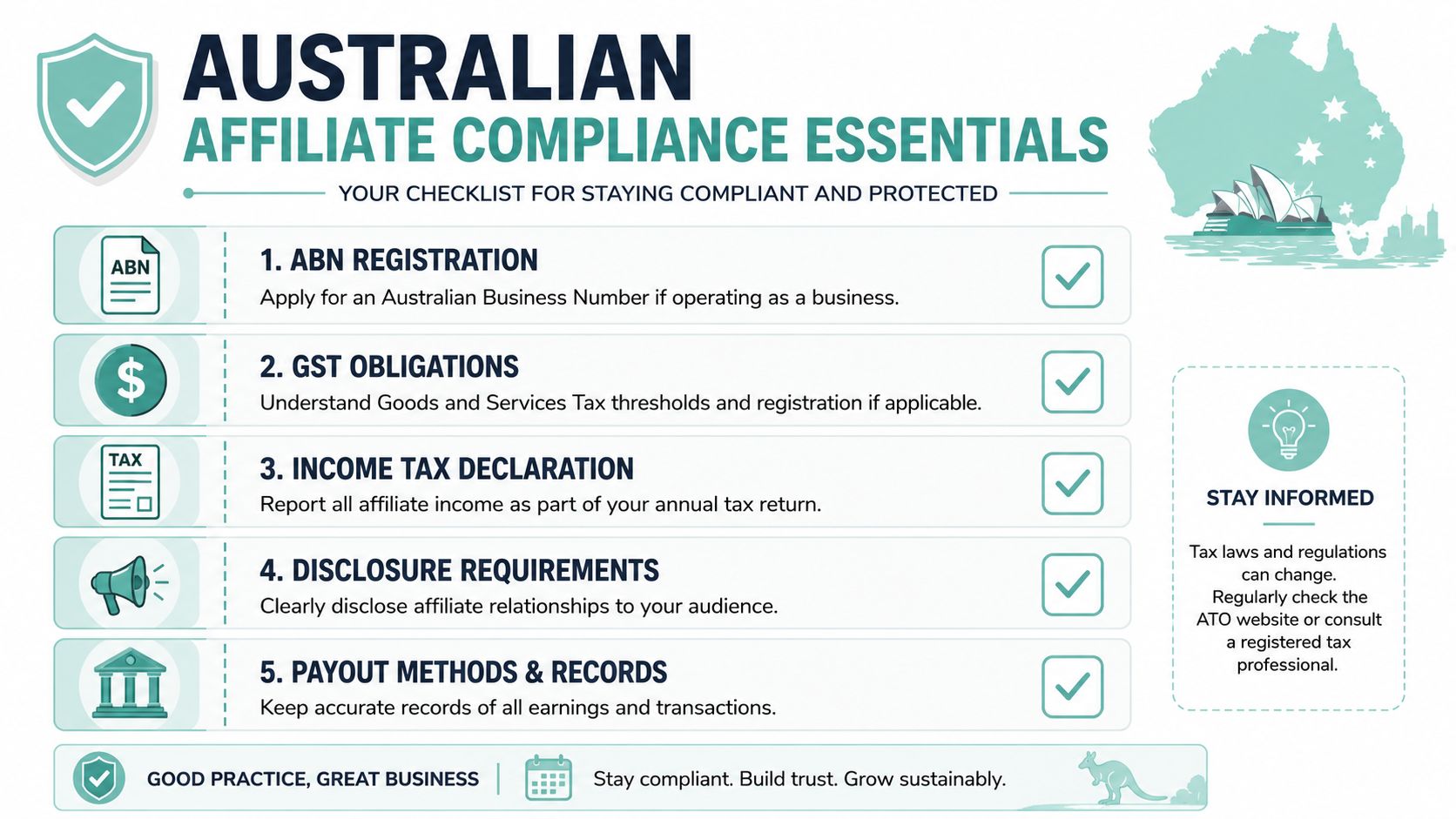
If your referrals are occasional, your setup may stay simple for a while. Once you're operating with intent, publishing regularly, and receiving payouts, you should treat it like business activity.
That usually means checking:
- ABN position: whether your affiliate activity should be carried on under an Australian Business Number.
- GST obligations: whether your circumstances require registration and how your invoices or reporting should be handled.
- Income tax treatment: affiliate earnings generally need to be declared as income.
- Banking and payout records: keep statements and payout confirmations organised.
For practical account administration, this knowledge base article on requesting an affiliate payout is the sort of operational detail worth checking early, especially if you want clean records from the start.
Keep records before you need them
Don't wait until tax time to reconstruct everything from emails.
Keep a simple system with:
- Payout confirmations
- Bank deposit records
- Screenshots or exports from your affiliate dashboard
- Published URLs where affiliate links appear
- Disclosure wording templates
Good recordkeeping isn't admin for admin's sake. It protects you if a payout is queried, a commission is reversed, or your accountant asks how the income was earned.
If you're unsure about your own tax treatment, get personal advice from a qualified Australian adviser. The specifics depend on how you're operating, not just on the fact that you use affiliate links.
Frequently Asked Questions
Do I need an ABN from day one
Not always in every circumstance, but once your affiliate activity is organised and run with a commercial purpose, it's worth getting proper advice early. Waiting too long usually creates more cleanup later than setting things up properly at the start.
Can I post affiliate links on social media
Yes, but the same disclosure standard still applies. If you're promoting a hosting offer on Instagram, LinkedIn, Facebook, or YouTube, the commercial relationship should be clear in the post, caption, or description where people see it.
What if I'm unsure about tax treatment
That's common. If you want a plain-English place to start thinking through tax optimization questions, that FAQ resource is useful background before you speak with your own accountant or registered tax adviser.
Are loyalty rewards the same as affiliate commission
No. Affiliate commission is referral income linked to a tracked signup. Loyalty rewards or account credits are a separate benefit structure. If a host offers both, treat them as different mechanisms and read the terms for each one separately.
If you want a locally relevant place to start, UpTime Web Hosting offers Australian hosting products, local support, and an affiliate setup that fits the kind of referral workflow many Australian developers, bloggers, and small agencies already use.