
You're probably here because the store needs to go live, the budget's real, and the platform decision can't turn into a six-week debate. Maybe you're selling a small product range, maybe you've outgrown a basic site, or maybe you're trying to work out whether you should own the stack or let someone else handle the plumbing. That's the shopify vs woocommerce vs wix question for Australian SMBs, and the wrong answer usually costs more than the headline plan price.
| Platform | Best fit | Hosting model | Control level | Practical Australian takeaway |
|---|---|---|---|---|
| Shopify | Product-focused stores that want speed to launch | Fully hosted | Lower server control, higher convenience | Strong default for merchants who want less technical overhead |
| WooCommerce | Content-heavy or custom stores that want ownership | Self-hosted on WordPress | Highest control | Best when you want to choose Australian hosting and shape the stack |
| Wix | Simple DIY business sites with light selling | Hosted website builder | Moderate control | Good for simpler sites, less suited to serious ecommerce growth |
Table of Contents
- Introduction Which Platform Actually Fits Your Australian Business
- Platform Overview at a Glance
- True Cost of Ownership in Australia
- Head to Head Comparison Across Key Decision Criteria
- Hosting Control and Why Local Australian Infrastructure Matters
- Real World Use Cases and Which Platform Wins Each Scenario
- Final Recommendation and Next Steps for Australian SMBs

Performance you can feel, backed by clients who depend on it. Read how our support and uptime create long‑term customer success.Power Your Business with Better Hosting
Introduction Which Platform Actually Fits Your Australian Business
A lot of Australian owners start in the same place. They've got products ready, a website that's doing nothing, and a phone full of suppliers asking when the store's going live. The trap is to compare Shopify, WooCommerce, and Wix as if they're just feature lists, then pick the cheapest monthly fee and hope the rest sorts itself out.
That's not how it works. Shopify is a hosted commerce platform, WooCommerce is an open-source WordPress add-on that needs hosting, and Wix is a website builder with ecommerce bolted on. Those are different business models, not just different tools.
For Australian SMBs, the decision turns on three things, true cost of ownership, control over hosting, and how much time you want to spend maintaining the store. The market data makes one thing obvious, Shopify is the largest tracked platform in Australia, with 51.7% of 296,288 stores, ahead of WooCommerce at 27.7% and Wix at 12.4% (plug2data Australia market share). That tells you Shopify is a common choice, not a niche one.
But market share doesn't mean it's automatically right for you. If you're running a content-led business, or you care about owning the stack on Australian infrastructure, WooCommerce can make more sense even if it asks more from you upfront. If you just want a clean DIY site with a light online shop, Wix can still be the easy path.
The right choice comes from matching the platform to the business model, not chasing the lowest sticker price. If you keep that frame in mind, the rest of the comparison gets much clearer.
Platform Overview at a Glance
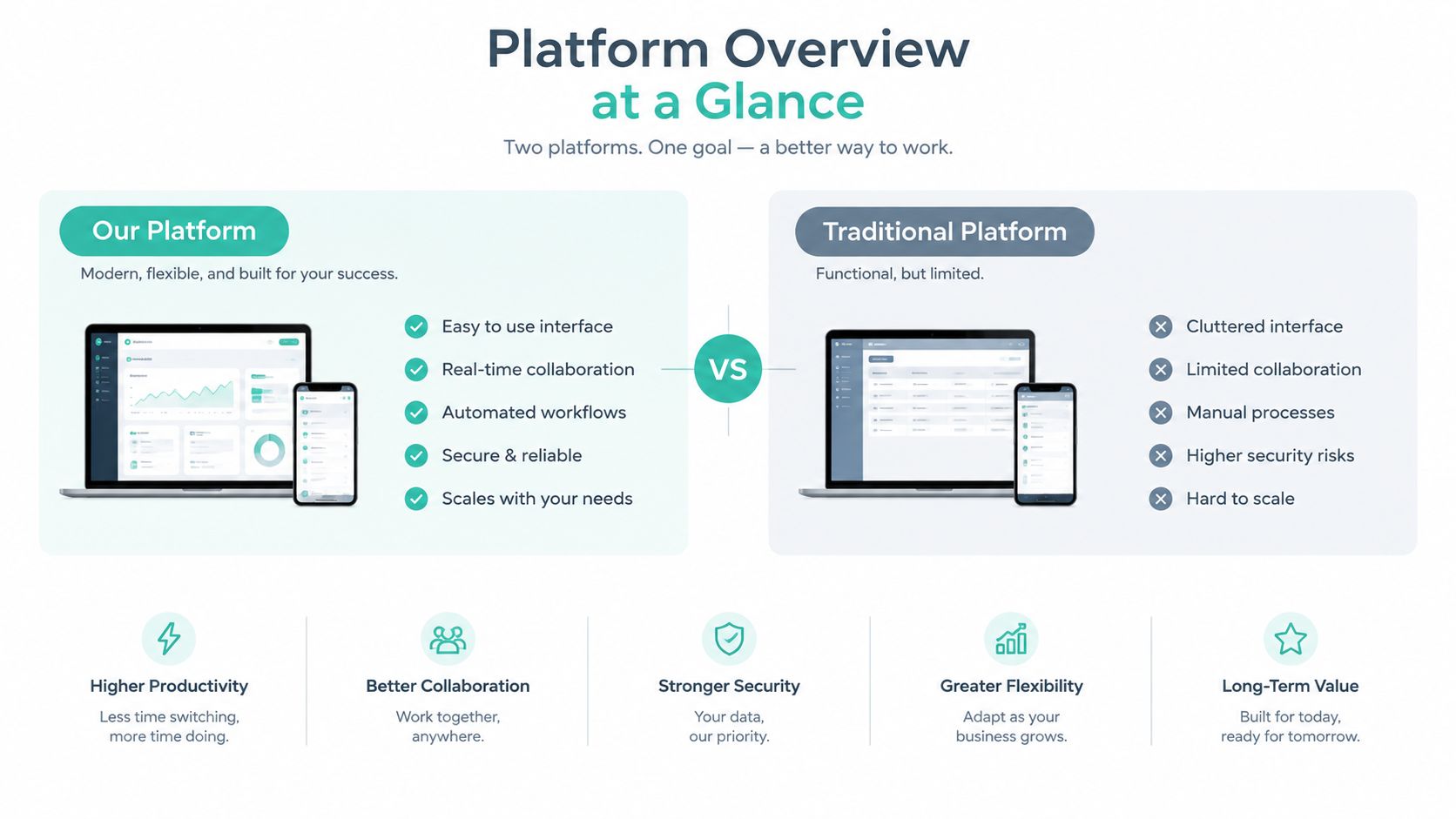
For Australian SMBs, the starting point is simple. Shopify is the most common choice in the tracked market, WooCommerce comes next, and Wix trails behind. That ranking does not decide the job for you, but it does show which platform is getting the most real-world use across local stores (plug2data Australia market share).
Shopify
Shopify is a fully hosted SaaS platform. You pay for the service, and Shopify handles the store infrastructure, checkout, updates, and hosting. That suits owners who want to focus on products, marketing, and fulfilment, not server work.
WooCommerce
WooCommerce is an open-source WordPress ecommerce plugin. The software is flexible, but you still need hosting, domain management, security, backups, and ongoing maintenance. It fits businesses that want editorial control, custom workflows, and more control over where the site sits. For a practical comparison of the hosting and setup side, see UpTime Web Hosting's Wix ecommerce vs WooCommerce guide.
Wix
Wix is a drag-and-drop website builder with ecommerce features. It is easier to shape visually than WooCommerce, and less commerce-focused than Shopify. It suits businesses that want a polished site first, with selling as one part of the mix.
The split is control versus convenience. Shopify removes a lot of operational work. WooCommerce asks for more setup, but it gives you room to own the stack, including the hosting layer, which matters if you care about Australian infrastructure and keeping control of your true cost of ownership.
Practical rule: if you want the platform to do more of the heavy lifting, Shopify is the cleanest bet. If you want to control the stack, WooCommerce gives you more room to move.
Host your website with our 5-star rated, cPanel website hosting plans.
Super fast servers, with security included and hosted in your choice of Australian Data Center.
View cPanel Plans
True Cost of Ownership in Australia
The monthly fee is the bit everyone sees first. The full bill shows up later, after you've added hosting, apps, payment fees, themes, support time, and the odd fix that takes longer than expected. That's why Australian comparisons that stop at headline pricing miss the part that matters.
The upfront price is only the start
Wise's Australia-specific guide puts Shopify from $149/month, WooCommerce as a free platform with hosting at $25 to $350/month plus extensions at $29 to $299/year each, and Wix from $55/month (Wise Australia ecommerce guide). A separate AU builder guide says Shopify starts around A$42/month and Wix around A$21/month, both with GST included (Studio Slate Australia guide). Those figures don't contradict each other, they reflect different plan framing and local presentation.
For WooCommerce, the invoice is spread across the stack. You might start with hosting, then add a domain, SSL, email, backups, theme licensing, and extensions. That's why WooCommerce can look cheap at the beginning and expensive once the business is live.
Australian true cost comparison over 12 months
| Cost Component | Shopify | WooCommerce | Wix |
|---|---|---|---|
| Platform fee | Paid plan, often presented as A$42/month in AU coverage or higher in broader pricing guides | Free software | Paid plan, often presented as A$21/month in AU coverage or higher in broader pricing guides |
| Hosting | Included | Separate hosting required | Included |
| SSL | Included | Usually separate through hosting | Included |
| Not the main operating layer | Often separate from hosting | Included or bundled depending on setup | |
| Backups and maintenance | Mostly platform-managed | Ongoing responsibility | Mostly platform-managed |
| Extensions and add-ons | Paid apps can add up | Paid extensions are common | Add-ons can still be needed |
| Developer time | Lower | Higher | Lower to moderate |
Owner reality: WooCommerce is only “cheaper” if you actually value your own time at zero. Once you price in maintenance, it stops being the bargain many people assume.
For a starter store, Shopify and Wix feel simpler because the platform bundle covers the basics. For a growing store, WooCommerce can win when you need more control over hosting, custom shipping, or the way your content and commerce layer work together. If you're comparing local hosting options for a WooCommerce build, UpTime Web Hosting's annual web hosting cost guide is a sensible place to sanity-check the hidden overhead.
Head to Head Comparison Across Key Decision Criteria
Performance and Core Web Vitals
Shopify has the clearest operational edge on mobile performance in the Australian comparison. The cited June 2025 CrUX snapshot reports a 75.22% mobile CWV pass rate for Shopify, compared with 70.76% for Wix and 43.44% for WordPress (Uptime Web Hosting comparison). Core Web Vitals are a useful user-experience indicator, and Shopify gives owners a stronger starting point than many poorly configured WooCommerce sites.
WooCommerce can perform just as well when the host, theme, plugins, image delivery, and caching are configured properly. That work sits with the owner, agency, or hosting provider. Wix usually lands between the two: easier than managing a neglected WordPress installation, but less flexible than a properly tuned WooCommerce stack.
Ease of use and daily management
Wix suits a non-technical owner who wants to edit pages visually, publish quickly, and avoid server decisions. Shopify requires more structure during setup, but that structure reduces accidental changes to checkout, product data, and store settings.
WooCommerce expects you to manage WordPress, hosting, updates, and the store layer together. That creates more work, though it also gives you greater control over how the site operates.
If one person in the business already knows WordPress, WooCommerce becomes a practical option. If nobody wants responsibility for maintenance, choose Shopify or Wix instead.
Ecommerce features and payments
Shopify is the strongest pure ecommerce platform of the three. Product management, checkout, shipping, discounts, and sales operations are central to the system. Choose it for a store where commerce is the main job.
Wix handles smaller catalogues and straightforward selling well. I would not choose it for complex fulfilment, advanced product rules, or a store expected to become the core of the business.
WooCommerce offers the broadest route for custom shipping rules, subscriptions, unusual product structures, and editorial-commerce sites. That flexibility depends on plugins and configuration, so the build needs disciplined management. For a detailed feature breakdown, read our WooCommerce versus Shopify comparison.
Extensions, growth, and content
Shopify's ecosystem is focused on commerce, which keeps expansion relatively orderly. WooCommerce grows through WordPress and its plugin ecosystem. That gives you more options, but each added component creates another update, compatibility, and support consideration.
Wix is comfortable for simpler business sites and modest stores. It is less suitable when the catalogue, fulfilment process, or integration requirements are likely to become complicated.
WooCommerce is the better choice for businesses that rely on articles, guides, landing pages, and detailed site architecture. WordPress gives you stronger editorial control, so the website can serve as a long-term marketing asset rather than a product catalogue alone. Shopify provides solid SEO foundations, while Wix covers on-page basics for less demanding sites.
Security, maintenance, and local support
Shopify and Wix reduce maintenance because the platform provider manages much of the underlying system. WooCommerce places more responsibility on the owner or agency, including updates, plugin compatibility, backups, and security configuration. That trade-off is acceptable when the business needs control and has someone accountable for the stack.
Australian businesses also need to consider GST workflows, support hours, and vendor coordination. Hosted platforms reduce the number of parties involved. WooCommerce can still be the better business decision when Australian hosting, local support, and control over the operating environment matter more than a simpler setup.
For another store-operator view of the trade-offs, see these platform choice insights from Refact.
Hosting Control and Why Local Australian Infrastructure Matters
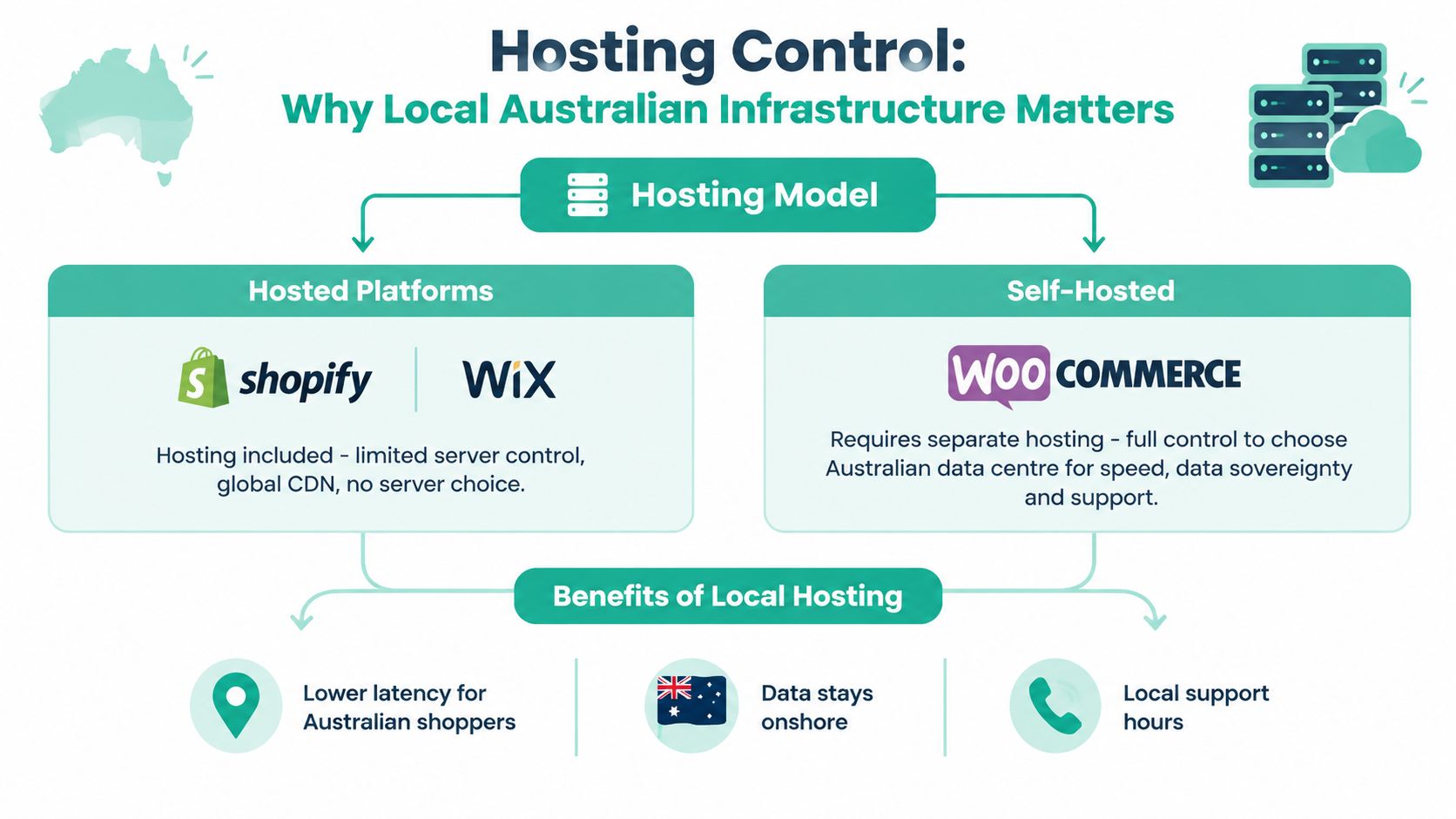
Shopify and Wix both include hosting, which is convenient, but it also means you don't choose the server stack. WooCommerce is different. You pick the host, and that choice affects speed, uptime, backups, updates, email setup, and support.
That's where Australian infrastructure matters. If your WooCommerce site sits on local servers in Sydney, Melbourne, Brisbane, or Perth, you've got better control over where the site lives and who supports it. For many businesses, that means easier conversations around data handling, response times, and maintenance windows.
What ownership really buys you
A properly managed Australian WooCommerce host can add practical layers like LiteSpeed, CloudLinux, free SSL, malware scanning, DDoS protection, nightly off-site backups, and 24x7 local support. Those aren't marketing extras, they're the stuff that stops a store from becoming a weekend emergency.
Practical rule: if your store depends on custom workflows, lots of pages, or a team that already lives in WordPress, owning the hosting layer can be the smarter long-term move.
That's also why data sovereignty comes up so often in local projects. Businesses that care about where customer data sits, or how their hosting is managed, should look closely at Australian data sovereignty hosting. It won't make the ecommerce platform choice for you, but it does change the risk profile of a self-hosted build.
If you're running WooCommerce, the hosting stack becomes part of the product. That's great for control and not so great if nobody on the team wants to manage it. Shopify and Wix spare you that responsibility. WooCommerce hands it back to you.
Register your new domain name at competitive market prices including free domain add-ons like privacy, DNS Hosting, Custom Nameservers and Forwarding.
Always the best price and no nasty renewal price hikes.
Register A Domain Name
Real World Use Cases and Which Platform Wins Each Scenario

A solo maker selling through Instagram usually wants the fastest path from product photos to checkout. Shopify is the straight answer there. You get a commerce-first setup, a predictable checkout flow, and less time spent wiring together parts that should already talk to each other.
A content-led service business with a blog is different. WooCommerce is the stronger fit because WordPress gives you editorial control, structure, and ownership of the content layer. If the site needs to educate, rank, and convert through articles and pages, WooCommerce is usually the better long-term asset.
A growing retailer that needs custom shipping rules, integrations, or a more customized workflow should also lean towards WooCommerce, provided they're willing to own the hosting. That's the point where the flexibility starts paying for itself. If you want a launch plan for selling products online in an Australian context, UpTime Web Hosting's guide to selling products online in Australia is a useful implementation reference.
A DIY business that mainly wants a simple brochure site with a small shop on the side should look at Wix. It's the least intimidating path if the store is secondary to the website. The trade-off is that once ecommerce becomes central, Wix starts to feel like a compromise.
Quick fit check
- Choose Shopify if you want to sell products fast and keep the operational burden low.
- Choose WooCommerce if you want editorial control, custom workflows, and ownership of the hosting layer.
- Choose Wix if you mainly need a simple site with light selling and minimal technical fuss.
If you're weighing the actual implementation rather than the marketing pitch, the question is simple. Which platform matches how your business really works today, and which one can grow without forcing a rebuild six months later?
Final Recommendation and Next Steps for Australian SMBs
Pick Shopify if you want the least friction and you're building a store-first business. Pick WooCommerce if you want control, content ownership, and the option to run the stack on Australian hosting. Pick Wix if you want a simple DIY website with light ecommerce and you don't need the store to do much heavy lifting.
Before you launch, check four things. Domain, hosting, SSL, and backups. If you're on WooCommerce, make sure the host can support the pace of your store, not just the brochure version of it. If you're on Shopify or Wix, check that the platform features line up with your payment, shipping, and content needs before you commit.
For Australian SMBs, the smartest move is to test the platform against your real workflow, not a generic feature checklist. Make sure the site loads properly on mobile, the checkout feels clean, and your support path is clear if something breaks on launch week.
UpTime Web Hosting provides Australian hosting, domains, email, SSL, backups, and WooCommerce-ready WordPress infrastructure for businesses that want local control over their store stack. If you're comparing Shopify, WooCommerce, and Wix from a hosting and ownership angle, visit UpTime Web Hosting and check the options against the way your business sells.