You're probably in the exact spot I see all the time with Australian store owners. You want to get online quickly, keep costs sensible, and avoid rebuilding everything six months later when the product range grows, the shipping rules get messy, or your SEO starts to matter more than the homepage design. That's the wix vs woocommerce decision for local SMBs, and it has less to do with “which is easier” than with who controls the stack and how painful migration will be later.
If you want a fast starting point for a small store, this guide to the best website builder for startups is a useful launchpad. If you're already thinking about content, checkout control, or local hosting, don't choose on convenience alone. Choose on how much ownership you want over the next two years.
Table of Contents
- Introduction Which Platform Fits Your Australian Store Today
- Wix and WooCommerce at a Glance for Australia
- Setup Hosting Performance and Security Compared
- Pricing Extensions Payments and Shipping in Australia
- SEO Scalability Support and Control
- Which Platform Suits Your Business Use Case
- Final Recommendation Migration Checklist and Hosting Specs

Performance you can feel, backed by clients who depend on it. Read how our support and uptime create long‑term customer success.Power Your Business with Better Hosting
Introduction Which Platform Fits Your Australian Store Today
A lot of Australian owners open this comparison from the same place. The business is real, the stock is ready, and the question is whether to launch tonight with a hosted builder or spend a bit more time setting up a WordPress store you control. I've launched stores on both, and the first mistake people make is assuming the cheapest start is the cheapest outcome.
Wix suits owners who want an all-in-one setup with fewer moving parts. WooCommerce suits owners who care about hosting control, deeper customisation, and the option to grow without ripping out the foundation later. For Australian businesses, that difference matters because GST, shipping logic, and local performance aren't abstract details, they're part of the checkout.
| Decision point | Wix | WooCommerce |
|---|---|---|
| Setup effort | Fast | More hands-on |
| Hosting control | Managed by Wix | You choose the host |
| Customisation | Simple, contained | Deep and flexible |
| Migration risk | Higher if you outgrow it | Lower if you plan the stack well |
| Best fit | Small, simple stores | Stores that expect growth |
For a local business, the recommendation changes once inventory gets broader or content starts driving sales. Australian online retail keeps growing, and the risk is not picking the wrong homepage theme, it's locking yourself into a starter site that can't keep up with the business once it's proven. If you want a guide that weighs the trade-off properly, think of this as a practical owner's comparison, not a design contest.
By the end, you'll know which platform fits your store today, which one protects you tomorrow, and when local hosting tilts the decision hard towards WooCommerce.
Wix and WooCommerce at a Glance for Australia
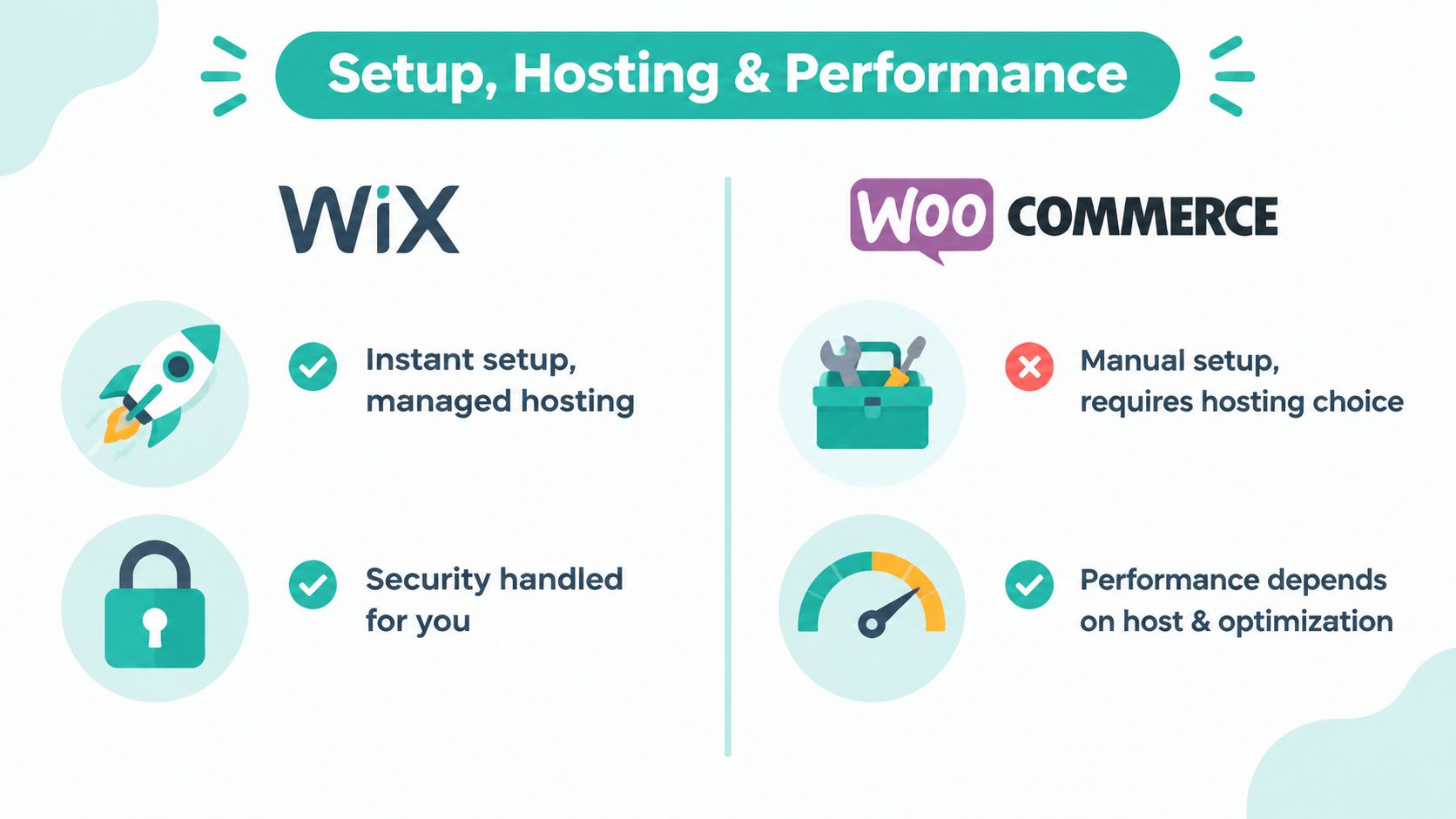
A store owner in Australia usually faces one choice first, do you want a managed platform, or do you want control over the hosting stack from day one? Wix is the managed option. WooCommerce is the open-source option that runs on WordPress and depends on the host underneath it.
That difference matters because hosting control changes your migration risk. Wix keeps the stack contained, which is handy early on, but it also means you work inside its system as the business grows. WooCommerce gives you room to choose local hosting, tune performance, and avoid a bigger rebuild later if the store outgrows the starter setup. If you are new to the WordPress side, start with what WooCommerce is before you compare the rest of the stack.
Australia is a useful market for this comparison because both platforms have real traction here. An independent 2026 dataset estimated 106,237 Australian stores on WooCommerce and 40,944 on Wix eCommerce, so WooCommerce had about 2.6 times as many AU stores at that point, with 31.98% of analysed Australian e-commerce stores versus 12.33% for Wix eCommerce, a gap of 19.65 percentage points ShopRank Australia data. That does not make Wix a poor choice. It shows where a lot of local merchants have landed once store complexity starts to matter.
The business model difference that actually matters
Wix gets you live fast. You sign up, choose a template, add products, and the platform handles the infrastructure in the background. WooCommerce asks for more setup because you choose the hosting environment first, then build the store around it.
That extra work buys you more control over performance, SEO, and checkout behaviour later. It also gives Australian businesses a cleaner path if they want local hosting, tighter control over their stack, or a setup that can grow without forcing a platform switch.
Wix publishes support for online stores with up to 50,000 products Wix ecommerce features. Product limits are only part of the story. The question is whether the platform still feels manageable when catalogue rules grow, shipping gets more specific, and you need more say over the hosting environment.
For owners on the WordPress side, the official WooCommerce documentation hub is the place to check how the plugin handles setup, orders, and checkout workflows. Wix manages the stack for you. WooCommerce lets you own it.
Host your website with our 5-star rated, cPanel website hosting plans.
Super fast servers, with security included and hosted in your choice of Australian Data Center.
View cPanel Plans
Setup Hosting Performance and Security Compared
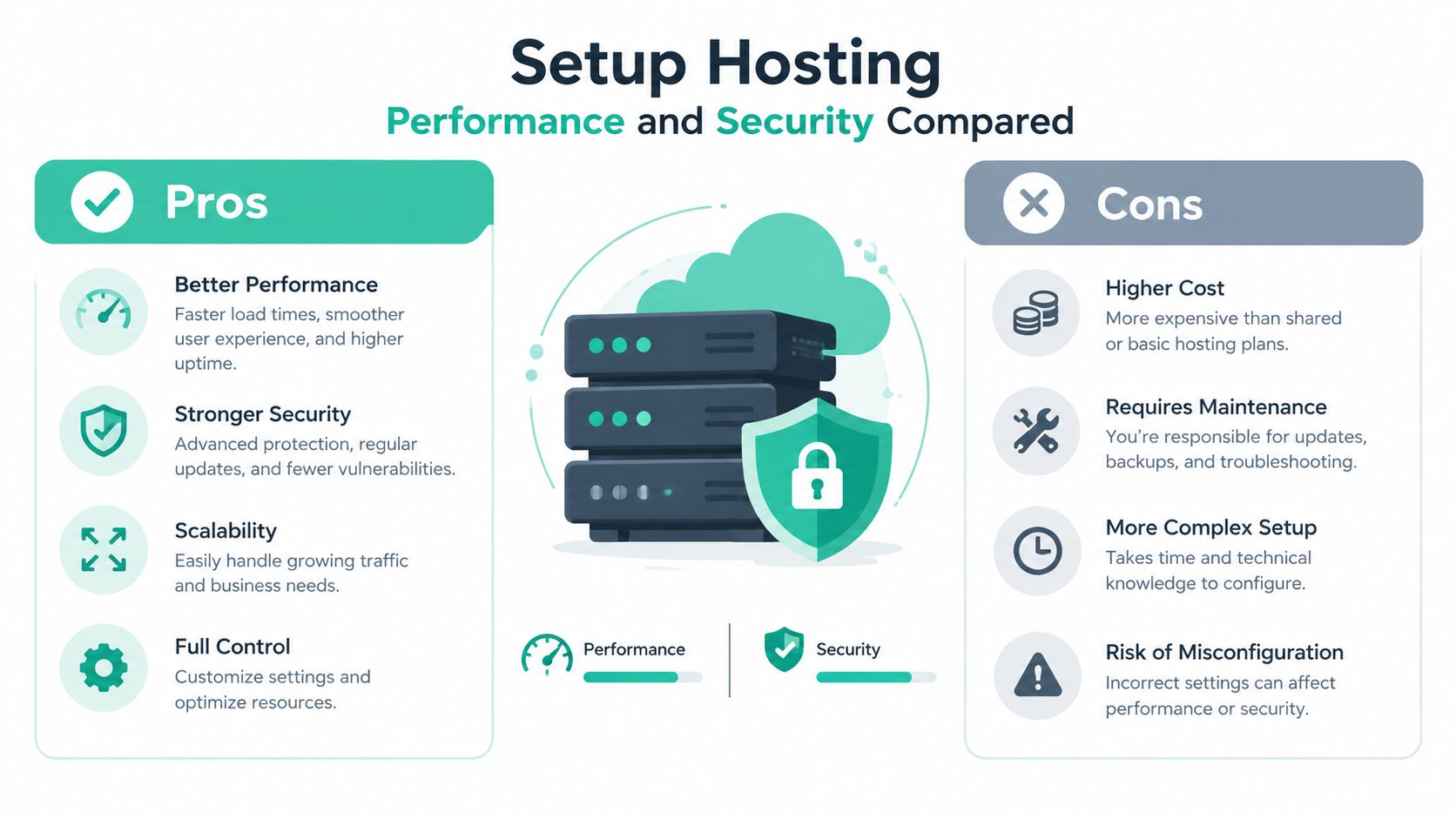
Setup is where the philosophies split
Wix is the faster path to a live store. You're not choosing a host, configuring server software, or thinking about caching layers before your first sale. That makes sense for a small business that wants to get moving quickly and keep the admin load low.
WooCommerce takes more setup because it lives on WordPress and depends on the hosting environment underneath it. That's not a flaw, it's the trade. You choose the host, then shape the performance stack around what the business needs. If you want to use a local Australian host, you can also pick infrastructure that keeps the store closer to your buyers, which matters when every second of load time affects checkout behaviour.
Performance and security are not the same problem
Wix handles security and infrastructure as part of the service. That removes a lot of operational burden. WooCommerce pushes more responsibility onto the host and the site owner, which means your choice of provider matters much more. A decent WooCommerce host should cover SSL, malware scanning, DDoS protection, backups, and monitoring, because those are not optional once the store is live.
Key point: Wix reduces the work you have to do. WooCommerce reduces the limits you have to live with.
For WooCommerce, local server location becomes a real commercial decision. If your hosting sits in Sydney, Melbourne, Brisbane, or Perth, the store is usually better placed for Australian visitors than if you've left the stack on a generic offshore setup. That doesn't mean every site needs complex engineering. It means hosting control is part of the store strategy, not an IT afterthought.
UpTime Web Hosting is one local option that fits that model, with cPanel, free SSL, malware scanning, DDoS-protected firewalls, CloudLinux, LiteSpeed, AccelerateWP, and encrypted off-site nightly backups built into its WordPress and WooCommerce-ready hosting. The important point isn't the brand name, it's the stack shape. WooCommerce runs better when the host is built for it.
A practical example. A small retailer with a simple range can live happily inside Wix and never think about the server. A growing retailer with content pages, product filters, and shipping rules will feel the limits faster, because every extra feature depends on the environment underneath it.
For a plain-language walkthrough of the WordPress side, the WooCommerce hosting guide is the kind of resource you want open while you plan the stack.
Pricing Extensions Payments and Shipping in Australia
| Total Cost and Capability Snapshot for Australia | Wix | WooCommerce |
|---|---|---|
| Core platform cost | Subscription-based | Plugin is free, hosting is separate |
| Extensions | Built-in tools plus app market | Plugin ecosystem through WordPress |
| Payments | Managed within the platform | Depends on payment gateway and setup |
| Shipping logic | Good for straightforward stores | Stronger for custom rules and local integrations |
| GST handling | Can be configured in-store | Can be configured in-store |
| Best for | Simple budget planning | Owners who want flexibility and control |
The price conversation gets messy because people only compare the headline subscription. That's the wrong lens. Wix packages more into the monthly plan, so the budgeting is simpler. WooCommerce starts with a free core, but the total cost depends on hosting, extensions, gateway costs, and the level of support you want around the store.
Australian GST setup is one part that shouldn't be hand-waved. The ACCC-backed MoneySmart GST calculator says that to work out a GST-inclusive price in Australia, you multiply the GST-exclusive amount by 1.1, and to extract GST from a GST-inclusive amount you divide by 11 MoneySmart GST calculator. That matters because your product pricing, checkout display, and accounting need to line up from day one.
Shipping and payments are where WooCommerce usually wins
Wix is fine if your shipping is straightforward. Once you need more complex logic, WooCommerce has the edge because its extension ecosystem is wider and easier to extend. Australian sources also note that WooCommerce can support Australia Post shipping integrations through its broader extension ecosystem, while Wix's AU shipping and app coverage is more limited and may need third-party apps or workarounds Forbes Advisor AU on ecommerce platforms.
If your shipping rules are already getting awkward on paper, don't force them into a builder that was never meant to carry that load.
Wix's advantage is simplicity. The platform works well when you want a contained store, a known monthly bill, and fewer technical choices. WooCommerce's advantage is that it can be shaped around the business rather than around the app store. That's why retailers who expect growth usually lean that way.
A practical example. A boutique with a tight product range and simple flat-rate shipping can use Wix and get on with sales. A retailer with suburbs, regions, bulky items, or mixed delivery methods should look hard at WooCommerce, because the logic tends to grow faster than the builder does.
For more local setup context, the online selling in Australia guide is the right place to sanity-check the commercial side before you commit.
SEO Scalability Support and Control
SEO is easy until content becomes the sales engine
Wix is fine for a small store with simple SEO goals. Once the site starts relying on content, category structure, internal links, and technical tweaks, it runs out of room faster. WooCommerce, on WordPress, gives you far more control over how the store grows and how search traffic is built over time.
That matters in Australia because online retail keeps expanding and the core issue is not launch speed. NAB estimated $64.88 billion in online retail over the 12 months to July 2025, and the ABS reported $4.7038 billion in online retail sales for June 2025, up 13.0% year-on-year IPC summary of NAB and ABS figures. Once a store is working, migration risk turns into a genuine business cost.
Support is only useful if the platform helps you solve the problem fast
Wix gives you an English-language Help Center, with 24/7 callback support and English live chat Monday-Friday from 2AM-6PM EST, plus self-service articles and tutorials Wix customer care support. Its Help Center also pushes users toward search-first troubleshooting Wix Help Center. That suits owners who want guided help inside a managed platform.
WooCommerce asks more of you, but that is the trade-off. The official documentation hub covers setup, FAQs, and practical guides, so you can work through store tasks without waiting for platform-specific hand-holding WooCommerce documentation. For checkout changes, order handling, and plugin setup, that matters more than polished marketing pages.
Support takeaway: Wix gives you a more guided service model. WooCommerce gives you deeper control, but you need a host and a setup you are willing to own.
Why tomorrow matters more than today
Too many owners choose for launch day and ignore month 12. A store that will stay small and publish little content can sit on Wix for a long time. A store that expects more products, more pages, local SEO work, and custom workflows usually feels the limits sooner than it expects.
If SEO is part of your growth plan, WooCommerce is the better long-term base. If the store is mainly a tidy online brochure with checkout, Wix is acceptable. If you want a practical WordPress SEO reference while you assess the stack, the WordPress SEO best practices guide is the right companion piece.
Register your new domain name at competitive market prices including free domain add-ons like privacy, DNS Hosting, Custom Nameservers and Forwarding.
Always the best price and no nasty renewal price hikes.
Register A Domain Name
Which Platform Suits Your Business Use Case

Solo seller with a small catalogue
Choose Wix if you're a maker, consultant, or local service business with a simple catalogue and you want the store live fast. You'll spend less time on setup and less time thinking about hosting. The trade-off is that your store will live inside Wix's rules, and that's fine until you want deeper control.
Growing retailer with messy shipping or bigger ambitions
Choose WooCommerce if your stock range is growing, shipping is getting complicated, or you know the site will need more than a starter store. This is the point where Australian hosting control starts paying for itself, because you can tune performance, keep the stack local, and avoid a rebuild when the business hits its stride.
Content-driven brand that wants SEO to pull its weight
Choose WooCommerce if the store depends on articles, guides, landing pages, and long-tail search. WordPress gives you better room to build around content, and that matters when you're trying to win local search traffic instead of just presenting products. If you want a broader outside perspective on traffic strategy, the Wispra guide to Shopify traffic is a useful reminder that infrastructure and traffic are separate problems.
Agency or multi-site operator
Choose WooCommerce if you're managing multiple client sites and need repeatable control over hosting, backups, and support. Wix can be convenient for one-off small builds, but agencies usually hit the ceiling once they need consistency across projects. The more sites you run, the more the hosting layer matters.
A simple rule works here. If you need low-maintenance and have a small store, Wix is acceptable. If you need ownership, flexibility, and room to grow without replatforming, WooCommerce is the sharper move.
Final Recommendation Migration Checklist and Hosting Specs
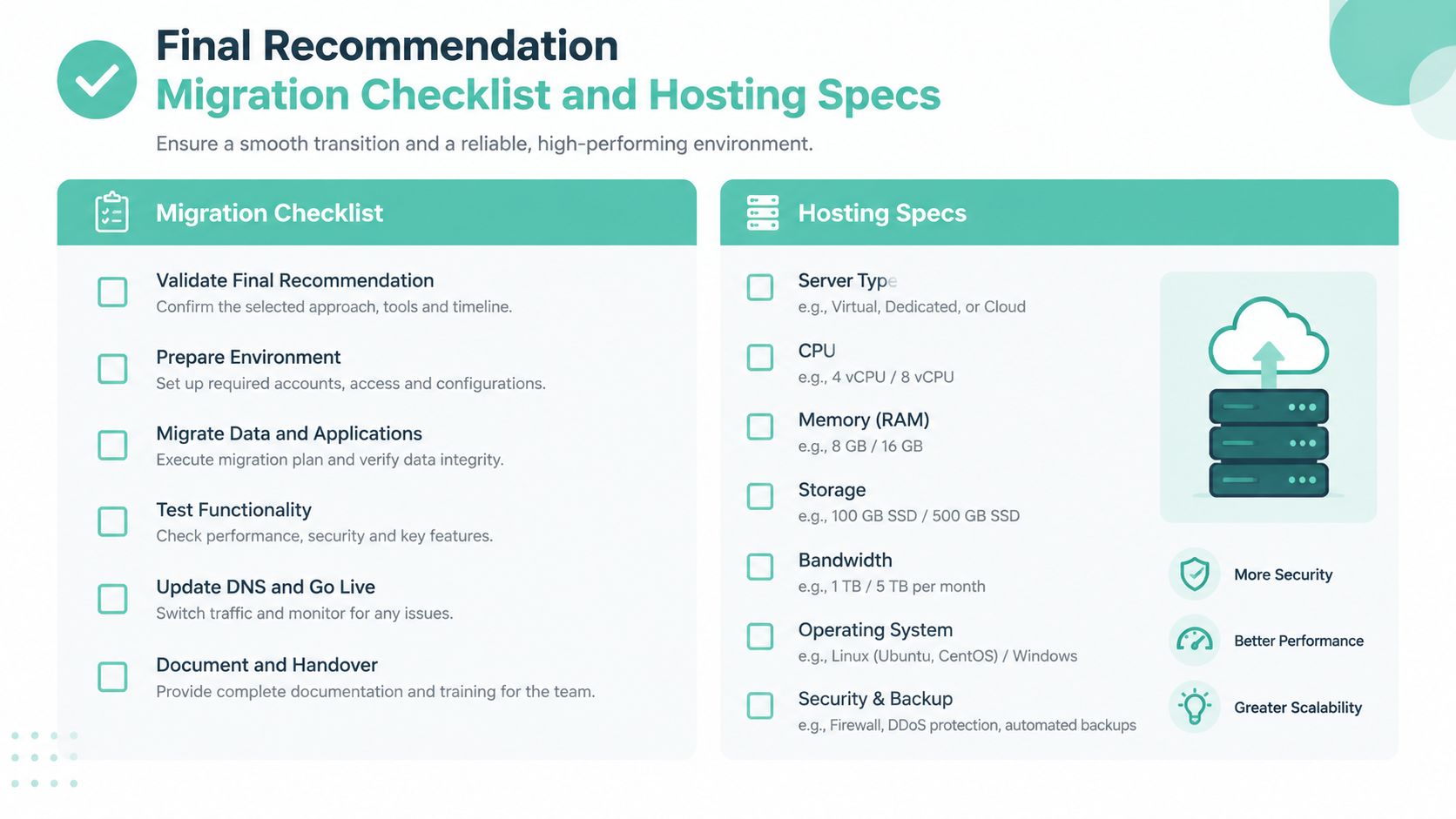
Start with the platform you can live with for the next few years, not the one that looks easiest this weekend. If you're serious about local control, WooCommerce on Australian hosting is the safer long-term choice for stores that expect to grow, need custom workflows, or care about migration risk. If you stay on Wix, do it because the store will stay simple, not because you want to postpone the hard decision.
Migration checklist
- Map the catalogue first. Check products, variants, categories, and any custom fields before moving anything.
- Audit the checkout. Confirm payments, tax display, and shipping logic so the new store behaves the way customers expect.
- Export content cleanly. Keep product descriptions, images, and page copy organised before launch.
- Test backups and restore points. A migration is only safe if you can roll back when something breaks.
- Check support access. Know whether you're using callback support, tickets, or documentation before launch day.
For WooCommerce hosting specs, I'd keep it simple. You want cPanel, free SSL, nightly backups, LiteSpeed, local Australian data centres, and active monitoring. That's the baseline that keeps the store fast, recoverable, and manageable without making every fix a ticketing drama.
Practical example: if a plugin update breaks checkout, you should be able to restore the site from a recent backup, review the change, and relaunch without rebuilding the whole store.
If you're comparing local providers, UpTime Web Hosting is one option that offers WooCommerce-ready cPanel hosting, free SSL, nightly backups, and local support through phone, tickets, and call-backs. That kind of setup fits Australian stores that want the platform flexibility of WooCommerce without giving up hosting control.
If you want the clean verdict, here it is. Choose Wix if you need a small, simple store and you're happy to accept platform limits. Choose WooCommerce if you want control, better long-term flexibility, and a store that won't force a rebuild the moment your business gets traction.
If you want a local hosting setup built for WooCommerce, visit UpTime Web Hosting and compare the Australian plans, support options, and backup features against your store's needs. If you're moving from a starter site or planning a new build, their WooCommerce-ready hosting is the practical place to start.